Ingredients You Will Need
For the Bread Batter
- 2 cups all-purpose flour
- 1 cup granulated sugar
- 1 ½ teaspoons baking powder
- ½ teaspoon baking soda
- ½ teaspoon salt
- 1 teaspoon ground cinnamon
- 2 large eggs (room temperature)
- ½ cup vegetable oil or melted butter
- ¾ cup milk (room temperature)
- 1 teaspoon vanilla extract
For the Cinnamon Sugar Coating
- ½ cup melted butter
- ½ cup granulated sugar
- 1 ½ teaspoons ground cinnamon
Choosing the Right Baking Pan
A standard 9×5-inch loaf pan works best.
Tips:
- Metal pans give better crust
- Grease thoroughly or line with parchment
- Avoid glass pans if possible (uneven browning)
Preparing Your Oven Properly
Preheat your oven to 175°C (350°F).
Why preheating matters:
- Ensures even rise
- Prevents dense texture
- Creates proper crust formation
Always preheat at least 15 minutes.
Mixing the Dry Ingredients
In a large bowl, combine:
- Flour
- Sugar
- Baking powder
- Baking soda
- Salt
- Cinnamon
Whisk well to distribute leavening evenly.
This step is crucial to avoid uneven rising.
Mixing the Wet Ingredients
In a separate bowl, whisk:
- Eggs
- Oil or melted butter
- Milk
- Vanilla extract
Mix until smooth and fully combined.
Room-temperature ingredients help create a uniform batter.
Combining Wet and Dry Ingredients
Pour the wet mixture into the dry ingredients.
Stir gently using a spatula or wooden spoon.
Important:
- Do not overmix
- Stop as soon as flour disappears
- Batter should be thick but pourable
Overmixing leads to tough bread.
Pouring the Batter into the Pan
Pour batter evenly into the prepared loaf pan.
Tap gently on the counter to release air bubbles.
Smooth the top with a spatula.
Baking the Bread
Place loaf pan in the center of the oven.
Bake for 45–55 minutes.
Check doneness by inserting a toothpick:
- Should come out clean or with few crumbs
- No wet batter
If browning too fast, cover loosely with foil.
Cooling the Bread Correctly
Remove bread from oven.
Let cool in pan for 10 minutes, then transfer to a wire rack.
Cooling prevents soggy crust and helps structure set.
Preparing the Cinnamon Sugar Coating
In a small bowl:
- Mix sugar and cinnamon thoroughly
In another bowl:
- Melt butter and keep warm
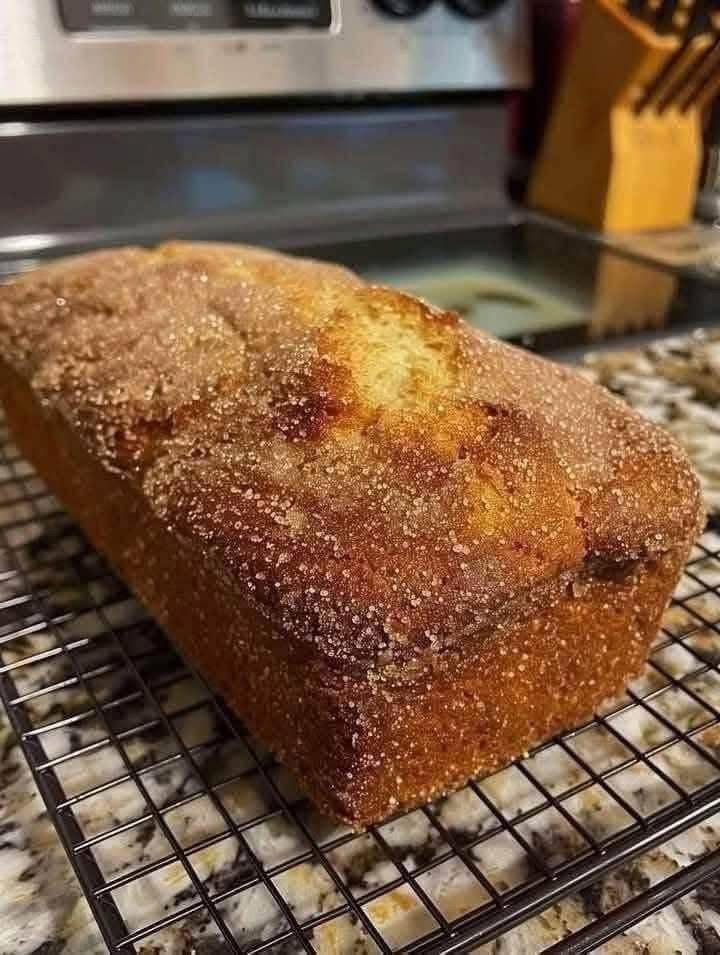
This coating creates the donut-like finish.
Coating the Bread While Warm
Brush entire loaf generously with melted butter.
Immediately roll or sprinkle with cinnamon sugar.
Make sure all sides are coated evenly.
This step is what makes the bread irresistible.
Achieving the Signature Sugar Crust
For extra crunch:
- Apply a second layer of butter and sugar
- Let sit for 5 minutes
- Lightly press sugar into surface
The result is a crackly, bakery-style crust.
Texture and Flavor Profile
Inside:
- Soft
- Moist
- Cake-like
Outside:
- Crisp
- Sweet
- Slightly crunchy
Flavor:
- Warm cinnamon
- Rich butter
- Balanced sweetness
Common Mistakes to Avoid
Overbaking
Results in dry bread.
Skipping Butter Coating
You’ll miss the donut texture.
Too Much Flour
Leads to dense loaf.
Cold Ingredients
Affect rise and texture.
Delicious Variations to Try
Cinnamon Swirl Donut Bread
Add a cinnamon-sugar swirl inside the batter.
Apple Cinnamon Version
Fold in diced apples.
Vanilla Glaze Finish
Drizzle with powdered sugar glaze.
Chocolate Chip Cinnamon Bread
Add ½ cup chocolate chips.
How to Serve This Bread
Perfect with:
- Coffee
- Tea
- Hot chocolate
- Milk
Serve:
- Warm
- Sliced thick
- With extra butter (optional)
Storage and Shelf Life
Room Temperature
- Store covered for 2–3 days
Refrigerator
- Keeps up to 5 days
- Reheat slightly before serving
Freezing
- Wrap tightly
- Freeze up to 2 months
- Thaw at room temperature
Reheating Tips
Warm slices in:
- Microwave (10–15 seconds)
- Oven at low heat
- Air fryer for crispy crust
Why This Bread Is Perfect for Any Occasion
- Easy to make
- Budget-friendly ingredients
- Crowd-pleaser
- Comforting and nostalgic
Great for:
- Breakfast
- Brunch
- Gifts
- Holidays
Final Thoughts
This Cinnamon Sugar Donut Bread is exactly what your image represents:
- Golden
- Sugary
- Cozy
- Bakery-quality at home