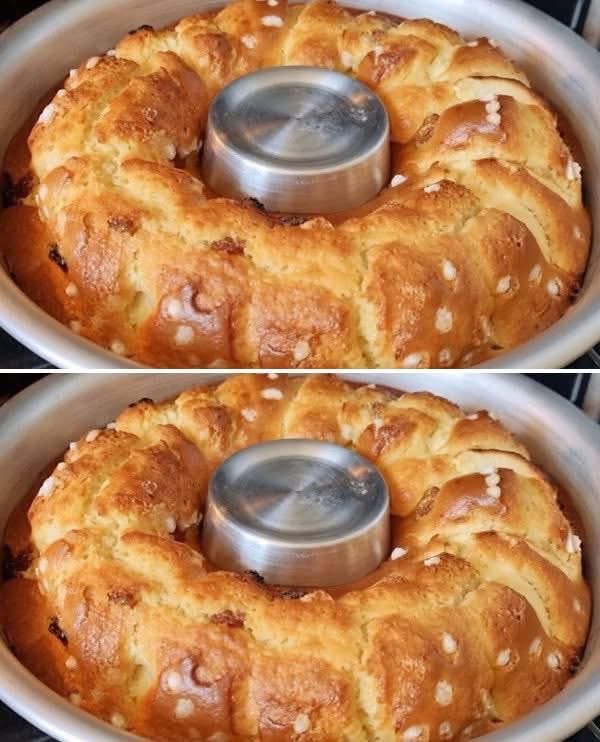
Ingredients for the Perfect Brioche Crown
For the dough:
- 500 g all-purpose flour or bread flour
- 80 g granulated sugar
- 10 g dry yeast (or 25 g fresh yeast)
- 200 ml warm milk
- 3 medium eggs (room temperature)
- 100 g unsalted butter (softened to room temperature)
- 1 tsp vanilla extract
- 1 pinch of salt
For decoration & finishing:
- 1 egg yolk
- 2 tbsp milk
- Pearl sugar (for topping — as shown in the image)
Optional additions (for flavor variations):
- Chocolate chips
- Raisins soaked in warm water
- Orange zest
- Cinnamon
- Custard filling
- Nutella swirl
Making the Dough: Step-by-Step
The secret to perfect brioche is proper gluten development and slow addition of butter. The dough should be soft, elastic, and slightly sticky — not dry.
1. Activate the yeast
Warm the milk gently until it is lukewarm, not hot. A temperature between 35–40°C is perfect. Add a teaspoon of sugar and the yeast, mix lightly, and let it rest for 5–10 minutes. You’ll know it’s ready when it becomes foamy — a sign that the yeast is active.
2. Mix the dry ingredients
In a large bowl, add the flour, sugar, and salt. Mix well so the salt and sugar are distributed evenly.
3. Add the eggs and yeast mixture
Create a well in the center of the flour. Add the eggs and the activated yeast mixture. Start mixing with a wooden spoon or a dough hook attachment if you’re using a stand mixer.
4. Knead until the dough begins forming
Once the dough starts to come together, begin kneading. If using a mixer, set it on medium speed. Kneading helps develop gluten, which is what gives brioche its airy and stretchy texture.
5. Add the butter slowly
This is the key step. Add the soft butter in small portions, allowing each piece to fully incorporate before adding more.
Never add all the butter at once — it will ruin the texture.
After adding all the butter, continue kneading for 10–12 minutes until the dough becomes smooth, shiny, and elastic.
6. First rise (1–2 hours)
Place the dough in a lightly oiled bowl, cover with plastic wrap or a clean cloth, and let it rise in a warm space until doubled in size. Depending on the room temperature, this takes 1 to 2 hours.
If your kitchen is cold, place the bowl inside the oven with only the oven light on — not the heat.
Shaping the Brioche Crown
Once the dough has doubled, gently punch it down to release air. The crown shape in your picture is formed by dividing the dough into small pieces and arranging them in a circle.
1. Divide the dough
Cut the dough into 12 to 16 equal pieces, depending on the size you want. Roll each piece into a smooth ball.
2. Prepare the mold
Use a ring mold or a bundt mold like the one in your image. Lightly butter it so nothing sticks.
3. Arrange the balls
Place all the dough balls around the mold, forming a circular crown. They should fit snugly but not be smashed together — they will expand during rising.
4. Second rise (45–60 minutes)
Cover the mold and let the shaped dough rise again until visibly puffy and almost doubled.
This second rise gives the brioche its signature fluffy texture.
Finishing and Baking
1. Prepare the egg wash
Mix the egg yolk with the milk. Brush the entire surface of the brioche gently. This is what gives the bread its golden, shiny crust.
2. Add the pearl sugar
Sprinkle generously on top — it gives a beautiful bakery-style look exactly like the image you uploaded.
3. Bake
Bake in a preheated oven at 180°C (350°F) for 25–35 minutes, depending on oven strength and mold size.
The top should be beautifully golden, and the bottom should sound hollow when tapped.
If the top browns too quickly, cover with foil for the last 10 minutes of baking.
Cooling and Serving
Let the brioche cool in the mold for 10 minutes, then transfer to a cooling rack.
Serve warm or at room temperature.
It pairs perfectly with:
- Honey
- Butter
- Jam
- Chocolate spread
- Coffee or tea
The interior will be soft, airy, and lightly sweet — the perfect brioche texture.
Tips for Success (Important for Bakery Results)
- Use room-temperature butter and eggs.
Cold ingredients prevent proper dough development. - Do not rush the kneading.
Good gluten development = soft, stretchy brioche. - Do not add too much flour.
The dough should remain a bit sticky — resist the temptation to add flour. - Be patient with rising times.
Brioche needs time because it is rich with butter and eggs. - For extra softness:
Add 1 tablespoon of milk powder or 1 tablespoon of honey to the dough. - For flavor boosts:
Add vanilla, orange zest, or a bit of almond extract.
Storage
This brioche stays soft for 3–4 days if stored in an airtight container.
To warm it up, microwave for 10 seconds or heat in the oven for 5 minutes.
You can also freeze slices individually and thaw them whenever you want a warm, fresh brioche