Ingredients
For the Cake Batter
- 1 cup (225 g) unsalted butter, softened
- 1 cup (200 g) granulated sugar
- 4 large eggs, room temperature
- 1 ½ cups (190 g) all-purpose flour
- 1 ½ teaspoons baking powder
- ½ teaspoon salt
- ½ cup (120 ml) milk
- 1 tablespoon vanilla extract
For the Condensed Milk Topping
- 1 can (395 g) sweetened condensed milk
- 2 tablespoons melted butter
- 1 teaspoon vanilla extract
Preparing the Batter
The secret to this cake lies in the creaming method. Proper creaming builds air inside the batter, making the cake rise beautifully and giving it a light yet rich crumb.
Creaming the Butter and Sugar
Start by placing your softened unsalted butter into a large mixing bowl. Using a hand mixer or stand mixer, beat the butter for 1–2 minutes until it becomes pale, fluffy, and smooth.
Next, gradually add the granulated sugar. Continue beating for at least 3–4 minutes. This step is essential for creating a soft cake: the sugar crystals help aerate the butter, trapping tiny air bubbles that make the cake rise.
Adding the Eggs One at a Time
Add the eggs one by one, beating well after each addition. This prevents the batter from curdling and ensures a stable emulsion.
Once all eggs are incorporated, mix in the vanilla extract. Your batter should now be glossy, thick, and well blended.
Mixing the Dry Ingredients
Combining the Flour, Salt, and Baking Powder
In a separate bowl, whisk together the all-purpose flour, baking powder, and salt. This simple step ensures that the leavening agent is evenly distributed throughout the cake, preventing flat spots or uneven rising.
Incorporating Dry Ingredients with the Wet
Add half of the dry mixture into the butter mixture and beat on low just until combined. Avoid overmixing at this stage.
Pour in the milk and gently mix.
Finish with the remaining flour mixture. Fold until the batter is smooth and no streaks of flour remain.
The batter will be thick, creamy, and lightly fragrant with vanilla — exactly what you want.
Preparing the Baking Dish
Greasing the Pan
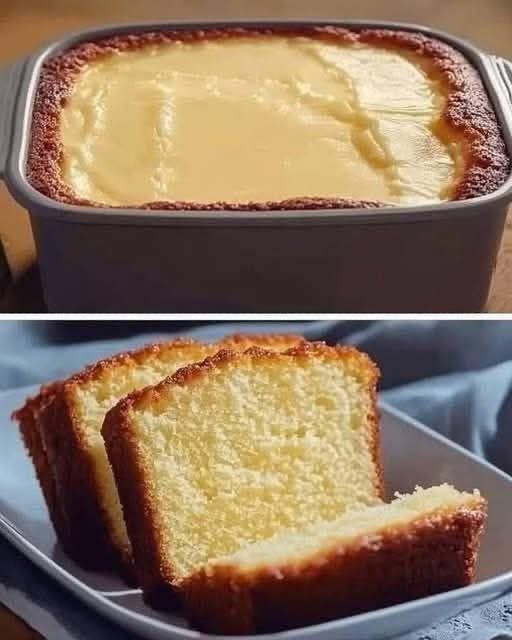
Use a deep baking dish or loaf pan (the one in your image appears to be 9×9 or similar). Grease it generously with butter and dust lightly with flour, or use parchment paper. This prevents sticking, especially since the cake is dense and moist.
Pouring in the Batter
Spread the batter evenly in the pan with a spatula. Try to level the top so it bakes uniformly.
Creating the Condensed Milk Layer
Mixing the Topping
In a bowl, whisk together:
- sweetened condensed milk
- melted butter
- vanilla extract
This topping adds an incredible creamy layer that caramelizes slightly during baking, giving the cake its smooth, glossy top.
Adding It Over the Batter
Gently pour the condensed milk mixture over the cake batter. Spread it evenly.
Don’t worry if it seems like a lot — it will gradually bake into a custard-like layer while still leaving a beautiful topping.
Baking the Cake
Time and Temperature
Bake the cake in a preheated oven at 350°F (175°C) for 45–55 minutes.
How to Know It’s Done
Because of the condensed milk layer, the cake won’t pass the typical toothpick test. Instead, look for:
- golden brown edges
- set center (no longer liquid)
- slightly caramelized top
The condensed milk layer creates a glossy, creamy upper crust that remains soft even when the cake is fully baked.
Cooling and Slicing
Once removed from the oven, place the pan on a cooling rack and let the cake rest for 20–30 minutes.
This step is crucial because the cake needs to firm up before slicing.
Cut into thick slices once completely cooled or slightly warm.
You’ll notice a beautiful contrast:
- A dense, buttery crumb base
- A creamy, custard-like top layer of condensed milk
Serving Suggestions
With Tea or Coffee
This cake pairs perfectly with hot drinks. Its rich texture is especially good with strong coffee or black tea.
As a Dessert
Serve warm slices with:
- whipped cream
- fresh berries
- caramel drizzle
- vanilla ice cream
As a Breakfast Treat
Its dense, milk-infused sweetness makes it perfect for mornings.
Tips for Perfect Results
Use Room-Temperature Ingredients
Butter and eggs must be soft and warm enough to blend properly. Cold ingredients cause dense, uneven cakes.
Do Not Overmix
Overmixing flour activates gluten, making the cake tough. Mix only until combined.
Do Not Overbake
Too much time in the oven dries the bottom layer. Remove as soon as the center is set.
Use Quality Vanilla
Vanilla carries the entire aroma of this cake. A good extract makes a huge difference.
Variations
Coconut Condensed Milk Cake
Add ½ cup shredded coconut to the batter.
Lemon Condensed Milk Cake
Add zest of 2 lemons and replace vanilla in the topping with lemon juice.
Chocolate Condensed Milk Cake
Add ¼ cup cocoa powder to the dry ingredients.
Orange Blossom Version
Add a splash of orange blossom water for a Middle Eastern twist.
Storage
Room Temperature
Keeps for 3 days in an airtight container.
Refrigerator
Stays fresh for up to 1 week. The topping firms up beautifully when cold.
Freezer
Slices freeze wonderfully for up to 2 months.
Conclusion
This condensed milk butter cake is more than just a recipe — it’s a comfort dessert, a nostalgic flavor, and a rich, satisfying treat that pleases every crowd. Its creamy layer, buttery crumb, and fragrant vanilla aroma make it unforgettable. Whether you serve it warm, cold, plain, or dressed up with toppings, this cake delivers perfect flavor every time.