Ingredients
For the Dough
- 4 cups all-purpose flour (approx. 500 g)
- 3 tablespoons sugar
- 1 teaspoon salt
- 2 ¼ teaspoons active dry yeast (1 packet)
- 1 cup warm milk (not hot, about 40°C / 104°F)
- ¼ cup warm water
- 1 large egg (room temperature)
- 4 tablespoons unsalted butter, softened
Optional (for extra softness)
- 2 tablespoons dry milk powder
- 1 tablespoon vegetable oil
For Brushing
- 2 tablespoons melted butter or milk (for a shiny golden top)
Instructions
1. Activate the Yeast
In a small bowl, mix the warm water, a teaspoon of sugar, and the yeast. Let it sit for 5–10 minutes until foamy. If it doesn’t foam, your yeast may be expired or the water was too hot or too cold.
2. Prepare the Dry Ingredients
In a large mixing bowl, whisk together:
- Flour
- Sugar
- Salt
- Milk powder (if using)
Make a well in the center.
3. Add Wet Ingredients
Pour in the warm milk, egg, and the activated yeast mixture. Begin mixing with a spatula or your hands until the dough starts coming together.
4. Add the Butter
Once the dough is shaggy and half mixed, add the softened butter. This step makes the dough extremely soft and flexible.
Knead for 10–12 minutes by hand, or 8 minutes in a stand mixer with a dough hook. The dough should become:
- Smooth
- Elastic
- Slightly tacky but not sticky
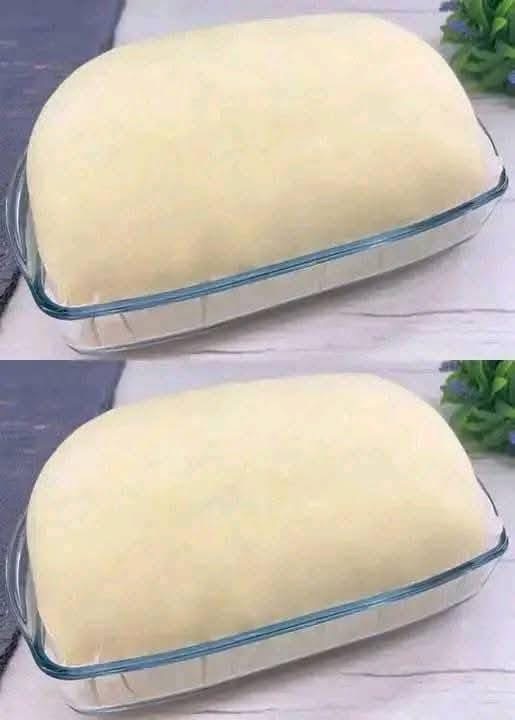
- Very soft (like the dough in the picture)
If the dough feels too sticky, add 1–2 tablespoons of flour, but avoid adding too much.
5. The First Rise (Proofing)
Place the dough into a lightly greased bowl and cover with plastic wrap or a towel.
Let it rise in a warm place for 1 to 1.5 hours, or until it doubles in size—this is the stage shown in your picture.
Signs your dough is perfectly risen:
- Puffy and domed
- Very soft to the touch
- Expanded evenly
- Leaves a dent when pressed gently with your finger
6. Punch Down & Shape
Punch down the dough gently to release gas. Depending on what you want to make, you can:
For a loaf:
Shape into a rectangle, roll it up tightly, and place into a greased loaf pan.
For dinner rolls:
Divide into 12–16 equal balls and place them into a baking dish.
For buns:
Shape into large round balls and place spaced on a baking tray.
7. Second Rise
Cover again and let rise for 30–45 minutes. The dough should puff up again and nearly double in size.
8. Bake
Preheat the oven to 175°C (350°F).
Depending on your shape:
- Loaf: 25–30 minutes
- Rolls: 18–22 minutes
- Buns: 15–18 minutes
Bake until:
- The top is golden
- It sounds hollow when tapped
- It smells buttery and sweet
9. Brush with Butter
While still hot, brush the top with melted butter for a glossy finish and extra softness.
Important Tips for Perfectly Soft Dough
Use Warm Liquids
Too hot kills yeast; too cold slows rising. Aim for 37–40°C (98–104°F).
Don’t Rush Proofing
The dough in your picture rose beautifully because it had time to expand. Always allow enough rising time.
Your Dough Should Be Soft
A slightly sticky dough creates the softest bread. Avoid adding too much flour.
Room Temperature Ingredients
Cold ingredients slow down yeast activity and hinder gluten development.
Proper Kneading
The dough should stretch without tearing—a sign that gluten is developed.
Variations
Sweet Milk Bread
Add 2 more tablespoons of sugar and a teaspoon of vanilla.
Herb and Butter Rolls
Add garlic powder, parsley, or oregano to the dough.
Brioche-Style
Increase butter to 6 tablespoons and sugar to 4 tablespoons.
Whole Wheat Version
Replace 1 cup of all-purpose flour with whole wheat flour.
Storing Your Bread
- Room temperature: 3–4 days in an airtight container
- Freezer: Freeze dough balls or baked bread up to 2 months
- Reheating: 10 seconds in the microwave makes it fluffy again
Why This Dough Works So Well
This dough is rich with milk, butter, and egg, giving it:
- A tender crumb
- Fluffy rise
- Beautiful golden color
- Bakery-style softness
- Smooth surface just like the one in your photo