Ingredients
For the Cheesecake Batter
- 250 g soft cream cheese
- 3 large eggs (room temperature)
- 200 ml milk
- 40 g butter
- 80 g sugar
- 40 g cornstarch
- 1 teaspoon vanilla extract
- A pinch of salt
For Finishing
- Powdered sugar for dusting
Prepare the Batter
The secret to a perfectly smooth milk cheesecake lies in temperature control. The cream cheese, milk, and eggs must be at room temperature so they combine into a silky mixture with no lumps.
Start by placing the cream cheese in a bowl and soften it with a whisk or spatula until creamy. In a small pot, warm the milk and butter together until the butter melts completely. Pour this warm mixture over the cream cheese in several additions, stirring slowly to create a smooth, shiny base. The warmth helps dissolve any remaining bits of cheese.
Next, add the sugar and vanilla extract, mixing until everything is fully incorporated. One by one, whisk in the eggs. Adding them slowly prevents the mixture from curdling and ensures a velvety consistency. When all the eggs are incorporated, sift the cornstarch over the mixture. This extra step is key to avoiding lumps and keeping the texture silky. Whisk gently until smooth and well-combined.
The batter should be thin, glossy, and completely lump-free, like a rich custard. If you want an absolutely perfect texture, you may strain the mixture through a fine sieve—this is what many professional bakers do.
Prepare the Baking Pan
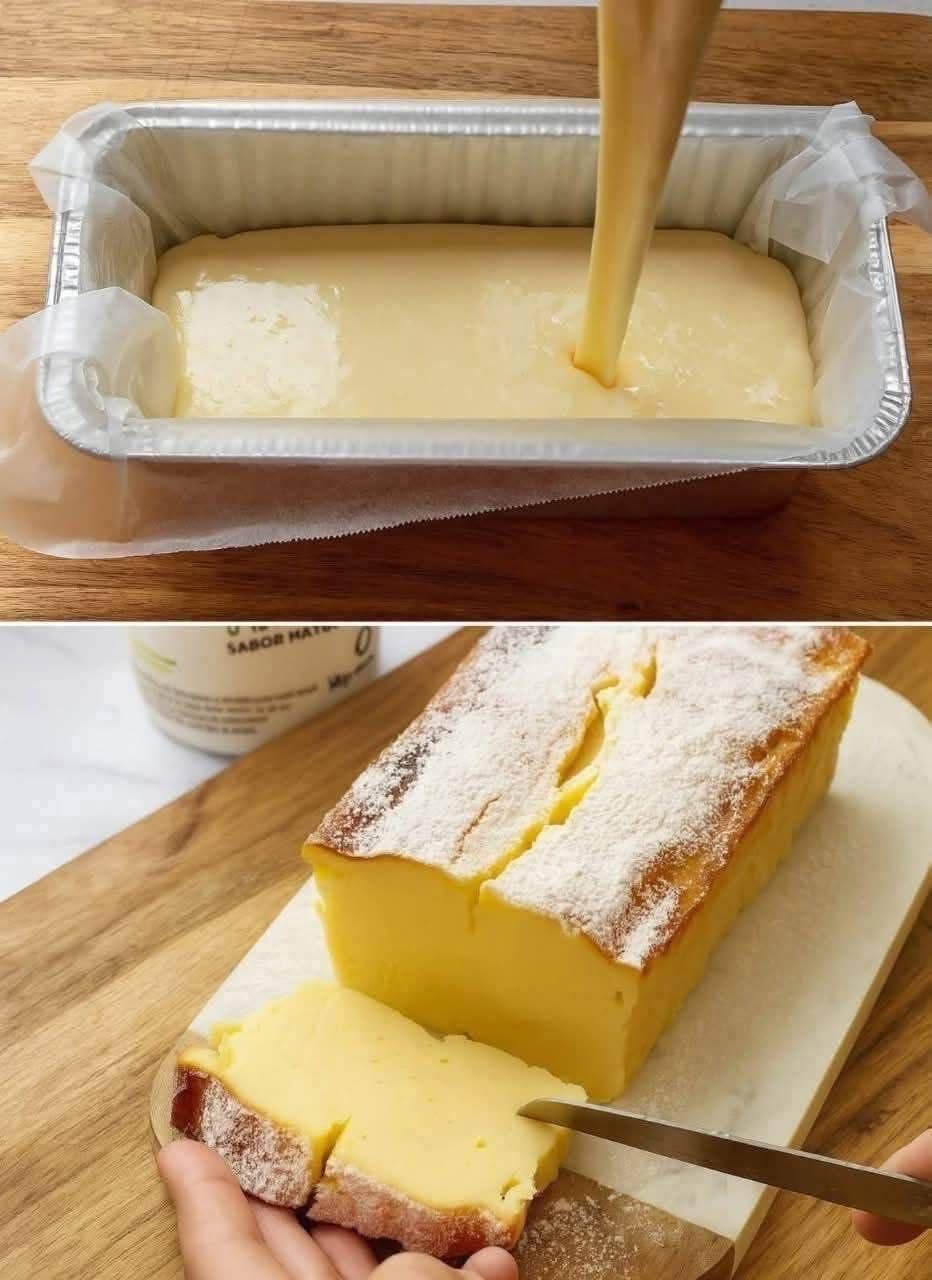
Line a loaf pan with parchment paper. Allow extra paper to hang over the sides—this makes it easier to lift the cake out later. Pour the batter into the pan, letting it settle naturally. Tap the pan lightly several times to remove any air bubbles.
To bake this cheesecake properly, you’ll need the gentle, even heat of a water bath. Place your loaf pan inside a larger baking dish. Fill the larger dish with hot water halfway up the sides of your loaf pan. This prevents the cheesecake from cracking too deeply and keeps the texture creamy rather than dry.
Baking
Preheat your oven to 160°C (320°F). Bake the cheesecake in its water bath for about 55–70 minutes, depending on your oven and pan size. The top should turn lightly golden, with soft cracks forming naturally as it rises. The cake will jiggle slightly in the center when it’s done—this is exactly what you want.
Don’t overbake. Overbaking makes the texture dense and removes the creamy softness that defines this cake.
Cooling Process
Once the cheesecake is baked, turn off the oven and open the door slightly, letting it cool gradually for 10 minutes. Sudden temperature changes cause dramatic cracking or sinking, so gentle cooling is important.
Remove the cake from the water bath and place it on a rack. Allow it to cool completely before removing it from the pan. As the cheesecake cools, it will settle slightly and develop that beautiful soft crack on top, just like in the picture.
Dust the top generously with powdered sugar before serving.
Serving & Texture
This milk cheesecake is incredibly moist and creamy. The texture is somewhere between custard, soufflé, and cheesecake—light, silky, and absolutely addictive. When sliced, the interior is smooth and soft, yet firm enough to hold its shape.
Serve it chilled for a firmer, creamier bite or warm for a softer, melt-in-your-mouth texture.
Tips for Success
Use room-temperature ingredients
Cold eggs or cheese make the batter lumpy.
Bake in a water bath
This is essential for creaminess and prevents cracking.
Don’t overmix after adding cornstarch
Too much mixing activates the starch and can make the cake rubbery.
Do not skip slow cooling
The gradual cooling keeps the cake from collapsing.
Strain the batter
Optional, but it gives a professional finish.
Variations
Lemon Milk Cheesecake
Add lemon zest and 2 tablespoons lemon juice.
Vanilla Bean Cheesecake
Use real vanilla bean seeds for stronger aroma.
Chocolate Milk Cheesecake
Stir in 50 g melted white chocolate for a richer flavor.