The Spirit of the Dish
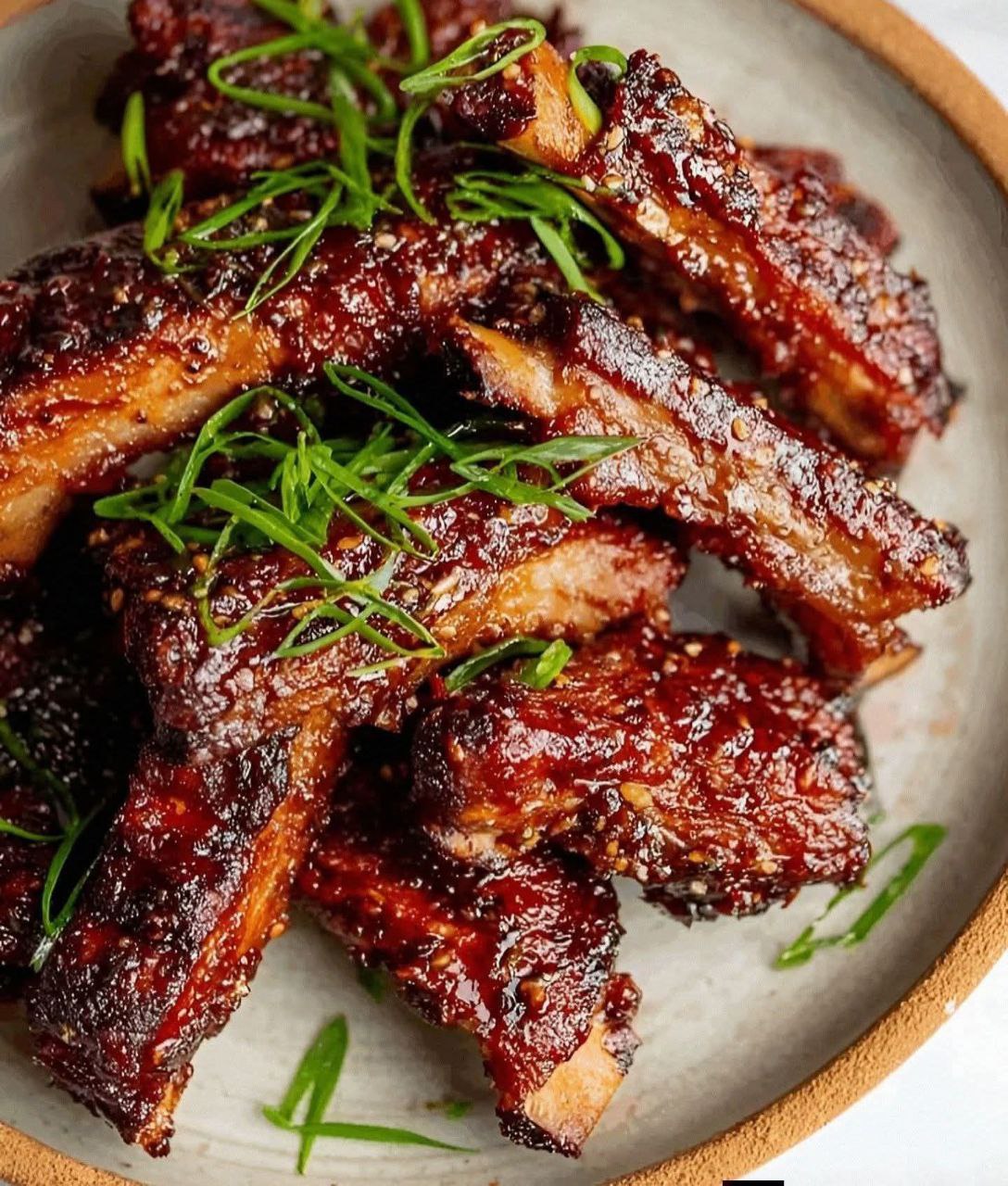
Korean cuisine thrives on balance: sweet against spicy, savory against tangy, tender meat against crisp edges. Yangnyeom-style ribs are the perfect example. Pork ribs are slow-cooked until tender, then glazed in a sauce that clings to every surface—sweet from sugar or honey, spicy from gochujang (fermented chili paste), aromatic from garlic and ginger.
The first time I made these, I underestimated the sauce. I brushed it on lightly, thinking it would be enough. The flavor was good, but the ribs lacked that sticky, lacquered finish. The second time, I basted generously, layering sauce as the ribs cooked. The glaze built up, caramelized, and transformed the ribs into something irresistible. That’s the secret: patience and layering.
Ingredients
For the Ribs:
- 3 lbs pork ribs (baby back or spare ribs)
- 1 tablespoon salt
- 1 teaspoon black pepper
- 1 tablespoon rice wine (mirin or sake)
For the Yangnyeom Sauce:
- 3 tablespoons gochujang (Korean chili paste)
- 2 tablespoons soy sauce
- 2 tablespoons honey (or brown sugar)
- 1 tablespoon rice vinegar
- 2 tablespoons sesame oil
- 4 cloves garlic, minced
- 1 tablespoon ginger, grated
- 1 tablespoon gochugaru (Korean chili flakes, optional for extra heat)
- 2 tablespoons ketchup (for tang and body)
For Garnish:
- Toasted sesame seeds
- Sliced scallions
- Fresh chili slices (optional)
Equipment
- Large pot for parboiling ribs
- Baking sheet or grill
- Saucepan for glaze
- Tongs and brush for basting
Step-by-Step Method
Step 1: Prep the Ribs Rinse ribs, pat dry, season with salt, pepper, and rice wine. Let sit 30 minutes. 👉 Why: Rice wine tenderizes and removes strong pork aroma.
Step 2: Parboil Place ribs in pot of boiling water, simmer 20 minutes. Skim foam. Drain and pat dry. 👉 Why: Parboiling removes excess fat and impurities, ensuring clean flavor.
Step 3: Make the Sauce In saucepan, combine gochujang, soy sauce, honey, vinegar, sesame oil, garlic, ginger, gochugaru, and ketchup. Simmer 5–7 minutes until thick and glossy. 👉 Visual cue: Sauce should coat spoon, not runny.
Step 4: Roast or Grill the Ribs Preheat oven to 375°F (190°C) or grill to medium heat. Arrange ribs on baking sheet. Brush with sauce. Roast 25 minutes, basting every 10 minutes. 👉 Why: Layering sauce builds sticky glaze.
Step 5: Finish with High Heat Increase oven to 425°F (220°C) or sear on grill. Cook 5–10 minutes until edges caramelize. 👉 Visual cue: Sauce bubbling, ribs slightly charred.
Step 6: Garnish and Serve Sprinkle sesame seeds, scallions, and chili slices. Serve hot with rice, kimchi, or lettuce wraps.
Mistakes to Avoid
- Skipping parboil: Ribs may taste greasy.
- Thin sauce: Always reduce until thick.
- Not basting enough: Flavor won’t build.
- Overcooking at high heat: Sauce can burn; watch closely.
Variations
- Use chicken wings instead of ribs.
- Add pear puree for sweetness (traditional Korean touch).
- Swap honey for corn syrup for shinier glaze.
- Make it smoky: grill over charcoal.
Storage
- Refrigerate ribs up to 3 days.
- Reheat in oven with foil to keep moist.
- Freeze cooked ribs up to 2 months; thaw and reheat with fresh glaze.
Serving Suggestions
Pair with steamed rice, kimchi, pickled radish, or lettuce wraps. For drinks, Korean beer or soju balances spice. Even iced barley tea works beautifully.
Reflection
Cooking these ribs is about rhythm: parboil, glaze, roast, baste, caramelize. The kitchen fills with aromas—garlic, sesame, chili, caramelized pork. When you plate them, you see abundance: glossy ribs stacked high, sesame seeds catching the light, scallions adding freshness. It’s indulgent, communal, and deeply satisfying.
Cultural Context & Expansion
Yangnyeom means “seasoned” in Korean, and it’s a cornerstone of Korean barbecue. Unlike plain grilled meats, yangnyeom dishes are marinated or glazed, layered with flavor. Pork ribs in this style echo the communal spirit of Korean dining—meat shared at the table, eaten with hands, paired with side dishes (banchan).
This dish reflects Korean culinary philosophy: balance of flavors, respect for ingredients, and joy in sharing. It’s not just food; it’s culture on a plate.
Pairings & Feast Ideas
Serve ribs with japchae (glass noodles), kimchi pancakes, or scallion salad. Add rice cakes (tteok) for chewy contrast. For a feast, set the table with banchan: pickled radish, seasoned spinach, bean sprouts, and kimchi.
Final Thoughts
Korean Sweet & Spicy Pork Ribs (Yangnyeom Style) are more than a recipe—they’re an experience. Sticky, spicy, sweet, savory, they embody the boldness of Korean cuisine. They demand patience, but reward you with flavor that lingers.
Every bite delivers contrast: tender meat, sticky glaze, nutty sesame, fresh scallion. It’s indulgent yet balanced, fiery yet comforting. Once you make them, you’ll see why they’re worth the effort.