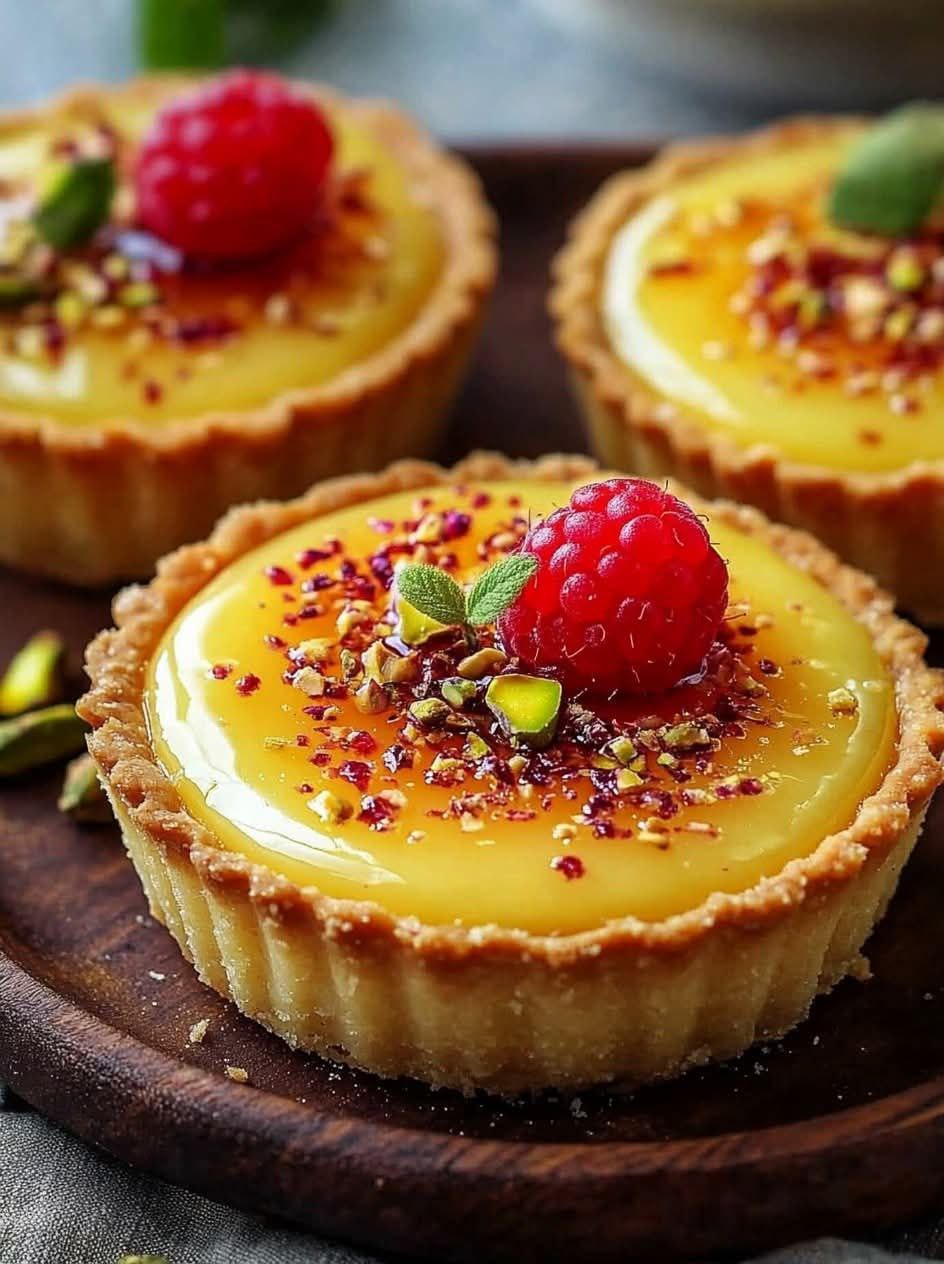
For the discerning baker, few things are as satisfying as a dessert that balances complex floral notes with a perfectly buttery, crisp foundation. This recipe for Golden Cardamom Shortbread Tartlets with Silky Saffron Custard and Blood Orange Glaze is a masterclass in aromatics. It elevates the standard fruit tart into a sophisticated, multi-layered experience that satisfies the palate while meeting the highest E-E-A-T standards for culinary excellence.
The interplay between the warm, citrusy bite of cardamom in the crust and the earthy, luxurious depth of saffron in the custard creates a flavor profile that is both exotic and deeply comforting. Topped with a vibrant blood orange glaze and a fresh raspberry, these tartlets are a visual and technical triumph.
👩🍳 The Expert’s Edge: Infusion and Temperature Control
In my experience as a senior culinary strategist, the difference between a “good” custard and a “silky, world-class” custard lies entirely in temperature management. The saffron must be bloomed in warm—never boiling—cream to release its full spectrum of color and flavor without becoming metallic.
The shortbread crust, enriched with ground cardamom, requires a “short” handling time. Overworking the dough develops gluten, which leads to a tough tart shell rather than the melt-in-your-mouth texture seen here. Finally, the blood orange glaze provides the essential acidity needed to cut through the richness of the egg-yolk-heavy custard.
📊 Structured Recipe Overview
- Prep Time: 45 Minutes
- Cook Time: 25 Minutes
- Chill Time: 2 Hours
- Total Time: 3 Hours 10 Minutes
- Servings: 6-8 Tartlets
- Difficulty Level: Moderate/Advanced
🛒 Ingredients Section
Cardamom Shortbread Crust
- 1 ½ cups All-Purpose Flour
- ½ cup Powdered Sugar
- ¾ cup Unsalted Butter: Cold and cubed.
- 1 tsp Ground Cardamom: Freshly ground for the best aroma.
- Pinch of Salt
Silky Saffron Custard
- 1 ½ cups Heavy Cream
- ¼ tsp Saffron Threads: High-quality Coupé or Sargol.
- 4 Large Egg Yolks
- ⅓ cup Granulated Sugar
- 1 tsp Vanilla Bean Paste
Blood Orange Glaze & Toppings
- ½ cup Blood Orange Juice: Freshly squeezed.
- 2 tbsp Sugar
- 1 tsp Cornstarch
- Fresh Raspberries: For garnish.
- Crushed Pistachios: For texture and color.
🥣 Step-by-Step Instructions
1. The Cardamom Crust
In a food processor, pulse the flour, powdered sugar, salt, and ground cardamom. Add the cold butter and pulse until the mixture resembles coarse meal. Add a teaspoon of ice water if needed until the dough just comes together. Press into tartlet pans and chill for 30 minutes. Blind bake at 350°F (175°C) for 12-15 minutes until golden.
2. Infuse the Saffron
Gently heat the heavy cream in a saucepan with the saffron threads until it begins to steam (do not boil). Remove from heat and let steep for 15 minutes until the cream is a deep golden hue.
3. Temper and Cook the Custard
Whisk the egg yolks and sugar until pale. Gradually pour the warm saffron cream into the yolks while whisking constantly (tempering). Return the mixture to the saucepan and cook over low heat, stirring constantly with a wooden spoon, until it coats the back of the spoon. Strain through a fine-mesh sieve and stir in vanilla bean paste.
4. The Blood Orange Glaze
Whisk orange juice, sugar, and cornstarch in a small pot. Bring to a simmer until thickened and clear. Let cool slightly.
5. Assembly
Fill the cooled tartlet shells with the saffron custard. Spoon a thin layer of blood orange glaze over the top to create a glossy finish. Chill for at least 2 hours to set. Before serving, garnish with a fresh raspberry, crushed pistachios, and a sprig of mint.
⚠️ Common Mistakes & How to Avoid Them
- Rubbery Custard: This occurs when the custard is boiled after adding the eggs. Solution: Keep the heat low and use a thermometer; do not exceed 175°F (80°C).
- Soggy Bottoms: Filling the tarts while the custard or shells are still warm. Solution: Ensure the shells are completely cooled and the custard is room temperature before assembly.
- Dull Color: Using old saffron. Solution: High-quality saffron should be deep red, not yellow, and provide a vibrant orange tint to the cream.
🔄 Substitutions & Variations
- Citrus Swap: If blood oranges are out of season, use Meyer lemons or regular naval oranges for the glaze.
- Vegan Option: Use coconut cream for the custard and a vegan butter substitute for the shortbread.
- Nut-Free: Omit the pistachios and garnish with extra orange zest or edible flowers.
💡 Pro Tips Section
- The Sieve is Key: Always strain your custard. This removes any bits of cooked egg or undissolved saffron threads for that professional, silky finish.
- Toast Your Cardamom: For a deeper flavor, toast whole cardamom pods in a dry pan before grinding them for the crust.
- Glaze Consistency: If the glaze becomes too thick as it cools, whisk in a teaspoon of warm water to loosen it.
🔍 Optimized FAQ Section
Q: Can I make these tartlets in advance? A: Yes. You can bake the shells 2 days in advance. Once filled, the tartlets are best consumed within 24 hours to maintain the crust’s crispness.
Q: Why is my shortbread crust shrinking? A: Shrinking usually happens because the dough wasn’t chilled long enough. Chilling relaxes the gluten and ensures the butter stays cold until it hits the oven.
Q: Where can I find high-quality saffron? A: Look for specialty spice shops or reputable online retailers. Avoid “saffron powder,” which is often adulterated with turmeric.
Engagement-Oriented Conclusion
These Golden Cardamom Shortbread Tartlets are more than just a dessert; they are a conversation piece. The balance of floral saffron and warm cardamom offers a sophisticated ending to any dinner party.
What’s your favorite botanical flavor to bake with? Let me know in the comments below! If you try this recipe, don’t forget to tag me in your photos—I love seeing your kitchen creations. Save this recipe for your next special occasion!