In the grand hierarchy of desserts, the Banana Cream Cheesecake represents a sophisticated evolution of the classic banana pudding. While the Banana Muffins offer a rustic, morning-friendly comfort and the Banana Cottage Cheese Pancakes lean into protein-packed functionality, this cheesecake is a pure celebration of decadence.
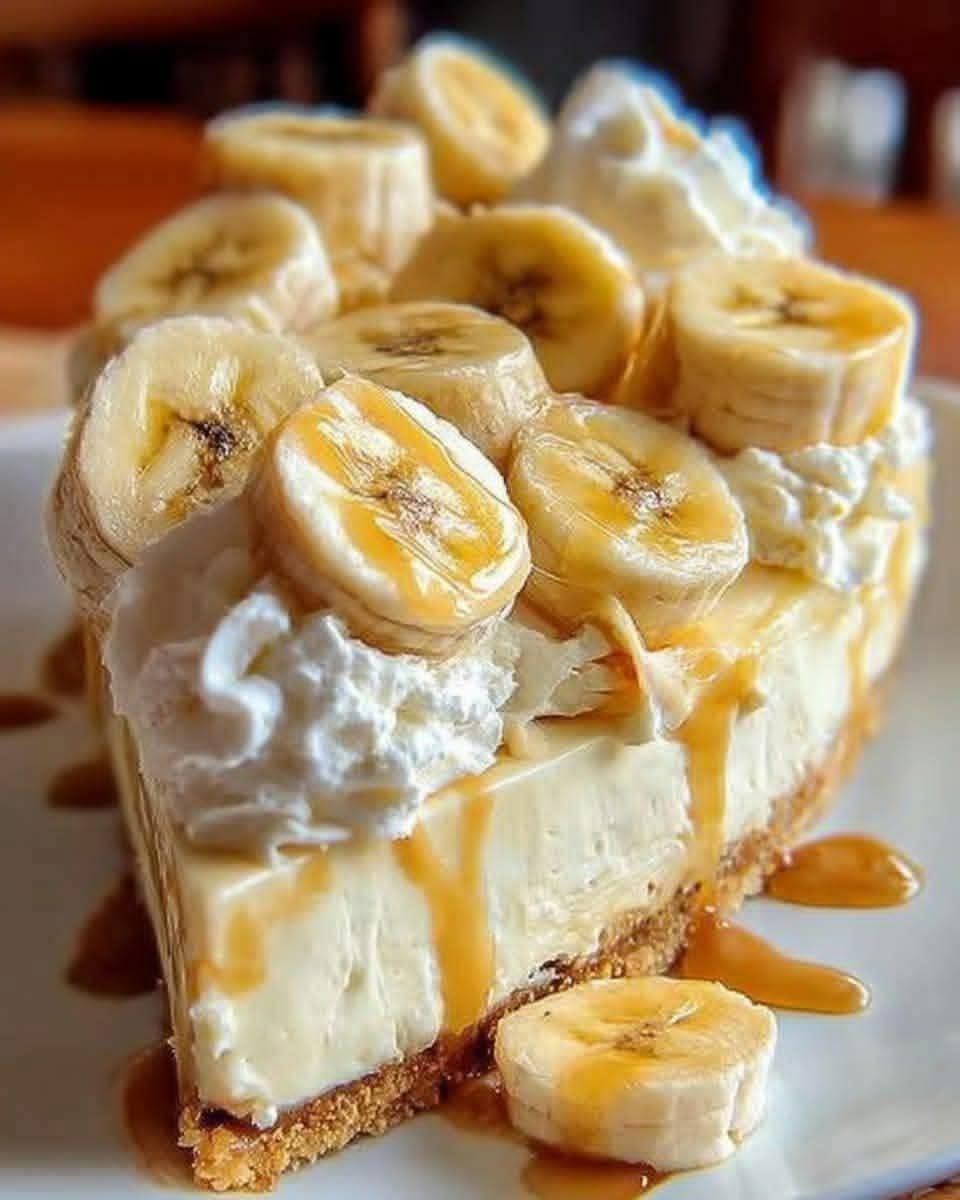
The featured image showcases a slice that is a study in textural contrast: a crisp, buttery graham cracker base, a dense and velvety cheesecake body, a cloud-like topping of whipped cream, and a crown of fresh banana slices drizzled with golden caramel.
1. Visual Anatomy: The Markers of a Professional Cheesecake
Recreating the aesthetic precision seen in the photograph requires attention to the “four pillars” of cheesecake structure:
The Architectural Foundation
- The Crust Ratio: Notice the thickness of the crust relative to the filling. It is thick enough to provide a mechanical “snap” but not so thick that it overpowers the creaminess of the center. The slightly jagged, golden-brown edge suggests a high butter-to-crumb ratio, which is essential for holding the structure without needing flour.
- Edge Definition: The vertical side of the slice is remarkably smooth. This indicates the cheesecake was chilled for at least 6–8 hours and sliced with a hot, clean knife.
The Topping Composition
- Whipped Peak Integrity: The cream topping shows stiff peaks that hold the weight of the fruit. This is likely a stabilized whipped cream, possibly containing a touch of mascarpone or gelatin to maintain its form in a room-temperature setting.
- Fruit Glazing: The banana slices are not just placed; they are layered and glazed with caramel. This glaze serves a dual purpose: it adds a burnt-sugar depth of flavor and prevents the bananas from oxidizing (turning brown) upon contact with the air.
2. Technical Execution: Mastering the Layers
To achieve the “lava-like” smoothness of the filling seen in the image, you must master the science of the dairy emulsion.
Phase 1: The Crust (The Support System)
For a crust that doesn’t crumble, pulse graham crackers with a pinch of salt and melted butter. The “wet sand” texture should be pressed firmly into the pan. Pro Tip: Pre-baking the crust for 10 minutes at 175°C creates a moisture barrier that prevents the cheesecake filling from making the base soggy.
Phase 2: The Filling (The Cream Factor)
Unlike the Banana Muffins which use mashed fruit for texture, a high-end cheesecake uses a banana purée for a uniform, silk-like consistency.
- Room Temperature Ingredients: Cream cheese, eggs, and sour cream must be at room temperature to prevent lumps.
- The Water Bath (Bain-Marie): To prevent the cracks seen in the center of the Chocolate Loaf, the cheesecake must be baked in a water bath. The steam provides gentle, even heat that keeps the protein structures in the eggs from tightening too quickly.
Phase 3: The Assembly (The Finale)
The final assembly, as demonstrated in the photo, should only occur once the cake is fully set.
- The Cream Layer: Pipe or spoon the stabilized whipped cream in generous dollops.
- The Banana Shingles: Slice bananas into even rounds and shingle them atop the cream.
- The Caramel Drizzle: Use a warm (not hot) caramel sauce to create the aesthetic “drips” visible on the side of the slice.
3. Flavor Profiles: Balancing Sweetness and Acidity
A great cheesecake is a balance of “heavy” and “bright” notes:
- The Tang: The cream cheese and a splash of lemon juice provide a necessary acidity that “cuts” through the sugar of the bananas.
- The Depth: Using brown sugar in the crust or a touch of bourbon in the caramel adds a smoky complexity that elevates the simple fruit flavor.
- The Salt Reset: A sprinkle of sea salt on top of the caramel drizzle provides a palate-cleansing contrast, much like the salt balance in Garlic Butter Wings or Steak.
4. Strategic Menu Pairings
This cheesecake is an “event” dessert that works best after a meal with high acidity or spice:
The Savory Precursor
- Spicy Seafood: Following a bowl of Shrimp Pasta or Garlic Butter Shrimp, the cool creaminess of the cheesecake acts as a perfect fire-extinguisher for the palate.
- Herb-Forward Poultry: The banana notes complement the earthiness of the Roasted Chicken with Potatoes or Lemon Garlic Drumsticks.
The Beverage Companion
- Unsweetened Coffee: The bitterness of a dark roast or espresso provides a necessary foil to the caramel and banana.
- Dessert Wine: A late-harvest Riesling or a Sauternes, which often has notes of honey and tropical fruit, would harmonize with the banana profile.
5. FAQ: Perfecting the Banana Cheesecake
How do I keep the bananas from turning brown? As seen in the photo, the bananas are coated in caramel. If you aren’t using caramel, toss the slices in a small amount of pineapple or lemon juice. The acidity denatures the enzymes responsible for browning.
Why is my cheesecake grainy? This is usually caused by over-beating the eggs. Over-beating incorporates too much air, which expands in the oven and then collapses, creating a spongy or grainy texture rather than the dense, velvety crumb shown.
Can I use frozen bananas? For the filling, yes. However, for the topping, you must use fresh, firm-but-ripe bananas. Frozen bananas will become mushy and release too much liquid as they thaw, compromising the whipped cream.
6. Photography Analysis: Creating “Dessert Drama”
The image uses Side Lighting and Selective Focus to make the slice feel immense and appetizing:
- The “Drip” Shot: By capturing the caramel mid-drip on the side, the photographer creates a sense of freshness and immediacy.
- Texture Stacking: The focus is sharpest on the leading edge of the crust and the first banana slice, allowing the eye to travel up the “mountain” of cream.
- Warm Color Palette: The image is dominated by gold, cream, and tan tones, which psychologically signal “warmth” and “richness” to the viewer.