In the landscape of soul-satisfying cuisine, few pairings carry the emotional and culinary weight of Crispy Fried Chicken over Creamy Mac & Cheese. While lighter fare like the Shrimp and Rice Glow Bowl or a Fresh Green Salad serves the need for vitality, this dish is a deliberate embrace of indulgence, designed to offer a symphony of textures—from the jagged, golden crunch of the breading to the velvet-smooth embrace of a multi-cheese sauce.
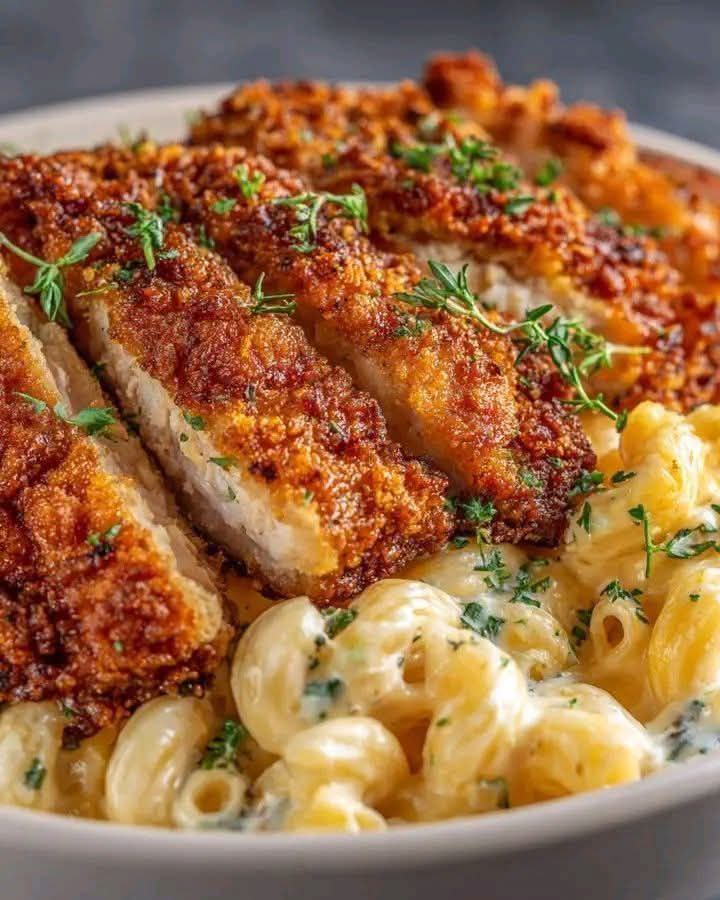
The featured image showcases a masterfully constructed bowl where a thick, panko-crusted chicken cutlet is sliced into uniform strips and laid atop a bed of shell-style pasta, which is practically drowning in a rich, herb-flecked cheese sauce.
1. Visual Anatomy: The Markers of High-Level Comfort
A truly successful version of this dish is identified by the specific visual cues that promise flavor before the first bite is even taken:
The “Glassy” Crunch of the Chicken
- Panko Architecture: The chicken exterior exhibits the characteristic “spiky” texture of panko breadcrumbs. Unlike standard flour dredging seen in Seared Chicken Bites, panko creates a thicker, airier crust that shatters upon impact.
- Uniform Slicing: The cutlet is sliced against the grain into thick, even strips. This not only makes the dish easier to eat but also reveals the juicy, perfectly cooked white meat interior, which contrasts beautifully with the dark golden crust.
- Herb Garnishing: Sprigs of fresh thyme and chopped parsley are scattered across the top. This isn’t just for aesthetics; the volatile oils in the fresh herbs provide a sharp, clean aromatic contrast to the heavy fats of the fried breading.
The Mac & Cheese: A Study in Emulsion
- Pasta Choice: The use of medium-sized shell pasta (Conchiglie) is a strategic choice. The hollow centers and ridged exteriors act as “flavor reservoirs,” capturing the liquid cheese sauce so that every bite is as saucy as the last.
- Sauce Viscosity: The cheese sauce appears glossy and thick, clinging to the pasta without pooling at the bottom. This indicates a well-developed roux and the addition of high-fat cheeses that have been emulsified slowly into the base.
2. Technical Execution: Mastering the Crunch and the Cream
To achieve the restaurant-quality results shown in the image, the cook must navigate two distinct technical processes simultaneously:
Phase 1: The Perfection of the Fry
- The Brine: To ensure the chicken is as moist as that seen in the photo, it should be brined in buttermilk and hot sauce for at least 4 hours.
- The Double-Dredge: For that thick, craggy crust, the chicken is dipped in seasoned flour, then an egg wash, and finally pressed firmly into the panko crumbs.
- Temperature Control: Frying at 175°C ensures the panko turns golden brown at the exact moment the internal temperature of the chicken reaches 74°C.
Phase 2: The Science of the Cheese Sauce
The creamy texture visible in the shells is achieved through a “Mornay” sauce.
- The Roux: Equal parts butter and flour are cooked until the raw flour smell is gone but before it turns brown.
- The Dairy infusion: Whole milk and heavy cream are whisked in gradually to create a smooth Bechamel.
- The Cheese Fold: To get the depth of color seen in the photo, a blend of sharp Cheddar (for flavor), Gruyère (for meltability), and Parmesan (for saltiness) is folded in off the heat to prevent the sauce from breaking.
3. Flavor Profiles: Balancing the Richness
Because this dish is inherently heavy, the successful chef uses “brightness” to prevent palate fatigue:
- The Acid Reset: Hidden within the cheese sauce is often a teaspoon of Dijon mustard or a splash of white wine vinegar. This acidity cuts through the fat of the cheese, making the dish feel lighter than it actually is.
- The “Green” Component: As seen in the photo, fresh thyme and parsley provide a peppery, earthy note that complements the poultry.
- The Panko Seasoning: The breading itself is likely seasoned with smoked paprika, garlic powder, and onion powder, mirroring the flavor profiles found in the Spicy Garlic Butter Shrimp.
4. Strategic Menu Pairings
This dish is a “main event” that requires simple, acidic, or fresh accompaniments to create a balanced meal:
- The Pickled Contrast: A side of pickled red onions or cucumbers provides a sharp, vinegar-forward snap that resets the tongue between bites of the creamy pasta.
- The Veggie Side: A simple Grilled Asparagus or a Fresh Green Salad with a lemon vinaigrette offers a much-needed fibrous crunch to contrast the soft mac and cheese.
- The Beverage: A crisp, cold lager or a sparkling apple cider provides the carbonation necessary to “scrub” the palate of the heavy cheese sauce.
5. FAQ: Perfecting the Fried Chicken Mac
How do I keep the chicken crispy after placing it on the wet pasta? Serve immediately! If the chicken sits on the sauce for too long, the bottom will inevitably soften. To mitigate this, some chefs place a small amount of extra-crisp panko or a “moisture barrier” of fresh herbs between the two layers.
Why is my cheese sauce grainy? This happens when the cheese is added to boiling liquid. To ensure the smooth, liquid gold appearance seen in the image, always remove your sauce from the heat before stirring in the grated cheese.
Can I use chicken thighs instead? While the photo shows a breast cutlet, boneless skinless thighs are a fantastic alternative as they are more forgiving and stay juicier even if slightly overcooked.
6. Photography Analysis: Visualizing “Heavy” Comfort
The image uses Shallow Depth of Field and Close-Up Macro Focus to make the dish feel intimate and irresistible:
- Texture Contrast: By focusing on the jagged edges of the chicken against the smooth curve of the pasta shells, the photographer emphasizes the primary sensory appeal of the dish: the crunch.
- Verticality: The way the chicken is stacked creates height, making the portion look substantial and “chef-driven” rather than just a casual bowl of leftovers.
- Color Saturation: The warm yellows of the cheese and the deep browns of the chicken are balanced by the vibrant green herbs, creating a color palette that signals “freshness” and “warmth” simultaneously.