In the pantheon of comfort food, few combinations command as much respect and anticipation as the pairing of a high-quality, seared protein and a rich, emulsified pasta. While lighter options like the Creamy Shrimp Salad or the Shrimp and Rice Glow Bowl have their place in a balanced diet, the Garlic Butter Steak with Creamy Parmesan Pasta represents a deliberate dive into culinary decadence.
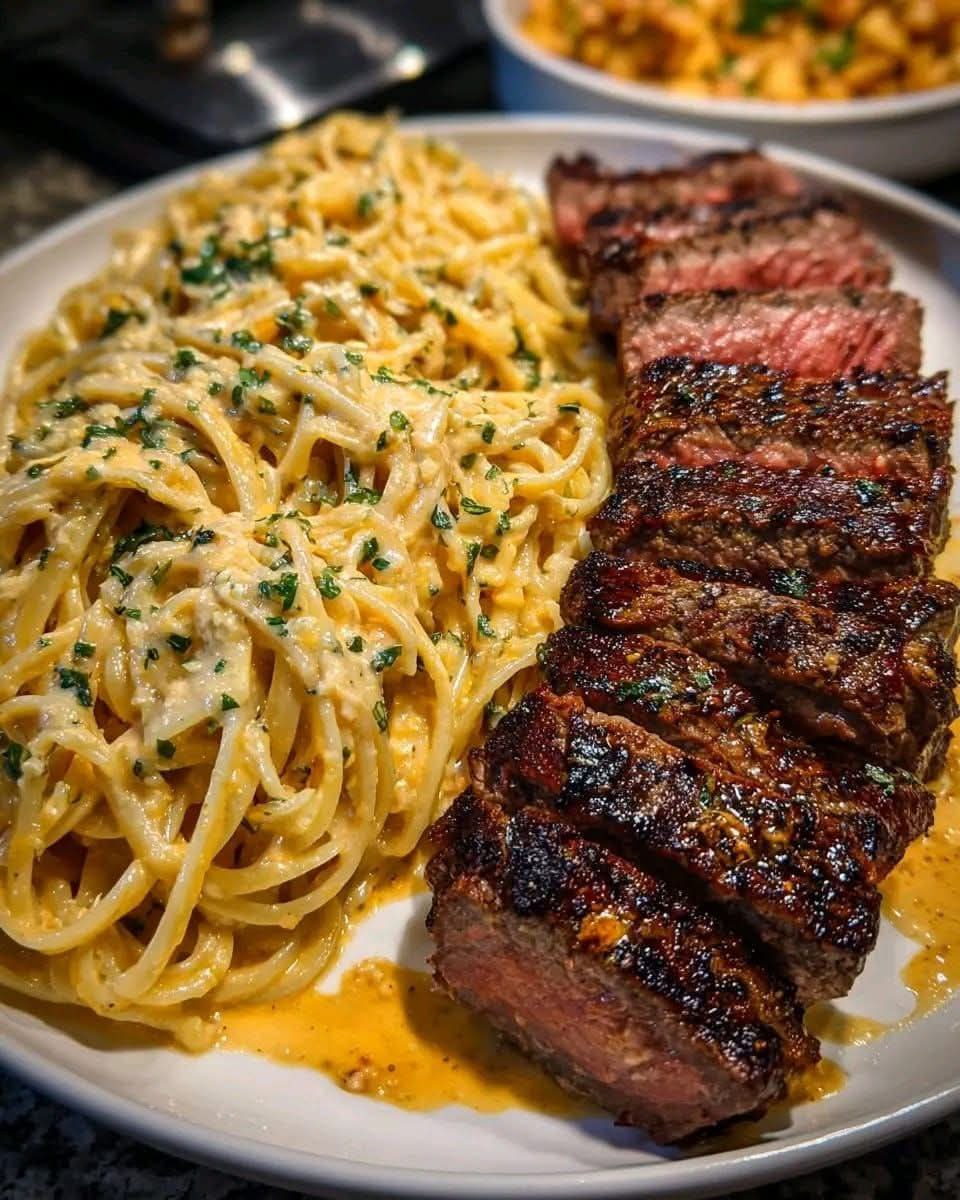
The featured image showcases a masterclass in plating and temperature control: a perfectly rested, medium-rare steak sliced to reveal a vibrant pink center, nestled alongside a swirl of long-strand pasta coated in a shimmering, golden Parmesan sauce.
1. Visual Anatomy: The Markers of Culinary Excellence
Recreating the professional aesthetic seen in the photograph requires an understanding of the visual cues that signal flavor and texture:
The Steak: Maillard Reaction and Rest Time
- The Crust: The exterior of the steak features a deep, mahogany-colored sear. This is the result of the Maillard reaction—a chemical reaction between amino acids and reducing sugars that gives browned food its distinctive flavor.
- The Gradient: Unlike the fully cooked Seared Garlic Butter Chicken Bites, this steak shows a “wall-to-wall” pink interior with minimal grey banding around the edges. This indicates a high-heat sear followed by a lower-temperature finish.
- Juice Retention: The absence of a large pool of blood on the plate suggests the meat was rested for at least 8–10 minutes before slicing, allowing the muscle fibers to reabsorb the juices.
The Pasta: Emulsion and “Silkiness”
- Sauce Adhesion: The Parmesan sauce is not “breaking” or looking oily; instead, it perfectly coats every strand of pasta. This is a visual indicator of a successful emulsion between the pasta water, butter, and cheese.
- Herb Integration: Finely chopped fresh parsley is scattered throughout the pasta and steak. This provides a necessary pop of green and a fresh, peppery finish to cut through the heavy fats.
2. Technical Mastery: The Two-Stage Cook
The success of this dish relies on timing the protein and the starch so they reach their peak simultaneously:
Step 1: The Steak (High-Heat Sear)
To achieve the crust seen in the photo, use a cast-iron skillet heated until it is smoking.
- Dry the Meat: Pat the steak extremely dry with paper towels to prevent steaming.
- The Butter Baste: In the final 2 minutes of cooking, add a large knob of butter, smashed garlic cloves, and fresh thyme. Tilt the pan and spoon the foaming butter over the steak repeatedly. This adds the rich, nutty aroma visible in the Garlic Butter Chicken Drumsticks.
Step 2: The Pasta (The Starch Secret)
The creamy texture of the pasta is achieved not just through cream, but through starchy pasta water.
- Under-Boil: Cook the pasta until it is two minutes away from al dente.
- The Emulsion: Transfer the pasta directly into a skillet containing butter and garlic. Add a splash of the cloudy pasta water and a generous amount of finely grated Parmesan. Whisk vigorously over low heat. The starch in the water acts as a bridge between the fat and the liquid, creating the velvety “lava-like” sauce seen in the image.
3. Flavor Profiles: Balancing the Heavy Hitters
This dish is a high-fat, high-protein experience, making flavor balance crucial:
- Garlic Depth: Much like the Spicy Garlic Butter Shrimp, the garlic in this dish should be aromatic but not burnt.
- The Salt Component: High-quality Parmesan (Parmigiano-Reggiano) provides a nutty, salty depth that eliminates the need for excess table salt.
- Acid Reset: Though not explicitly shown, a squeeze of lemon juice—similar to the lemon slices accompanying the Whole Roasted Chicken—can be used at the end to “brighten” the heavy cream and butter.
4. Strategic Menu Pairings
To round out this meal, consider side dishes that offer texture and “palate cleansing”:
- The Veggie Crunch: Pair this with the Grilled Asparagus or a Fresh Green Salad as seen in the Chicken Glow Plate. The fibrous snap of the greens provides a break from the soft pasta and tender beef.
- The Bread Component: If the sauce is particularly plentiful, a slice of crusty bread is essential for “cleaning the plate,” mirroring the way the Cheesy Scalloped Potatoes are served as a decadent side.
5. FAQ: Perfecting the Steak and Pasta
How do I prevent the pasta from getting gummy? Never rinse your pasta. Rinsing removes the starch needed to create the creamy emulsion. Additionally, ensure you add the cheese off the heat or on very low heat; high heat will cause the Parmesan to clump and the oil to separate.
What cut of steak is best for this? For the thick, uniform slices shown, a New York Strip or a Ribeye is ideal. These cuts have enough intramuscular fat (marbling) to remain tender during a high-heat sear.
Can I make this ahead of time? No. Both the steak and the creamy pasta rely on being served immediately. As the pasta cools, the starch sets, and the sauce will lose its glossy, liquid quality.
6. Photography Analysis: Visualizing Flavor
The image uses Warm, Directional Lighting to emphasize the richness of the ingredients:
- Shadow Play: The shadows beneath the steak and pasta create a sense of height and volume, making the portion look generous and satisfying.
- Focus on the Grain: The camera focus is sharpest on the leading edge of the steak slices, highlighting the texture of the meat fibers and the moisture within.
- The “Glisten” Factor: The light reflecting off the buttery sauce on the pasta communicates “creaminess” without the viewer needing to taste it.