In a world of rapidly evolving culinary trends and complex fusion dishes, the Roasted Chicken with Potatoes & Carrots remains the undisputed heavyweight of home-cooked comfort. While modern variations like the Herb Roasted Chicken Bowl with Avocado offer a contemporary, nutrient-dense spin on the bird, and the Lemon Garlic Shrimp Rice Bowl provides a lighter alternative, there is something intrinsically primal about a whole chicken roasted atop a bed of root vegetables.
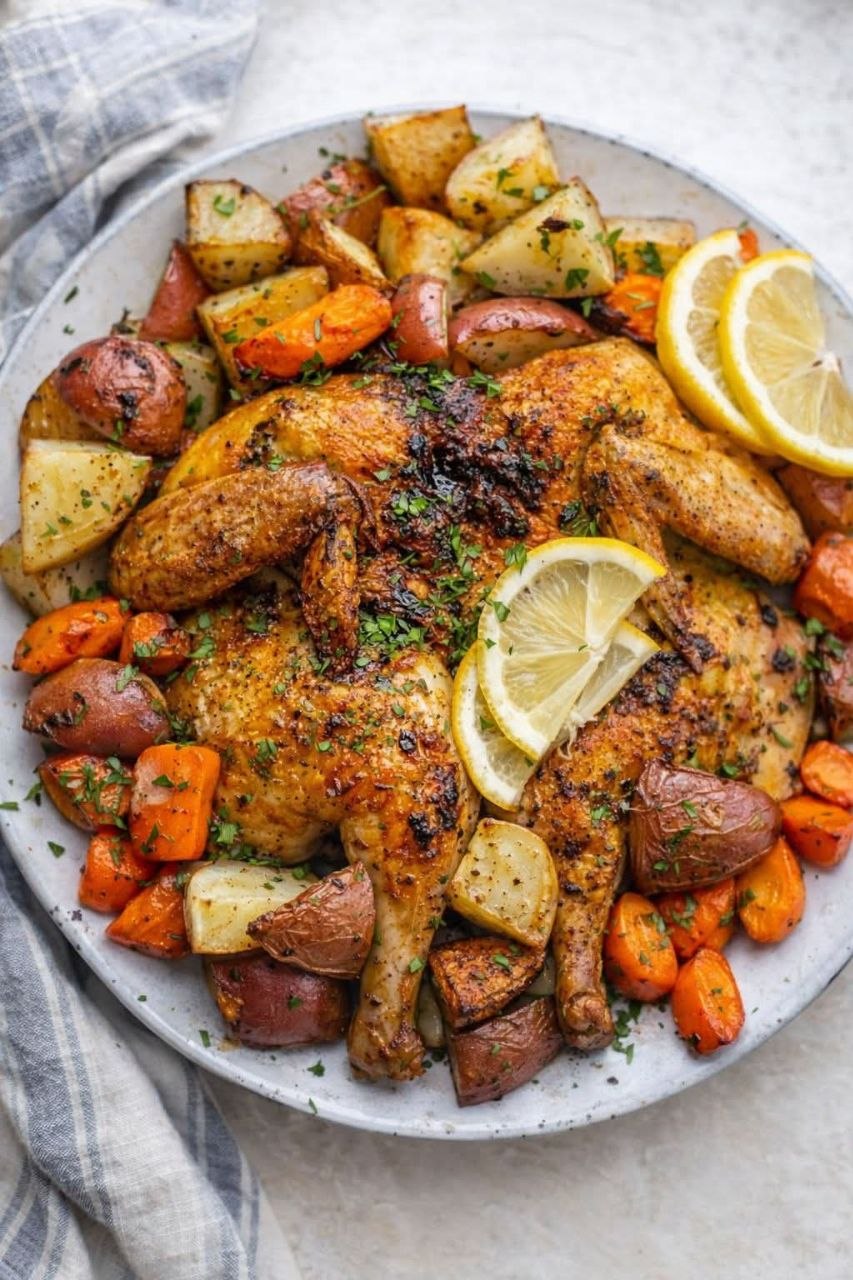
The featured image captures a platter of “Spatchcocked” chicken, surrounded by a vibrant mosaic of red-skinned potatoes and honey-gold carrots, garnished with fresh herbs and lemon wheels. This isn’t just a meal; it’s a sensory experience of textures and aromas that define the concept of “home.”
1. Visual Anatomy: Why This Dish Succeeds
The visual appeal of this roast is rooted in the contrast between the rustic, earthy vegetables and the high-gloss, seasoned skin of the chicken:
The Spatchcock Technique
- Even Cooking: The chicken has been “spatchcocked” or butterflied, meaning the backbone has been removed so the bird can lay flat. This is the gold standard for roasting because it exposes all parts of the skin to the heat simultaneously, ensuring the breasts don’t dry out before the legs are finished.
- The Crust: The skin is a deep, burnished amber, heavily textured with dried herbs (likely rosemary and thyme) and black pepper. Charred highlights on the wings and drumsticks indicate a high-heat finish that maximizes the Maillard reaction.
The Vegetable Foundation
- Potato Variation: The dish uses a mix of red-skinned potatoes and starchy white potatoes, cut into large, irregular chunks. This variety ensures some pieces become creamy on the inside while others develop the crispy, roasted edges seen in Steak & Eggs with Crispy Potatoes.
- Carrot Caramels: The carrots have been roasted until their natural sugars have concentrated, giving them a slightly wrinkled, glazed appearance that promises a sweet counterpoint to the salty chicken.
Bright Accents
- Lemon Infusion: Thinly sliced lemon wheels are tucked into the platter. When roasted, lemon loses its sharp bite and becomes mellow and jammy, providing a bright, acidic “lift” to the heavy fats of the roast.
2. Technical Mastery: The “One-Platter” Workflow
Achieving the level of perfection shown in the image requires understanding the “roasting hierarchy”:
The Seasoning Strategy
Unlike the delicate seasoning of the Seared Garlic Butter Chicken Bites, a whole roast chicken requires an aggressive rub.
- Dry Brining: For that thin, parchment-like crispy skin, the chicken should be salted 24 hours in advance and left uncovered in the fridge.
- The Fat Barrier: In the photo, the chicken appears to have been rubbed with a compound butter or herb-infused oil. This fat conducts heat directly into the skin, causing it to blister and fry while the meat beneath steams in its own juices.
The Vegetable Symbiosis
- Schmaltz Basting: The secret to the flavor of the potatoes and carrots is that they are roasted under or around the chicken. As the chicken fat (schmaltz) renders out, it bastes the vegetables, infusing them with a rich, poultry-forward umami that you cannot get from olive oil alone.
3. Flavor Profiles: Salt, Smoke, and Citrus
The flavor profile of this roast is more complex than it appears at first glance:
- Earthy (Herbs & Potatoes): The rosemary and thyme provide a woody, evergreen base that anchors the dish.
- Sweet (Roasted Carrots): Carrots become nature’s candy in the oven, offering a sugary reprieve from the savory elements.
- Bright (Lemon & Parsley): The fresh parsley garnish and lemon slices prevent the dish from feeling too “heavy,” much like the fresh greens in the Mediterranean Ground Beef Pita Wraps.
4. Strategic Menu Pairings
Because this is a comprehensive “meat and three” style meal, it needs side dishes that offer high contrast in texture and temperature:
- The Acidic Starter: Serve with the Salami, Cheese, and Pickle Charcuterie Jar. The cold, vinegary pickles and sharp cheese are the perfect palate primer for a hot, fatty roast.
- The Creamy Complement: If the roasted potatoes aren’t enough, a side of Green Chile Cheese Scalloped Potatoes adds a spicy, decadent Southwestern twist to the meal.
- The “Surf” to your “Turf”: For a truly indulgent feast, pair the roast with a side of the Garlic Butter Shrimp from the rice bowl. The shellfish provides a different type of protein richness.
- The Dessert Finale: End the meal with the No-Bake Sugar-Free Strawberry Cheesecake. Its cool, fruity profile acts as a refreshing counter-balance to the warm, roasted meal.
5. FAQ: Solving Common Roasting Problems
How do I know when the chicken is truly done? While the visual cues in the image show a perfectly cooked bird, always use a meat thermometer. You are looking for 74°C (165°F) in the thickest part of the thigh.
My potatoes are soft but not crispy. What happened? This is usually caused by overcrowding the pan. If the vegetables are too close together, they “steam” rather than “roast.” Give each potato its own space to ensure the skin gets that crispy finish seen in the Steak & Eggs plate.
Can I use frozen vegetables? It is not recommended for this style of roasting. Frozen vegetables release too much water, which will ruin the crispness of the chicken skin and turn the potatoes mushy. Stick to fresh root vegetables for the best texture.
6. Photography Analysis: Selling the “Perfect Sunday”
The image uses Natural Side-Lighting and Soft Shadows to evoke a sense of warmth and accessibility:
- The “Craggy” Textures: The high-resolution shot allows you to see the individual grains of salt and the rough texture of the roasted potato skins. This tactile detail makes the food feel “real” and attainable.
- Color Saturation: The photographer has emphasized the orange of the carrots and the yellow of the lemons, which draws the eye around the entire platter and highlights the nutritional variety of the dish.
- Domestic Context: The presence of a blue-and-white checkered kitchen towel in the background subtly reinforces the “homemade” narrative, making the viewer feel like they are about to sit down at their own family table.