In the landscape of weekday staples, the Garlic Lemon Chicken Drumstick stands out as a triumph of flavor economy. While complex dishes like Crockpot Beef Tips with Mushrooms or the multi-stage Cheesy Potato Patties require significant prep time, drumsticks offer a high-impact, low-effort protein that bridges the gap between casual family dining and gourmet “glow plate” aesthetics.
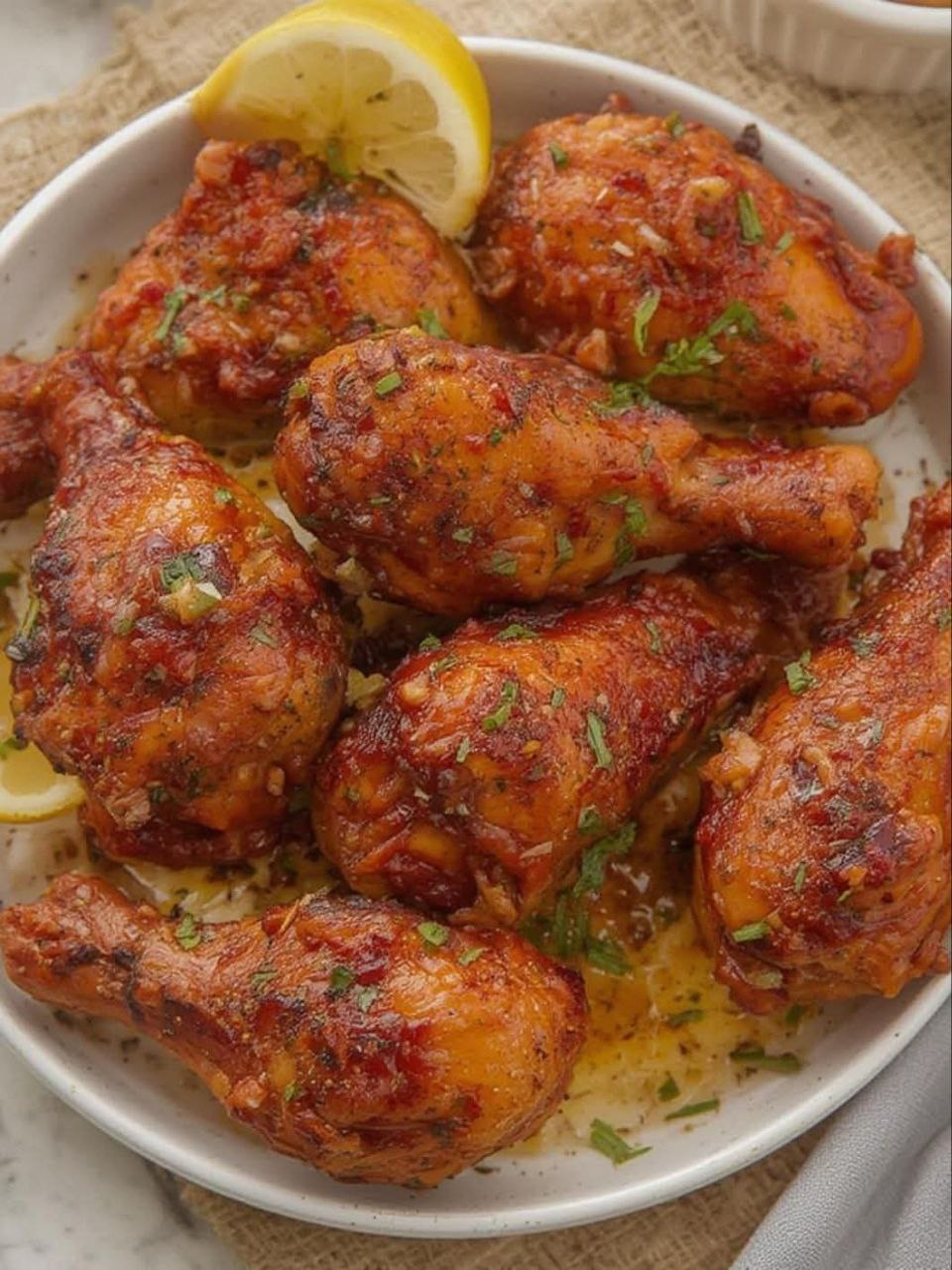
The featured image showcases a rustic white bowl filled with plump, mahogany-skinned drumsticks. They are bathed in a shimmering, garlic-infused jus and garnished with a confetti of fresh herbs and bright lemon wedges, signaling a dish that is as aromatic as it is savory.
1. Visual Anatomy: Indicators of a Perfect Roast
A superior chicken drumstick is defined by the relationship between its rendered skin and its succulent interior:
The “Glassy” Skin Texture
- Maillard Reaction: The drumsticks exhibit a deep, amber-red hue, particularly on the rounded “meat” end. This is the result of high-heat roasting, which caramelizes the natural sugars and proteins in the skin.
- Rendered Fat: The skin appears taught and slightly translucent in spots, suggesting that much of the subcutaneous fat has melted away, basting the meat in the process.
- Charred Edges: Tiny black flecks on the skin indicate “flavor hotspots” where the high heat has scorched the garlic and spices, adding a subtle smoky depth similar to the Grilled Chicken.
The Infused Jus
- Emulsified Base: At the bottom of the bowl, a clear, golden liquid is visible, speckled with herbs and bits of minced garlic. This is not just grease; it is a “pan sauce” formed by the marriage of lemon juice, chicken drippings, and aromatics.
- Viscosity: The liquid clings slightly to the meat, indicating it has reduced during the roasting process to a light, pourable glaze.
Fresh Garnishes
- The Herb Confetti: Bright green, finely chopped parsley is scattered over the top. This provides an essential “cool” contrast to the “warm” savory notes of the chicken.
- Citrus Accents: The inclusion of fresh lemon wedges tucked among the meat serves both a visual and functional purpose, inviting the diner to add a final burst of fresh acid to the rich skin.
2. Technical Execution: Mastering the Bone-In Cook
Cooking drumsticks requires a different approach than the Garlic Butter Chicken Bites because of the bone and the connective tissue:
The Importance of the Bone
The bone in a drumstick acts as a thermal conductor, radiating heat through the center of the meat. This ensures that the thickest part of the leg cooks evenly, while the marrow adds a subtle depth to the surrounding flesh that boneless cuts lack.
Temperature Strategy
To achieve the results seen in the photo, a “Start High, Finish Low” or “Consistent High” roasting method is used:
- High Heat (Approx. 200°C): Essential for rendering the skin and achieving that mahogany color.
- Internal Target: Unlike chicken breast, which can dry out at 74°C, drumsticks benefit from being cooked to 80°C – 85°C. This higher temperature breaks down the collagen in the leg, resulting in the “fall-off-the-bone” tenderness implied by the visual.
3. Flavor Profile: The Mediterranean Harmony
This dish relies on a classic four-pillar flavor profile that mimics the brightness of the Shrimp Spaghetti:
- Pungency (Garlic): The primary aromatic, which softens and becomes sweet during roasting.
- Acidity (Lemon): Cuts through the fatty richness of the dark meat and the chicken skin.
- Savory/Salty (Paprika & Salt): The reddish tint of the skin suggests the use of paprika, which provides an earthy, mild spice and contributes significantly to the vibrant color.
- Herbal (Parsley/Dried Oregano): Adds a “green” finish that cleanses the palate.
4. Strategic Menu Pairings
To create a balanced meal, pair the Garlic Lemon Drumsticks with items that complement its citrus-heavy profile:
The Starch Foundation
- Lemon Garlic Rice: The fluffy white rice from the Shrimp Bowl is the ideal sponge for the chicken’s pan jus.
- Crispy Roasted Potatoes: As seen in the Steak and Eggs, the earthy, salty crunch of potatoes provides a perfect textural counterpoint to the soft chicken meat.
The Green Contrast
- Grilled Asparagus: The charred, slightly bitter notes of asparagus highlight the sweetness of the roasted garlic.
- Mixed Herb Salad: The leafy greens from the Roasted Chicken Bowl add a light, fresh element that prevents the meal from feeling too heavy.
5. FAQ: Perfecting the Drumstick
Why isn’t my chicken skin crispy? The most likely culprit is moisture. For the skin to crisp like the photo, you must pat the chicken bone-dry with paper towels before seasoning. If the chicken is wet, it will steam rather than roast.
How do I prevent the garlic from burning? If you use minced fresh garlic, tuck it under the skin or mix it with a bit of oil. Exposed garlic in a high-heat oven will turn bitter and black.
Can I use this marinade for other parts? Yes, but be careful with chicken breast. Because breast meat is leaner, it cooks faster and can become dry if subjected to the long roasting times required to render drumstick skin.
6. Photography Analysis: The “Sunday Dinner” Aesthetic
The photography of this dish uses Top-Down Lighting and Natural Textures to create a sense of home-cooked comfort:
- The Rustic Bowl: The speckled, off-white ceramic bowl frames the warm tones of the chicken, making the reds and oranges of the skin “pop”.
- The Jus Glisten: The photographer has captured the light reflecting off the pan juices, which signals flavor and moisture to the viewer.
- Soft Background Elements: The burlap-textured cloth and the hint of a side dish in the corner suggest a full, satisfying table setting without distracting from the main event.