In the competitive arena of gastropub favorites—competing with the savory depth of Garlic Herb Steak Kabobs and the indulgent gooeyness of Green Chile Cheese Scalloped Potatoes—the Spicy Honey-Glazed Chicken Wings stand as a masterpiece of flavor engineering. This dish is a high-wire act of culinary balance, managing to be simultaneously crispy and sticky, while harmonizing aggressive spice with soothing sweetness.
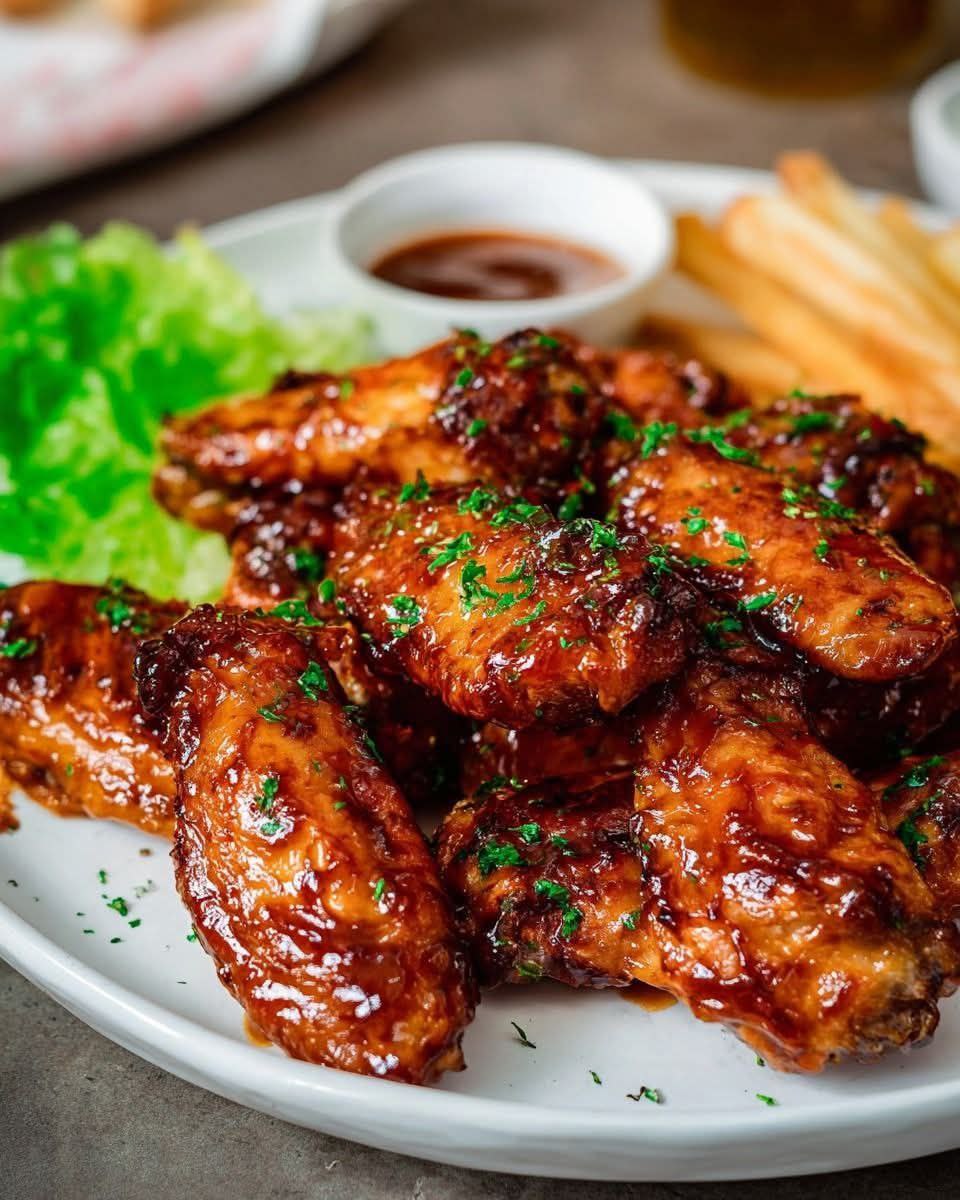
The featured image showcases a generous pile of wings that have been tossed in a mahogany-toned glaze, shimmering with a high-gloss finish that indicates a perfectly reduced sauce. Garnished with fresh greenery and served alongside classic accompaniments, these wings are the definitive “crowd-pleaser” for any modern table.
1. Visual Anatomy: The Markers of a Superior Wing
The success of a glazed wing is written in its surface tension and color saturation:
The Lacquered Glaze
- High-Gloss Finish: The wings possess a reflective sheen. This level of gloss is achieved through the use of honey or agave, which, when heated, creates a translucent “lacquer” that clings to the skin rather than soaking into it.
- Deep Mahogany Tones: The dark reddish-brown color suggests a combination of soy sauce, chili paste, and caramelized sugars. This color profile promises a complex “umami” experience rather than just simple heat.
- Viscous Adherence: Notice how the sauce pooled at the base of the wings is thick and slow-moving. This ensures that every crevice of the wing is coated, providing flavor in every bite.
The Crispy Foundation
- Skin Integrity: Despite being drenched in sauce, the visible edges of the wings appear sharp and defined. This indicates a “double-fry” or a high-heat air-fry method that rendered the fat out of the skin, making it structurally sound enough to support a heavy glaze.
- Internal Juiciness: The plumpness of the drumettes and flats suggests they were cooked just until the internal temperature reached a safe level, preserving the moisture beneath the crispy exterior.
The Garnish Strategy
- Herbaceous Pop: A fine dusting of freshly chopped parsley provides a vibrant green contrast to the dark glaze. Much like the garnish on the Seared Garlic Butter Chicken Bites, this herb cuts through the heavy, sweet-and-spicy fats with a hit of freshness.
2. Technical Execution: Achieving the “Sticky-Crispy” Ratio
Recreating the professional look of the image requires a two-phase cooking process: the Crisp and the Glaze.
Phase 1: The Crisp (The Skin Engineering)
- Moisture Removal: For the wings to be as crispy as those in the photo, they must be patted bone-dry. Many chefs leave them uncovered in the fridge for 4 hours to dehydrate the skin.
- The Starch Barrier: A light dusting of cornstarch or baking powder helps create a “craggy” surface that the honey glaze can later “grip”.
- High-Heat Rendering: Whether frying at 190°C (375°F) or using an air fryer, the goal is to blister the skin until it is golden and firm.
Phase 2: The Glaze (The Flavor Infusion)
- Reducing the Sauce: The sauce—a blend of honey, hot sauce (like Sriracha or Gochujang), garlic, and a splash of rice vinegar—must be simmered until it reduces by one-third. This creates the thick consistency seen in the image.
- The Hot Toss: The wings must be tossed in the glaze immediately after coming out of the heat. The residual heat of the wings helps “set” the glaze, turning it into that sticky lacquer.
3. Flavor Harmony: The Science of Sweet and Heat
This dish operates on the principle of Flavor Balancing, which is why it feels more sophisticated than a standard buffalo wing:
- The Heat: Provides the initial “punch” that wakes up the palate.
- The Honey: Acts as a “fire extinguisher,” coating the tongue and preventing the spice from becoming overwhelming.
- The Acid: Usually from lime juice or vinegar, the acidity “lifts” the heavy sugars and fats, making the dish craveable rather than cloying.
- The Umami: Garlic and soy sauce provide a grounded, savory base that ties the sweet and spicy elements together.
4. Strategic Menu Pairings
To build a complete experience around these wings, look for sides that offer “crunch” or “coolness” to reset the palate:
- The Cooling Dip: These wings pair perfectly with a side of Creamy Blue Cheese Dip. The dairy in the dip neutralizes the capsaicin in the honey glaze.
- The Starch Side: Golden, salted French Fries—visible in the background of the image—provide a neutral, salty contrast to the intense flavor of the glaze.
- The Fresh Alternative: If the wings feel too heavy, a side of the Grilled Chicken & Asparagus or a Tomato and Feta Salad offers a lighter, vegetable-forward counterpoint.
- The Indulgent Ending: Follow the spice with the Banana Pudding Cheesecake Bars. The cool, creamy pudding is the ultimate “reset button” for a palate stimulated by spicy honey.
5. FAQ: Perfecting the Wing Result
How do I prevent the honey from burning in the oven? If you are baking the wings, do not apply the glaze until the last 5 minutes of cooking. Honey has a low smoke point and will turn bitter and black if exposed to high heat for too long.
Can I make these “Extra Spicy”? Absolutely. To increase the heat without ruining the texture, add Cayenne Pepper or Red Chili Flakes directly to the dry rub before cooking. This embeds the heat into the skin, while the honey glaze remains the sweet carrier.
Why are my wings soggy? Sogginess usually comes from tossing the wings in too much sauce too early. For the best results, use a large bowl to toss them lightly so they are “coated,” not “swimming”. Serve immediately to maintain the crunch.
6. Photography Analysis: The “Crave” Factor
The image uses Warm Lighting and Tight Framing to emphasize the tactile nature of the food:
- Macro Details: The focus is sharp enough to see the individual flecks of black pepper and the tiny bubbles in the glaze. This creates a “sensory” image that makes the viewer imagine the sticky texture.
- Abundance Composition: By piling the wings high, the photographer creates a sense of generosity and communal eating.
- Color Complementarity: The bright green lettuce and parsley act as a “cool” frame for the “hot” mahogany wings, making the colors of the main protein appear even richer.