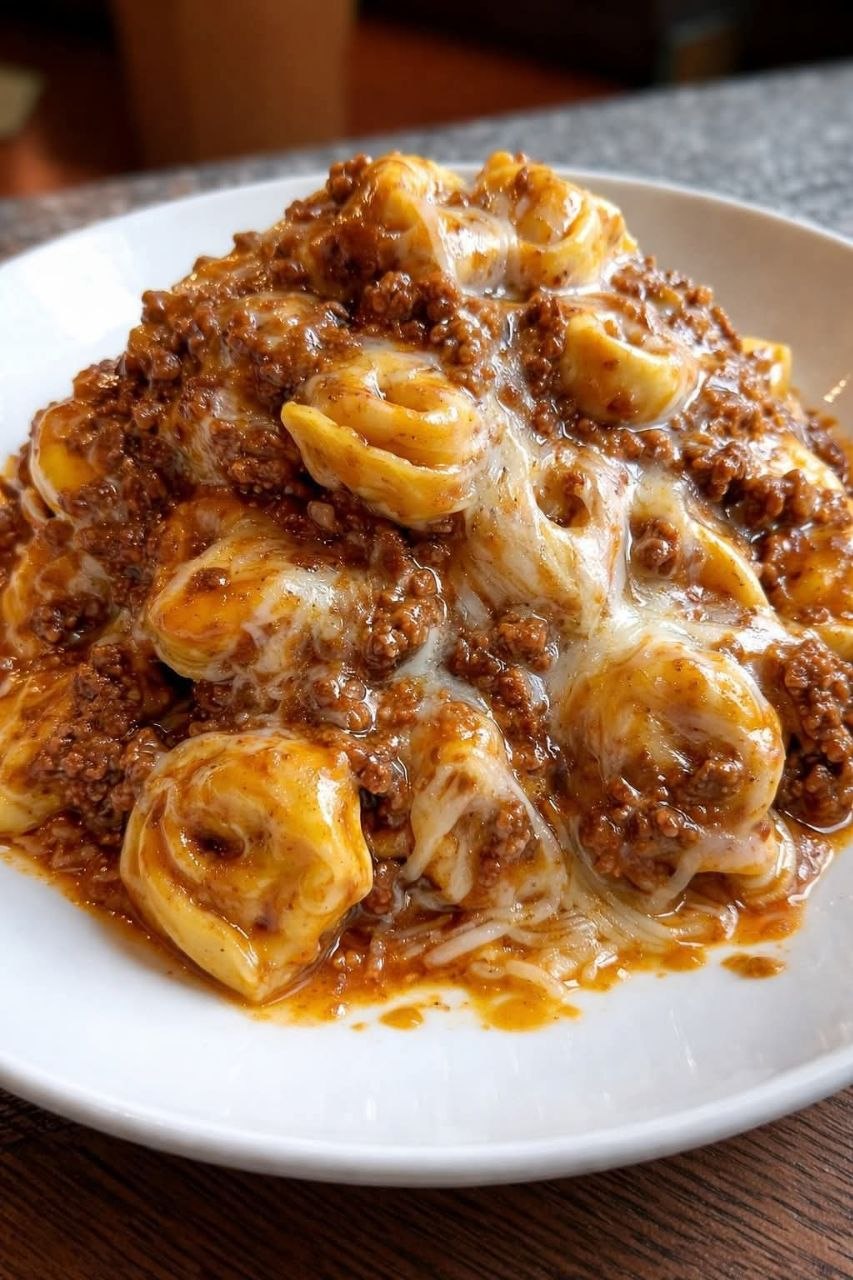
In a culinary repertoire that celebrates bold, hearty flavors—from the mahogany-glazed Sticky Chicken Wings to the towering luxury of a Loaded Steak Pizza—this Cheesy Beef Tortellini Bake stands as the definitive expression of soulful Italian-American comfort. This dish represents a perfect marriage of texture and temperature: plump, cheese-filled pasta pockets enveloped in a thick, savory meat sauce and bound together by a molten web of melted mozzarella.
Presented in a clean white bowl, the dish is piled high, showcasing the sheer density of the toppings. Unlike the long, elegant ribbons of Lobster Alfredo or the structured layers of a Rigatoni Bake, the tortellini bake is a beautifully chaotic mountain of indulgence, where every crevice is filled with sauce and cheese.
1. Visual Anatomy: A Study in “The Melt”
The immediate visual appeal of this dish is driven by the specific way the cheese interacts with the heavy meat sauce:
The Tortellini Foundation
The star of the dish is the Cheese Tortellini.
- Pasta Profile: Each individual ring of pasta is visible, suggesting they were cooked to a perfect al dente before being tossed in the sauce. This prevents them from becoming mushy during the baking process.
- Interior Surprise: The golden-hued pasta shells act as vessels for even more cheese, typically a blend of ricotta, parmesan, and romano, providing a creamy interior contrast to the robust exterior.
The Bolognese-Style Meat Sauce
The sauce used here is thick and protein-forward, similar in texture to the sauce found in your Spaghetti Bolognese.
- Granular Texture: The finely crumbled ground beef is visible throughout the dish, clinging to the curves of the tortellini.
- Rich Coloration: The sauce has a deep, brick-red hue, indicating a long simmer with tomato paste, aromatics, and possibly a splash of red wine or beef stock to deepen the flavor profile.
The Molten Cheese Web
The cheese application in this dish is distinctive.
- Translucent Veins: Rather than a thick, opaque blanket of cheese (like the one on the Rigatoni Bake), the mozzarella here has melted into translucent, glassy veins that stretch across the meat and pasta.
- Integrated Emulsion: At the base of the bowl, the cheese has partially emulsified with the tomato oils and beef juices, creating a creamy, orange-tinted liquid that pools at the bottom—the ultimate “dip” for a crusty piece of bread.
2. Technical Execution: Achieving the Perfect Bake
To recreate the luscious textures seen in the photograph, several culinary steps must be executed with precision:
- The Two-Stage Cook: The tortellini are likely boiled for 2 minutes less than the package instructions. This allows them to finish cooking in the oven by absorbing the excess moisture from the meat sauce, ensuring they are flavorful through to the center.
- Layering vs. Tossing: The visual evidence suggests these were tossed in a large bowl with the sauce first, then transferred to a baking dish and topped with cheese. This ensures every single piece of pasta is lubricated, preventing dry spots.
- The High-Heat Finish: To get the cheese to melt into those thin, stretchy ribbons without burning the pasta, the dish was likely baked at a high temperature (around 400°F/200°C) for a short duration—just long enough for the cheese to become molten and the sauce to bubble.
3. Flavor Harmony: Salty, Savory, and Creamy
This dish is a masterclass in umami, drawing flavor from multiple sources:
- Salty: Provided by the cured cheeses inside the tortellini and the generous seasoning of the beef.
- Savory (Umami): Derived from the concentrated tomato base and the browned ground beef.
- Creamy: The melted mozzarella and the ricotta pasta filling act as a cooling counterpoint to the acidic tomatoes.
- Sweet: A subtle sweetness likely comes from sautéed onions and carrots (the soffritto base) within the red sauce.
4. Nutritional Insights
This is a calorie-dense meal that provides significant energy and protein.
| Component | Key Nutrient | Benefit |
| Ground Beef | Iron, Zinc, B12 | Essential for oxygen transport and immune function. |
| Cheese Tortellini | Complex Carbohydrates | Provides sustained energy for the body. |
| Tomato Sauce | Lycopene | A powerful antioxidant that supports heart health. |
| Mozzarella | Calcium & Protein | Supports bone health and provides the “satiety” factor. |
5. Strategic Menu Pairings
To create a balanced dining experience around such a heavy main course, consider these additions from your kitchen:
- The Starter: Serve the Garlic Shrimp Cheese Bread. The crunch of the toasted bread is the perfect texture to contrast the soft, pillowy tortellini, and the garlic notes will enhance the Italian theme.
- The Palate Cleanser: A crisp, acidic salad like the one seen with your Cajun Chicken Pasta would provide a much-needed “lift” to the meal, cutting through the richness of the beef and cheese.
- The Refreshing Dessert: End the meal with the Fruit-Topped Cream Cake. The tartness of the kiwi, berries, and oranges will refresh the palate after the heavy, savory pasta.
6. FAQ: Mastering the Pasta Bake
How do I prevent the cheese from becoming “rubbery”?
Avoid using pre-shredded cheese from a bag. Bagged cheese is coated in potato starch or cellulose to prevent clumping, which interferes with the melt. For the glassy, stretchy look seen in the photo, grate a block of whole-milk mozzarella yourself.
Can I use frozen tortellini?
Yes, but do not thaw them first. Boil them directly from frozen, but reduce the boiling time by about 1 minute so they remain firm enough to withstand the oven’s heat.
What’s the best way to add more depth to the meat sauce?
Much like your Mushroom and Chicken Casserole, adding finely diced mushrooms to the beef while browning will add an incredible depth of earthiness and umami without changing the fundamental texture of the sauce.
7. Photography Analysis: The “Comfort” Aesthetic
The photography of this dish focuses on Proximity and Color Saturation:
- Vertical Piling: By stacking the tortellini high, the photographer creates shadows and highlights that emphasize the individual shapes of the pasta, making it look more “homemade” and artisanal.
- Glossy Highlights: The lighting is positioned to catch the sheen of the sauce and the melted cheese, signaling to the viewer that the dish is moist and fresh.
- Color Contrast: The stark white of the bowl provides a neutral background that makes the vibrant orange and red tones of the sauce “pop,” enhancing its visual warmth.