In your sophisticated culinary repertoire—which masterfully balances high-protein savory dishes like Sliced Steak with Corn and Avocado and artisanal bakes like Rustic No-Knead Rosemary Garlic Bread—the Classic Caramel Flan stands as the ultimate test of temperature control and patience. While your Strawberry Brownies rely on a dense, fudgy bite and your Peach Glazed Donuts on a fried, airy structure, the flan is a study in delicate molecular chemistry. It requires transforming simple eggs, milk, and sugar into a custard so smooth it appears glass-like.
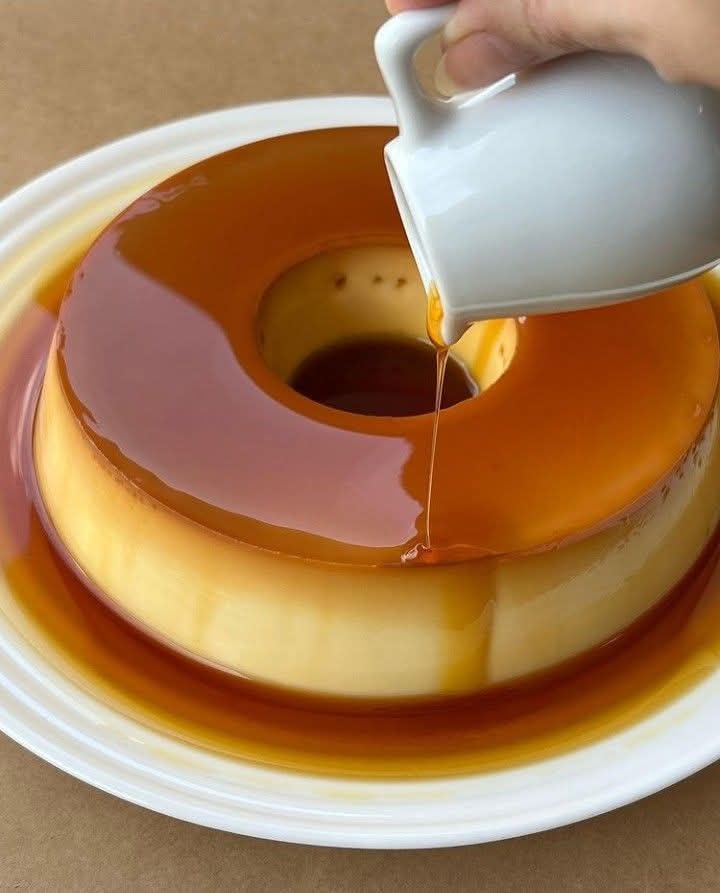
Your presentation features a large, ring-shaped flan (baked in a savarin mold) resting on a white porcelain plate. The custard is a pale, creamy ivory, topped with a deep amber translucent caramel that pools at the base. The final touch, captured in motion, shows extra golden syrup being drizzled from a white ceramic pitcher, highlighting the dessert’s luxurious, glossy finish.
1. Visual Anatomy: The Markers of a Flawless Custard
The aesthetic of a professional-grade flan is defined by its structural integrity and its interaction with light:
The Mirrored Surface
The most striking feature of your flan is the “mirror” effect of the caramel. A well-executed caramel should be dark enough to provide a bittersweet contrast but clear enough to reflect the light. The thin, consistent coating over the top of the ring indicates that the caramel was perfectly liquefied before the custard was added to the mold.
The Silken Perimeter
The sides of the flan are remarkably smooth, without the “pockmarks” or bubbles often caused by over-whipping the eggs or baking at too high a temperature. This indicates a gentle bake in a bain-marie (water bath), which protects the delicate proteins from the direct, harsh heat of the oven.
The Ring Form (Savarin)
By using a ring mold rather than a solid circular pan, the surface area for the caramel is increased, and the center cooks more evenly. This shape also creates a natural “well” in the center where the excess liquid gold can pool, creating a beautiful visual reservoir.
2. Technical Execution: The Science of Caramel and Protein
Achieving the results seen in your photography requires a precise understanding of two distinct chemical processes:
- Dry Caramelization: The topping is created by melting granulated sugar until it reaches approximately 160°C to 175°C. If pulled too early, it lacks the signature amber hue; if pulled too late, it becomes bitter and black.
- Egg Protein Coagulation: The custard is a mixture of whole eggs and yolks, sweetened condensed milk, and evaporated milk (or heavy cream). These proteins set into a gel-like structure at low heat. The absence of bubbles in your photo suggests the mixture was strained through a fine-mesh sieve to remove any air or chalazae from the eggs.
- The Inversion Process: The most critical moment is “unmolding”. The flan must be completely chilled (usually 4 to 24 hours) to allow the structure to firm up and the hard caramel at the bottom of the pan to turn into the liquid syrup seen drizzling from the pitcher.
3. Flavor Harmony: Bitter, Sweet, and Creamy
The flavor profile of a classic flan is a sophisticated loop of sensations:
- The Bitter-Sweet Edge: The amber caramel provides a burnt-sugar complexity that keeps the dessert from feeling one-dimensionally sweet.
- The Lactic Depth: Using a combination of milks provides a rich, fatty mouthfeel that coats the tongue, creating a “blanket” of flavor.
- The Aromatic Finish: Though not visible, a high-quality flan usually carries a heavy note of Madagascar vanilla or a hint of citrus zest, which lifts the heavy creaminess of the eggs.
4. Nutritional Insights: A Caloric Indulgence
Flan is an energy-dense dessert, providing high-quality protein from eggs alongside significant sugars.
| Component | Nutritional Value | Role |
| Whole Eggs | Protein & Vitamin B12 | Provides the structural framework and essential nutrients. |
| Dairy (Milk/Cream) | Calcium & Vitamin D | Creates the creamy mouthfeel and contributes to bone health. |
| Caramelized Sugar | Simple Carbohydrates | Provides immediate energy and the signature flavor profile. |
5. Strategic Menu Pairings
This flan is the perfect “palate cleanser” for several of your existing savory dishes:
- The Latin-Inspired Dinner: Serve as the dessert following your Beef Stir-fry with Peppers and Onions; the cool, creamy custard provides a soothing contrast to the savory, pepper-heavy main.
- The Rustic Roast Accompaniment: Pair a slice with a cup of black coffee after a heavy meal of Pot Roast with Potatoes and Carrots.
- The Texture Play: Serve alongside your Strawberry Brownies for a “Sweet Platter” that contrasts the dense chocolate fudge with the light, silken custard.
6. Frequently Asked Questions (FAQ)
Why does my flan have little holes on the sides?
This is usually caused by “over-baking” or the water bath reaching a boil. When the egg proteins get too hot too fast, they contract and squeeze out moisture, creating those tiny steam pockets.
How do I get the caramel out of the pan?
If some caramel remains stuck in the bottom of the mold after you flip the flan, don’t worry. You can briefly place the bottom of the pan over a warm stove burner to melt it, then pour that extra syrup over the finished dessert as seen in the photo.
Can I make this ahead of time?
Actually, you must make it ahead of time. A flan needs at least 8 hours to chill so the caramel can liquefy and the flavors can meld.
7. Photography Analysis: Liquid Motion
The photography of this flan is designed to emphasize the “freshness” and “luxury” of the syrup:
- The Action Shot: Capturing the stream of caramel mid-pour adds a dynamic element to the image, making the dessert feel “alive” and ready to be served.
- High-Key Lighting: The bright, clean background and white plate allow the golden-brown tones of the caramel to stand out without distraction.
- Symmetry and Shape: Centering the ring mold highlights the perfection of its form and the consistency of its texture.