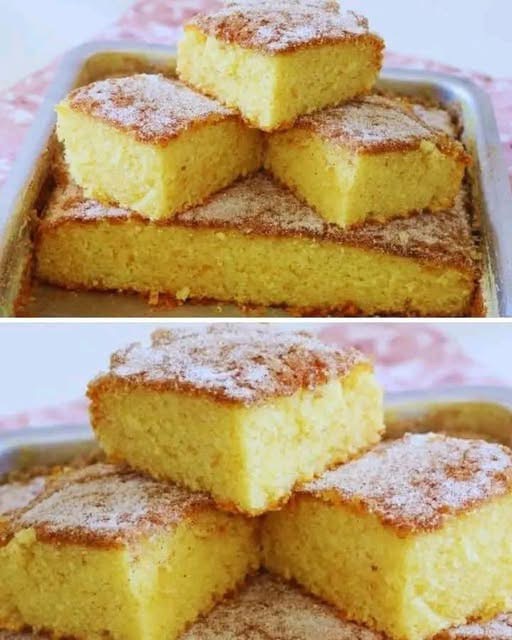
Why This Cake Works So Well
This recipe succeeds because it focuses on:
- Proper aeration of eggs
- Balanced fat and liquid ratio
- Gentle mixing to preserve air
- Controlled baking for even rise
The result is a cake that:
- Rises evenly
- Stays moist for days
- Cuts cleanly into squares
- Has a soft, fine crumb
Texture & Flavor Profile
- Texture: Soft, fluffy, tender
- Crumb: Fine and even
- Flavor: Light vanilla, slightly buttery
- Sweetness: Balanced, not overpowering
This cake is ideal on its own or as a base for additions like lemon zest, coconut, or jam.
Ingredients List
Dry Ingredients
- 3 cups all-purpose flour
- 1 tablespoon baking powder
- ½ teaspoon salt
Wet Ingredients
- 4 large eggs (room temperature)
- 1½ cups granulated sugar
- 1 cup whole milk (room temperature)
- ¾ cup vegetable oil (or melted butter)
- 2 teaspoons vanilla extract
For the Pan
- Butter or oil for greasing
- Flour for dusting
For Finishing
- Powdered sugar, for dusting
Choosing the Right Ingredients
Eggs
Room-temperature eggs whip better and trap more air, resulting in a lighter cake.
Oil vs Butter
Oil gives a moister cake that stays soft longer. Butter adds flavor but can firm up when cold. You can use either, but oil is recommended for this texture.
Milk
Whole milk adds richness. Avoid low-fat milk for best results.
Step 1: Preparing the Pan and Oven
Preheat your oven to 170°C (340°F).
Grease a rectangular baking pan (about 30×20 cm / 9×13 inches). Dust lightly with flour and tap out excess. This ensures easy release and clean edges.
Set aside.
Step 2: Mixing the Dry Ingredients
In a medium bowl, whisk together:
- Flour
- Baking powder
- Salt
Whisking evenly distributes the leavening agent, which is essential for an even rise.
Set aside.
Step 3: Beating Eggs and Sugar (Key Step)
In a large mixing bowl, add the eggs and granulated sugar.
Beat on medium-high speed for 4–5 minutes, until the mixture becomes:
- Pale in color
- Thick
- Slightly fluffy
This step incorporates air, which is crucial for a light sponge texture. Do not rush it.
Step 4: Adding Liquids Gently
Reduce mixer speed to low.
Slowly add:
- Oil (or melted butter)
- Milk
- Vanilla extract
Mix just until combined. Do not overmix at this stage—too much mixing can deflate the batter.
Step 5: Incorporating Dry Ingredients
Add the dry ingredients in two or three additions, folding gently with a spatula or mixing on the lowest speed.
Stop as soon as no dry flour remains. The batter should be:
- Smooth
- Pourable
- Light and airy
Overmixing here will make the cake dense.
Step 6: Pouring and Leveling
Pour the batter into the prepared pan.
Gently tap the pan on the counter once or twice to release large air bubbles. Do not shake aggressively.
Use a spatula to level the surface evenly.
Step 7: Baking the Cake
Place the pan in the center of the oven.
Bake for 35–40 minutes, or until:
- The top is lightly golden
- A toothpick inserted in the center comes out clean
- The cake springs back lightly when touched
Avoid opening the oven during the first 25 minutes.
Step 8: Cooling Properly
Remove the cake from the oven and place the pan on a wire rack.
Let it cool in the pan for 15–20 minutes, then gently remove or leave it in the pan if serving directly.
Cooling allows the crumb to set and prevents crumbling when slicing.
Step 9: Finishing Touch
Once fully cooled, dust generously with powdered sugar.
Cut into neat squares using a sharp knife, wiping the blade between cuts for clean edges.
Serving Suggestions
This cake is delicious:
- With tea or coffee
- Slightly warm or at room temperature
- With fresh fruit on the side
- With a dollop of whipped cream
It also works beautifully as a base for:
- Jam layers
- Lemon glaze
- Coconut topping
Flavor Variations
Lemon Vanilla Cake
Add zest of 2 lemons and replace ¼ cup milk with lemon juice.
Coconut Cake
Replace ½ cup flour with desiccated coconut and use coconut milk.
Orange Cake
Add orange zest and a splash of orange juice.
Cinnamon Sugar Top
Sprinkle cinnamon sugar over batter before baking for a lightly spiced crust.
Tips for a Perfect Sponge Cake
- Use room-temperature ingredients
- Beat eggs and sugar thoroughly
- Do not overmix after adding flour
- Bake at moderate temperature
- Cool before cutting
These small details make a big difference.
Storage Instructions
Store the cake:
- At room temperature, covered, for up to 3 days
- In the refrigerator for up to 5 days
- In the freezer (wrapped well) for up to 2 months
To serve after refrigeration, bring to room temperature for best texture.
Common Mistakes to Avoid
- Cold ingredients
- Overmixing the batter
- Baking at too high temperature
- Opening oven too early
- Cutting while hot
Avoiding these ensures a soft, even crumb.
Nutritional Notes
This cake is light compared to frosted cakes, making it a great everyday dessert. The oil-based batter keeps it moist without heaviness.
Why This Recipe Is Reliable
This traybake sponge uses a balanced formula that works in most home ovens. It’s forgiving, consistent, and adaptable, making it ideal for beginners and experienced bakers alike.
Final Thoughts
This soft vanilla sponge cake is proof that simple recipes can be exceptional. With its fluffy texture, gentle sweetness, and golden finish, it’s the kind of cake that disappears quickly from the table.