Why This Recipe Works
Many people overcook pork chops out of fear, which leads to dryness. This recipe avoids that by:
- Using bone-in pork chops for better flavor and moisture
- Applying a dry brine for deeper seasoning
- Searing at the right temperature to build a golden crust
- Finishing gently so the meat stays juicy
- Resting properly to lock in the juices
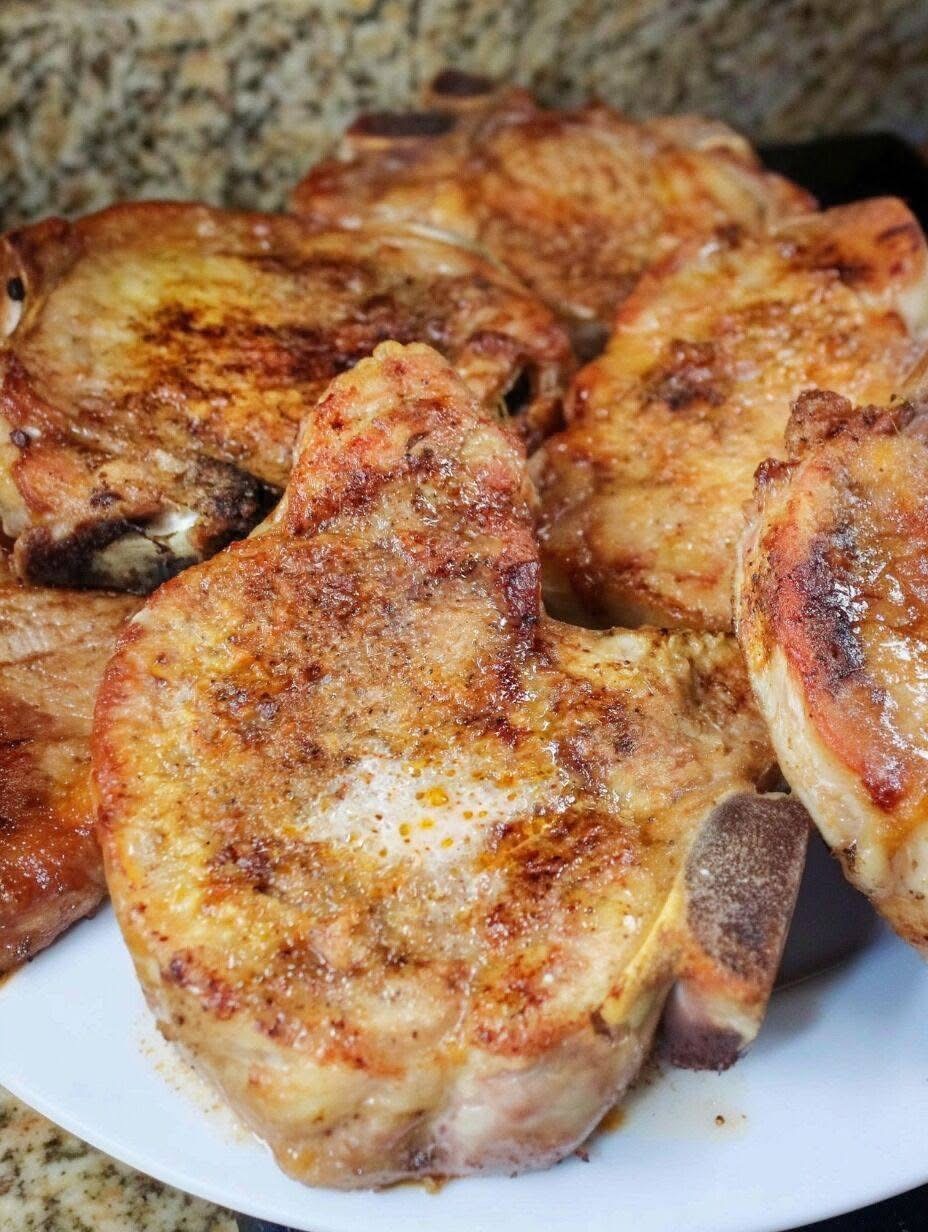
The result is pork chops that are crisp on the outside and tender inside, with natural pork flavor enhanced—not masked—by seasoning.
Choosing the Right Pork Chops
For best results, use:
- Bone-in pork chops
- Thickness: 2.5–3 cm (1–1¼ inches)
Avoid very thin chops, as they overcook too quickly.
Best cuts:
- Rib chops
- Center-cut loin chops
The bone helps regulate heat and keeps the meat juicy.
Ingredients
Main Ingredients
- 4 bone-in pork chops (2.5–3 cm thick)
- 2 tablespoons olive oil or neutral oil
- 2 tablespoons unsalted butter
Seasoning
- 1½ teaspoons salt
- 1 teaspoon black pepper
- 1 teaspoon paprika (smoked or sweet)
- ½ teaspoon garlic powder
- ½ teaspoon onion powder
Optional Aromatics
- 2 cloves garlic, lightly crushed
- 2 sprigs fresh thyme or rosemary
Step 1: Dry Brining the Pork Chops
Pat the pork chops completely dry with paper towels.
Season both sides generously with salt. Place them on a plate or rack and leave uncovered in the refrigerator for 30 minutes to 2 hours.
Why this matters:
- Salt penetrates the meat
- Improves flavor throughout
- Helps retain moisture during cooking
- Creates a better crust
Before cooking, remove from the fridge and let them sit at room temperature for 20 minutes.
Step 2: Seasoning Before Cooking
Just before cooking, season both sides with:
- Black pepper
- Paprika
- Garlic powder
- Onion powder
Do not add extra salt if you dry-brined generously.
Press the seasoning gently into the meat.
Step 3: Heating the Pan Correctly
Use a heavy skillet—cast iron is ideal.
Place the pan over medium-high heat and add the oil. Heat until the oil shimmers but does not smoke.
This step is critical:
- Too cool → pale, soggy chops
- Too hot → burned exterior, raw interior
Step 4: Searing the Pork Chops
Place the pork chops in the pan carefully, away from you to avoid splashing.
Do not move them for the first 3–4 minutes.
You want:
- Deep golden crust
- Natural release from the pan
Flip once the bottom is well browned.
Cook the second side for another 3 minutes.
Step 5: Butter Basting for Flavor
Reduce heat to medium-low.
Add butter, garlic, and herbs to the pan.
As the butter melts and foams, tilt the pan slightly and spoon the butter over the pork chops continuously for 1–2 minutes.
This step:
- Adds richness
- Enhances aroma
- Gently finishes cooking
If the pork chops are very thick, you can stand them upright with tongs to sear the fat edge for 30–60 seconds.
Step 6: Checking Doneness
The safest and best method is a thermometer.
Target internal temperature:
- 63°C (145°F) for juicy pork
Insert the thermometer into the thickest part, away from the bone.
If you don’t have a thermometer:
- Press the meat gently
- It should feel firm but springy, not hard
Step 7: Resting the Pork Chops
Transfer the pork chops to a plate and tent loosely with foil.
Let them rest for 5–10 minutes.
Why resting is essential:
- Juices redistribute
- Meat becomes more tender
- Prevents dryness when cutting
Never skip this step.
Serving Suggestions
These pork chops pair beautifully with:
- Mashed potatoes
- Roasted vegetables
- Garlic green beans
- Simple salad with vinaigrette
- Rice or buttered pasta
Spoon some of the pan butter and juices over the chops before serving.
Flavor Variations
Garlic-Herb Style
Add extra garlic and fresh rosemary with a squeeze of lemon at the end.
Spicy Paprika Version
Use smoked paprika and a pinch of chili flakes.
Honey-Butter Finish
Add 1 teaspoon honey to the butter during basting for a subtle sweet-savory glaze.
Mustard Pan Sauce
After removing pork:
- Deglaze pan with a splash of broth
- Add 1 teaspoon Dijon mustard
- Finish with butter
Common Mistakes to Avoid
- Overcooking pork
- Using thin chops
- Skipping resting time
- Cooking straight from the fridge
- Moving the meat too early
Each of these can ruin texture and juiciness.
Storage and Reheating
Store leftovers in an airtight container in the refrigerator for up to 3 days.
Reheat gently:
- In a covered pan over low heat
- Or in the oven at 150°C (300°F)
Avoid microwaving if possible, as it dries the meat.
Nutritional Notes
Pork chops are:
- High in protein
- Rich in B vitamins
- Naturally satisfying
Balance the meal with vegetables for a complete dish.
Final Thoughts
Juicy pan-seared pork chops are all about respecting the meat. With proper seasoning, controlled heat, and careful timing, pork becomes tender, flavorful, and deeply comforting. This recipe proves that pork chops don’t need complicated sauces or heavy marinades—just good technique and attention