What Is Oxtail?
Oxtail is the tail of beef cattle, cut into thick rounds with a central bone surrounded by collagen-rich meat. While it was once considered a humble or inexpensive cut, oxtail has become highly prized for its ability to create incredibly rich, silky sauces when cooked slowly.
Because oxtail contains a lot of connective tissue, it needs long, slow cooking to break down properly. When done right, the meat becomes meltingly tender, and the sauce naturally thickens without the need for flour or starch.
Why Slow Cooking Is Essential for Oxtail
Oxtail is not a quick-cook cut. Rushing it will only result in tough meat. Slow cooking allows:
- Collagen to convert into gelatin
- Meat to absorb deep flavors
- Sauce to become naturally thick and glossy
- Bones to release richness into the dish
This is why oxtail dishes are often simmered for hours in stews, braises, and tagines.
Ingredients for Slow-Braised Oxtail
Main Ingredients
- 2–2.5 kg oxtail, cut into pieces
- 2 large onions, finely chopped
- 4 cloves garlic, minced
- 2 tablespoons olive oil
- 1 tablespoon tomato paste
- 2 tomatoes, grated or finely chopped
- 1–1.5 liters beef stock or water
- Salt, to taste
- Black pepper, to taste
Spices and Aromatics
- 1 teaspoon paprika
- 1 teaspoon ground cumin
- ½ teaspoon ground ginger
- 1 bay leaf
- ½ teaspoon chili flakes (optional)
- Fresh parsley or cilantro, chopped (for garnish)
Preparing the Oxtail
Before cooking, it’s important to prepare the oxtail properly:
- Rinse the oxtail pieces under cold water.
- Pat dry thoroughly with paper towels.
- Season generously with salt and black pepper.
Drying the meat helps achieve a better sear, which is crucial for flavor.
Browning the Oxtail for Maximum Flavor
Heat olive oil in a heavy-bottomed pot or Dutch oven over medium-high heat.
- Add oxtail pieces in batches
- Brown on all sides until deeply golden
- Do not overcrowd the pot
This step builds the foundation of the dish. The browned bits left at the bottom of the pot will later dissolve into the sauce, adding incredible depth.
Remove the oxtail and set aside.
Building the Flavor Base
In the same pot:
- Add chopped onions
- Cook over medium heat until soft and lightly golden
- Add garlic and stir for 30 seconds
- Add tomato paste and cook until slightly caramelized
This slow cooking of aromatics is what gives the dish its rich, savory backbone.
Adding Tomatoes and Spices
Once the onions are well cooked:
- Add grated tomatoes
- Stir in paprika, cumin, ginger, and chili flakes
- Add bay leaf
Let everything simmer for 5–10 minutes until the mixture thickens and the oil starts to separate slightly. This step concentrates the flavors and removes raw tomato acidity.
Braising the Oxtail
Return the browned oxtail pieces to the pot.
- Stir gently to coat them with the sauce
- Pour in beef stock until the meat is just covered
- Bring to a gentle boil
Once boiling, reduce heat to low, cover, and let simmer slowly.
Cooking Time and Patience
Oxtail requires 2.5 to 3.5 hours of slow cooking.
During this time:
- Stir occasionally
- Check liquid level
- Add a little water if necessary
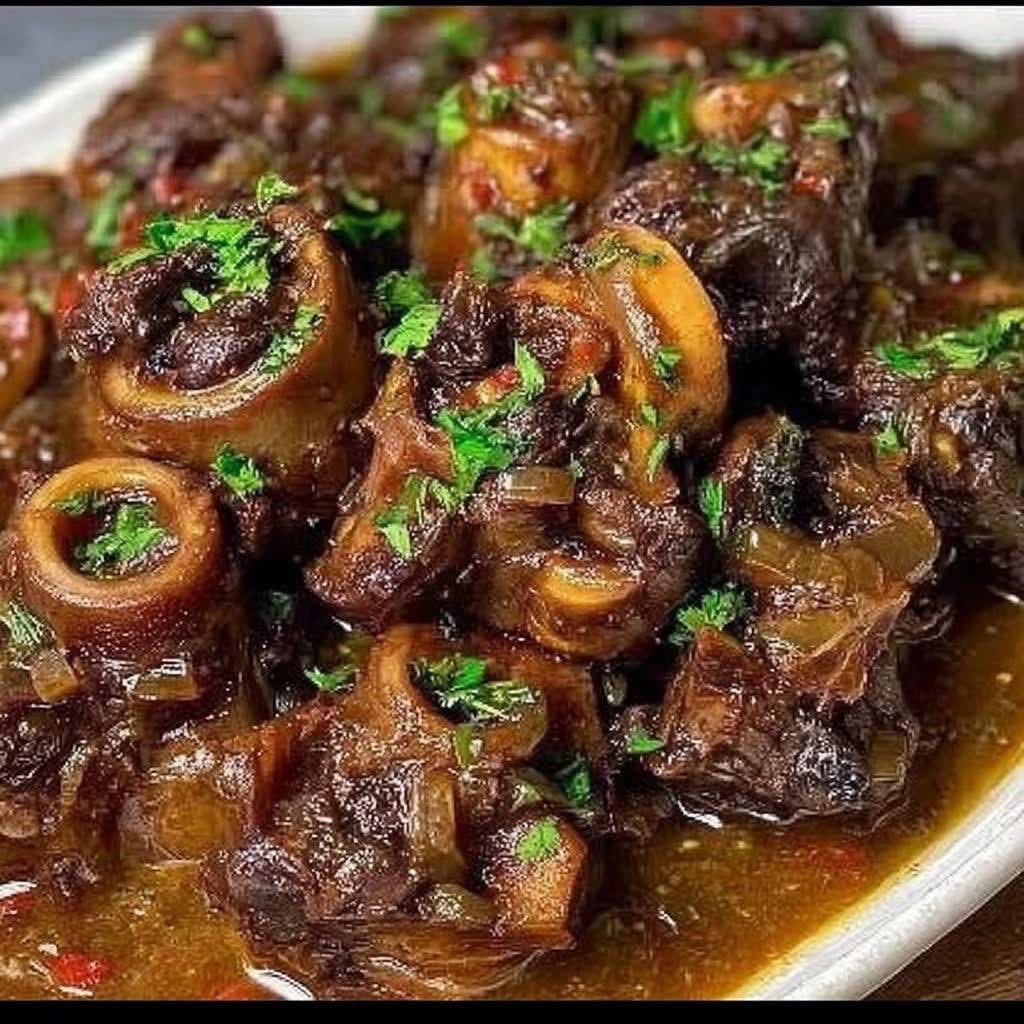
As it cooks, the meat will shrink slightly, soften, and release gelatin into the sauce, creating that luxurious texture visible in the image.
How to Know When Oxtail Is Done
Perfectly cooked oxtail should be:
- Fork-tender
- Nearly falling off the bone
- Surrounded by a thick, glossy sauce
If the sauce is too thin near the end, uncover the pot and simmer gently until reduced.
Final Seasoning and Garnish
Once the oxtail is tender:
- Taste and adjust salt and pepper
- Remove bay leaf
- Sprinkle generously with fresh parsley or cilantro
This final touch adds freshness and contrast to the deep, rich flavors.
How to Serve Slow-Braised Oxtail
Oxtail is incredibly versatile and pairs beautifully with:
- Mashed potatoes
- Steamed rice
- Couscous
- Polenta
- Crusty bread
The sauce is often considered the star, so always serve it with something that can soak it up.
Why Oxtail Tastes Better the Next Day
Like many slow-cooked dishes, oxtail improves with time.
- Flavors deepen overnight
- Sauce thickens naturally
- Meat absorbs more seasoning
If possible, cook it a day ahead and gently reheat—it will taste even better.
Common Mistakes to Avoid
- Skipping the browning step
- Cooking on high heat
- Not using enough salt
- Rushing the process
- Using a thin pot that burns easily
Patience and low heat are key.
Nutritional Benefits of Oxtail
Oxtail is not only delicious but also nourishing:
- Rich in collagen and gelatin
- Supports joint health
- High in protein
- Provides iron and zinc
It’s a deeply satisfying dish that nourishes both body and soul.
Variations You Can Try
Once you master the basic recipe, you can experiment:
- Add carrots and celery for a classic stew
- Add preserved lemon for a Moroccan twist
- Use red wine instead of part of the stock
- Add chickpeas for a heartier meal
Each variation brings a new personality to the dish.
Final Thoughts
Slow-braised oxtail is the definition of comfort cooking. It transforms a tough cut into something luxurious through time, care, and tradition. The dish you see in the image represents patience, depth of flavor, and the beauty of slow food.