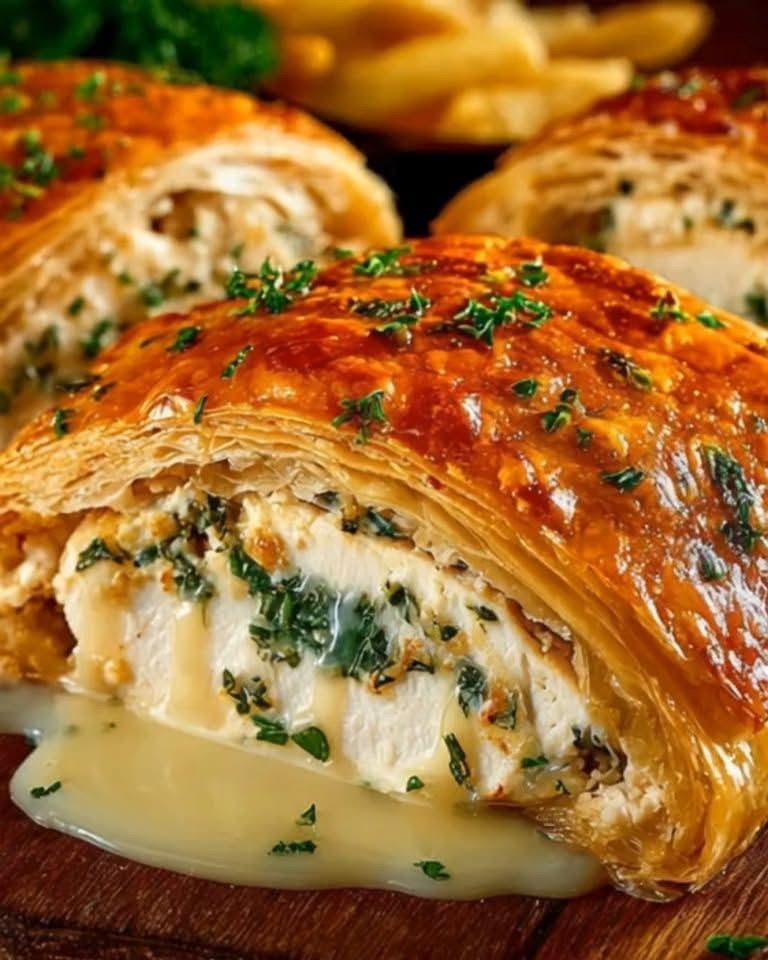
What Is Chicken Wellington?
Chicken Wellington is inspired by the traditional Beef Wellington but uses chicken breast instead of beef fillet. The structure remains the same:
- A protein (chicken)
- A flavorful mushroom mixture (duxelles)
- A thin wrap (often prosciutto)
- Puff pastry baked until golden
The result is elegant, flavorful, and easier to cook evenly than beef.
Why Choose Chicken Wellington Over Beef?
Chicken Wellington has several advantages:
- More affordable than beef fillet
- Lighter and less rich
- Easier to cook through without overcooking
- Loved by people who don’t eat red meat
- Perfect canvas for herbs and creamy flavors
It’s a great choice for family celebrations and dinner parties.
Ingredients for Chicken Wellington
For the Chicken
- 2 large chicken breasts (boneless, skinless)
- Salt and black pepper, to taste
- 1 tablespoon olive oil
- 1 teaspoon Dijon mustard
For the Mushroom Duxelles
- 250 g (9 oz) mushrooms, finely chopped
- 1 small onion or shallot, minced
- 2 cloves garlic, minced
- 1 tablespoon butter
- 1 tablespoon olive oil
- Salt and pepper, to taste
- 1 teaspoon fresh thyme (or ½ teaspoon dried)
For Wrapping
- 6–8 slices prosciutto or smoked turkey/ham
- 1 sheet puff pastry, thawed
- 1 egg, beaten (for egg wash)
Choosing the Right Chicken
Use thick, evenly sized chicken breasts so they cook at the same rate. If the breasts are very thick on one end, gently pound them to an even thickness. This ensures juicy, evenly cooked chicken once wrapped in pastry.
Preparing the Mushroom Duxelles
Duxelles is the heart of Wellington—it adds moisture, flavor, and depth.
- Heat butter and olive oil in a pan over medium heat
- Add onion and cook until soft
- Add garlic and mushrooms
- Cook slowly, stirring often, until all moisture evaporates
This step is critical. The mixture must be dry, or the pastry will become soggy.
Seasoning the Duxelles
Once the mushrooms are cooked down:
- Season with salt and pepper
- Add thyme
- Cook for another minute
Remove from heat and let cool completely before assembling.
Searing the Chicken
Season chicken breasts with salt and pepper.
- Heat olive oil in a skillet over medium-high heat
- Sear chicken for 1–2 minutes per side
- You want color, not full cooking
Remove from heat and brush lightly with Dijon mustard while warm. This adds flavor and helps bind the layers.
Why Searing Matters
Searing:
- Locks in juices
- Adds flavor
- Improves texture
- Prevents pale chicken inside pastry
Do not skip this step.
Wrapping with Prosciutto
Lay plastic wrap on the counter.
- Arrange prosciutto slices slightly overlapping
- Spread cooled mushroom duxelles evenly over prosciutto
- Place chicken breast in the center
Using plastic wrap helps you roll everything tightly.
Rolling the Chicken Parcel
Carefully roll the prosciutto and mushrooms around the chicken using the plastic wrap.
- Twist the ends tightly
- Chill in the refrigerator for 20–30 minutes
This step firms everything up and makes pastry wrapping easier.
Preparing the Puff Pastry
Lightly flour your surface.
- Roll puff pastry slightly to smooth seams
- Remove chicken parcel from plastic
- Place in the center of the pastry
Make sure the pastry is cold but pliable.
Wrapping the Wellington
- Brush pastry edges with egg wash
- Fold pastry over chicken, sealing edges underneath
- Trim excess pastry if needed
Place seam-side down on a lined baking tray.
Decorating and Egg Wash
Brush entire surface with egg wash.
For a decorative finish:
- Score light lines with a knife (do not cut through)
- Add pastry scraps for design (optional)
This gives that classic golden bakery look.
Baking the Chicken Wellington
Preheat oven to 200°C / 400°F.
- Bake for 25–30 minutes
- Pastry should be deep golden brown
- Internal chicken temperature should reach 74°C / 165°F
If browning too fast, tent loosely with foil.
Resting Before Slicing
Once baked:
- Remove from oven
- Let rest for 10 minutes
Resting keeps the juices inside and ensures clean slices.
Texture and Flavor You Can Expect
A perfect Chicken Wellington should be:
- Crisp, flaky pastry outside
- Juicy, tender chicken inside
- Savory mushroom flavor throughout
- Balanced and not greasy
Each slice should hold its shape beautifully.
How to Serve Chicken Wellington
Chicken Wellington pairs wonderfully with:
- Creamy mashed potatoes
- Roasted vegetables
- Green beans or asparagus
- Simple pan gravy or mushroom sauce
Serve with something fresh to balance the richness.
Make-Ahead Tips
Chicken Wellington can be prepared in advance.
- Assemble completely
- Wrap tightly
- Refrigerate up to 24 hours
- Bake just before serving
Perfect for stress-free entertaining.
Storage and Reheating
Storage
- Refrigerate leftovers up to 2 days
Reheating
- Oven at 160°C / 325°F
- Avoid microwave (pastry softens)
Common Mistakes to Avoid
- Wet mushroom mixture
- Skipping chicken sear
- Overfilling pastry
- Cutting too soon
- Overbaking chicken
Attention to detail makes all the difference.
Delicious Variations to Try
Once you master the classic version, try:
- Spinach and cream cheese filling
- Garlic herb cheese layer
- Pesto brushed on chicken
- Individual mini Chicken Wellingtons
Each variation adds a new personality.
Why Chicken Wellington Always Impresses
This dish succeeds because it:
- Looks elegant
- Tastes comforting
- Feels special
- Isn’t overly complicated
It’s a show-stopper that’s achievable at home.
Final Thoughts
Chicken Wellington is the perfect blend of elegance and comfort. It transforms simple chicken into a centerpiece dish worthy of celebrations and special dinners. Golden pastry, juicy meat, and rich flavors make it unforgettable every time.