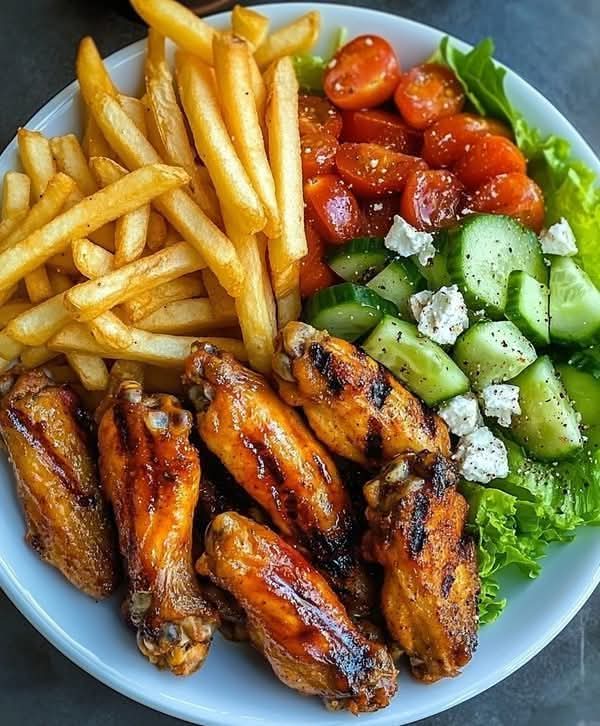
In your expansive culinary portfolio, which spans the rich Classic Butter Cake to the savory Garlic Butter Shrimp & Steak Bites, the Grilled Chicken Wings Plate represents the ultimate expression of casual, high-flavor dining. While your Fried Chicken Drumsticks focus on a thick, craggy flour breading, this grilled plate emphasizes the natural rendering of chicken skin and the deep infusion of spice through direct flame contact.
The presentation features a generous portion of drumettes and flats, paired with thick-cut seasoned fries and a cooling dipping sauce, all served in a clean white bowl.
1. Visual Anatomy: The Texture of the Char
The visual appeal of this plate is defined by the contrast between the vibrant, orange-red glaze of the wings and the golden-yellow of the fries:
- The Wing Glaze: The chicken wings exhibit a glossy, semi-translucent coating that suggests a honey or maple-based buffalo sauce. Areas of deep mahogany and black “char” spots indicate they were finished over high heat to caramelize the sugars in the marinade.
- Thick-Cut Seasoned Fries: The fries are cut into substantial wedges rather than thin matchsticks. They are dusted with a fine herb blend—likely dried parsley or oregano—and salt, showing a matte finish that suggests they were baked or air-fried to a sturdy crispness.
- The Cooling Element: A small glass ramekin holds a thick, white sauce topped with fresh green herbs. Its creamy consistency provides a visual and textural break from the spicy, oily wings and the starchy fries.
- Herbaceous Garnish: Fine green flecks are scattered across the fries and the sauce, tying the entire plate together with a hint of freshness.
2. Technical Execution: Balancing Heat and Moisture
Achieving the perfect grilled wing requires a two-stage cooking process to ensure the meat is tender while the skin is crispy:
The Indirect Render
To avoid the common pitfall of burnt skin and raw centers, the wings are often started over indirect heat. This allows the fat under the skin to “render” or melt away slowly, which is what eventually makes the skin crispy.
The Glaze and Sear
The vibrant color seen in the photograph comes from applying the sauce in the final minutes of cooking. By moving the wings directly over the flames after saucing, the sugars in the glaze undergo rapid caramelization, creating the sticky, “finger-licking” texture that defines high-quality grilled wings.
Fry Consistency
The thickness of the fries on this plate is strategic; they are thick enough to hold their internal heat and fluffy texture while being sturdy enough to act as a vehicle for the leftover wing sauce or the creamy dip.
3. Flavor Harmony: Sweet, Spicy, and Creamy
This dish is a classic example of flavor “triangulation,” where three distinct profiles work together to create a balanced bite:
- The Heat (Wings): The orange-red hue suggests a base of cayenne or chili, providing a sharp, acidic heat that stimulates the appetite.
- The Salt and Earth (Fries): The seasoned fries provide the savory, salty foundation. The earthiness of the potato balances the intensity of the wing sauce.
- The Relief (Creamy Dip): The white sauce—likely a Ranch or Blue Cheese base—provides a cooling effect that neutralizes the capsaicin from the wings, allowing the diner to reset their palate for the next bite.
4. Nutritional Profile: Protein and Energy
This plate offers a dense source of protein and carbohydrates, making it a favorite for post-activity refueling.
| Component | Main Nutrient | Health Contribution |
| Grilled Wings | High Protein, Vitamin B6 | Essential for muscle maintenance and metabolism. |
| Seasoned Fries | Carbohydrates, Potassium | Provides immediate energy and supports heart health. |
| Creamy Dip | Calcium, Fats | Aids in the absorption of fat-soluble vitamins. |
| Herbal Garnish | Micronutrients | Adds a small boost of antioxidants like Vitamin K. |
5. Strategic Menu Pairings
To round out the “pub-style” experience of the Grilled Chicken Wings Plate, consider these additions from your existing menu:
- The Fresh Contrast: A side of your Greek Salad with Feta would provide a watery, crunchy texture that cuts through the richness of the wings and fries.
- The Veggie Side: The Charred Broccoli from your steak plate offers a bitter, smoky note that complements the grilled flavor of the chicken.
- The Sweet Finish: Follow this savory meal with a light slice of Japanese Soufflé Cheesecake to provide a cloud-like, mildly sweet ending that doesn’t feel heavy after the fried elements.
6. Frequently Asked Questions (FAQ)
Are these wings fried or grilled?
While they are served with fries, the distinct char marks and glossy, non-breaded skin indicate they are grilled or perhaps roasted at very high heat. This is a healthier alternative to the deep-fried drumsticks seen elsewhere in your collection.
How do I get the fries so golden?
To achieve the golden-yellow color seen here without deep-frying, soak the potato wedges in cold water to remove excess starch, dry them thoroughly, and toss them in a small amount of oil and cornstarch before baking.
What is in the white sauce?
The visual cues—thick, creamy, and topped with herbs—suggest a Greek yogurt or sour cream-based dip with dill, garlic, and chives.
7. Photography Analysis: The “Crave” Perspective
The photography of this plate uses “warm-tone saturation” to make the food look more inviting:
- Macro Texture: The camera is positioned at a 45-degree angle, allowing the viewer to see the “crags” on the fries and the sticky “glaze” on the wings simultaneously.
- Color Complementarity: The orange of the wings and the yellow of the fries are neighbors on the color wheel, creating a harmonious and warm visual experience that the human brain associates with “comfort food”.
- Depth of Field: The background remains slightly out of focus, keeping all the attention on the foreground elements—the wings and the dip—which are the “heroes” of the plate.