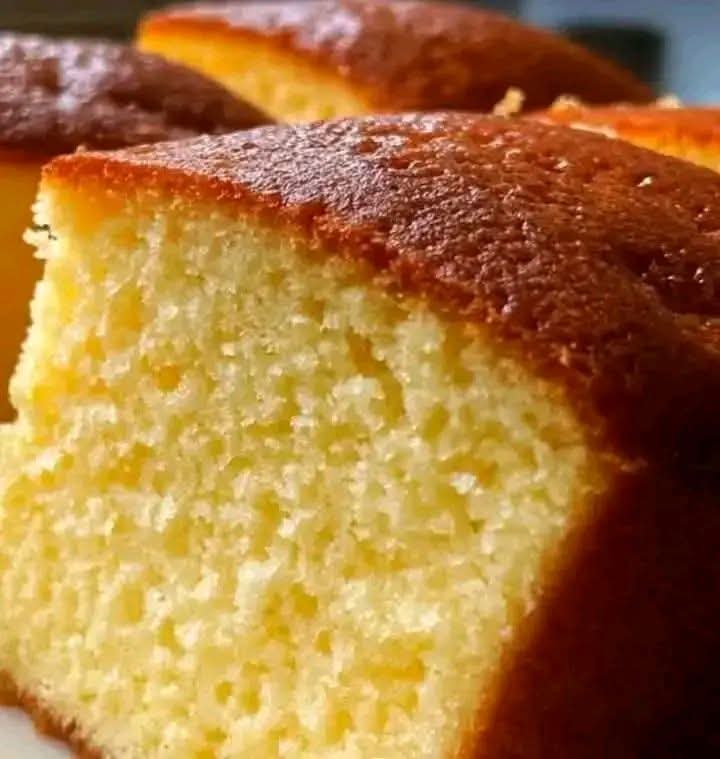
The Moist Butter Cake, as illustrated in your recent culinary gallery, is the quintessential foundation of home baking—a dish that prioritizes a tight, velvet-like crumb and a rich, golden exterior. This cake represents a move toward pure, unadulterated flavor, standing in contrast to the complex, multi-component architecture of your Brownie Bottom Mini Cheesecakes or the fruit-heavy profile of your Heavenly Raspberry Mousse Parfait.
Achieving the specific level of “moistness” and the uniform, honeycomb-like aeration seen in your photo requires a technical mastery of the “creaming method” and precise temperature management of dairy fats. This guide explores the chemistry, technique, and artistic staging necessary to produce a butter cake that is both structurally sound and decadently soft.
1. The Anatomy of a Superior Butter Cake
A professional butter cake is defined by its “even crumb”—a lack of large air tunnels—and a crust that is caramelized but not tough. Based on the visual evidence in your photo, this cake achieves success through three critical attributes:
- The Golden “Maillard” Crust: A thin, mahogany-toned top layer that provides a slight resistance before giving way to the soft interior.
- The Uniform Aeration: A crumb structure that features thousands of tiny, evenly distributed air pockets, which hold moisture and provide the “melt-in-your-mouth” sensation.
- The High-Fat Luster: A visible “sheen” on the cut surface of the cake, indicating that the butter and milk have been perfectly emulsified into the flour.
2. Technical Precision: The Science of the Creaming Method
The secret to the height and texture of the cake in your photo is the Creaming Method. This is a mechanical process where sugar crystals are used to “drill” millions of tiny holes into solid fat.
The Temperature of Success
- The 65°F (18°C) Rule: For the butter to hold air effectively, it must be at “cool room temperature”—soft enough to indent with a finger but firm enough to hold its shape. If the butter is too warm (greasy), the air bubbles will collapse, leading to a flat, oily cake.
- Emulsification: Eggs must be added one at a time. Much like the stable custard in your Green Chile Cheese Pie, adding cold eggs to warm butter will cause the batter to “curdle,” breaking the emulsion and resulting in a coarse, dry crumb.
Ingredient Ratios for Maximum Moisture
To achieve the “heavy-weight” moisture seen in your image, the recipe should utilize a High-Ratio approach:
- The Fat: Use a mixture of high-quality European butter (for flavor) and a tablespoon of neutral oil. The oil remains liquid at room temperature, ensuring the cake feels moist even after it has cooled.
- The Liquid: Substituting standard milk with Buttermilk or a combination of milk and Sour Cream introduces acidity. This acidity tenderizes the gluten in the flour, creating the delicate texture visible in your cross-section.
3. Flavor Profiles: Elevating the Simple
While the butter is the star, a master-level cake uses subtle “flavor bridges” to enhance the experience:
- The Vanilla Spectrum: Use a combination of pure vanilla extract and vanilla bean paste. The alcohol in the extract provides an immediate aroma, while the paste offers a deep, lingering flavor and the classic “speckled” look.
- Salt as a Catalyst: A generous pinch of fine sea salt is required to balance the high sugar and fat content. Without it, the cake can taste “flat.”
- The Citrus Lift: A small amount of lemon or orange zest (rubbed into the sugar before creaming) adds a bright top-note that cuts through the richness of the butter, similar to the lemon garnish on your Baked Cod.
4. Nutritional Profile: Dense Energy and Fortified Fats
Butter cake is an energy-dense food that provides essential fat-soluble vitamins when made with high-quality ingredients.
| Component | Key Nutrients | Functional Benefit |
| High-Quality Butter | Vitamin A, D, & E | Supports skin health and immune function. |
| Enriched Flour | Iron & B-Vitamins | Provides essential minerals for oxygen transport and energy production. |
| Pasture-Raised Eggs | Choline & Protein | Supports brain health and provides the structural integrity seen in the crumb. |
| Milk/Buttermilk | Calcium | Essential for bone health and proper muscle function. |
5. Aesthetic Staging and Presentation
To match the professional, “sun-drenched” aesthetic of your photo, follow these presentation principles:
- The “Macro-Crumb” Shot: As seen in your image, getting a close-up of the internal structure highlights the moisture and quality of the bake.
- Natural Back-Lighting: Positioning the cake near a window (as indicated by the soft shadows in your photo) allows the light to pass through the top of the crumb, making the cake look lighter and fluffier.
- The “Loaf-End” Perspective: Photographing the cake from an angle that shows both the crusty end and the sliced interior (as seen in your Fruit Cake image) provides a complete “story” of the bake.
6. Frequently Asked Questions (FAQ)
Why did my cake sink in the middle?
This is often caused by opening the oven door too early, which causes a sudden drop in temperature before the structure is set. Like the Green Chile Cheese Pie, a cake needs consistent heat to “lock” its height.
How can I make the crust look as golden as the photo?
Brush the top of the batter with a small amount of melted butter and a sprinkle of granulated sugar before baking. This encourages the Maillard reaction, resulting in the beautiful color seen in your gallery.
Can I freeze this cake?
Yes. Due to the high fat content, butter cakes freeze exceptionally well. Wrap it tightly in plastic wrap and foil; it will retain its moisture for up to 3 months.
7. Culinary Inspiration: Integrating Your Gallery
The Moist Butter Cake is a versatile “workhorse” that can be integrated into several of your other culinary themes:
- The “Trifle” Transformation: Cube the butter cake and layer it with the components of your Raspberry Mousse Parfait for a decadent, multi-textured dessert.
- The Afternoon Tea Pairing: Serve a thick slice alongside the Oreo Frappuccinos for a modern take on the classic “coffee and cake” tradition.
- The “Shortcake” Base: Top a slice with the fresh strawberries from your Chocolate Fruit Parfait and a dollop of whipped cream for an instant Summer Strawberry Shortcake.
- The Holiday Variant: Use this same base batter and fold in the dried fruits seen in your Classic Fruit Cake for a more substantial holiday loaf.