Chicken Thighs and Vegetables in the Oven The Art of the One-Pan Roast
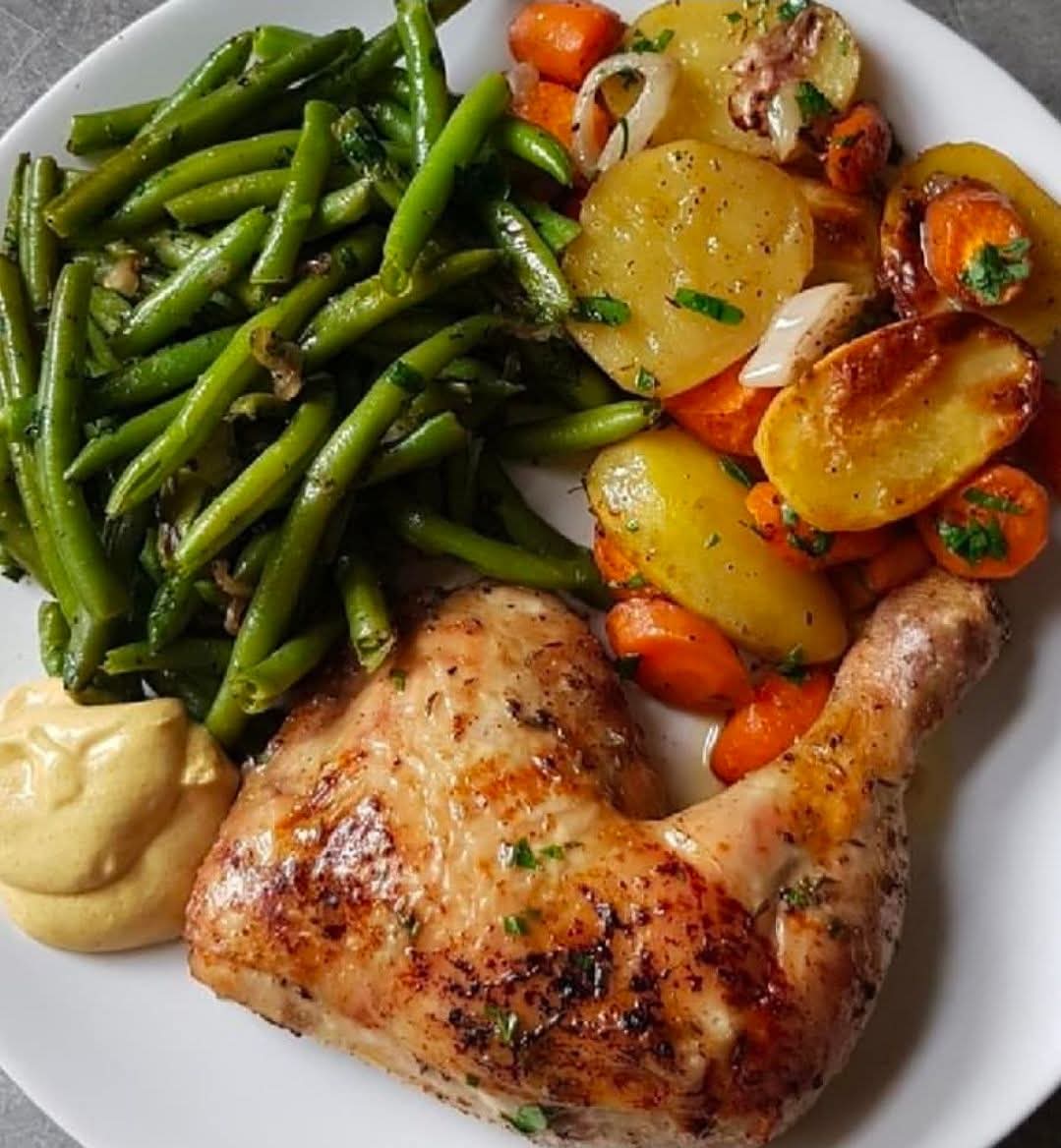
The Chicken Thighs and Vegetables platter, as presented in your latest culinary capture, is a masterclass in “High-Heat Harmony”. This dish represents the evolution of the sheet-pan dinner, where a succulent, herb-roasted chicken leg quarter is paired with a duo of distinct vegetable preparations: crisp-tender sautéed green beans and golden, caramelized roasted potatoes and carrots. By utilizing the oven as a centralized heat source, you have achieved a meal that is both deeply comforting and technically balanced in its nutritional profile.
Achieving the specific “shimmer” on the roasted chicken skin and the translucent, buttery glaze on the potatoes seen in your photo requires a technical understanding of fat rendering, vegetable “staggering,” and the science of the Maillard reaction. This comprehensive guide explores the culinary physics and refined techniques necessary to master this oven-roasted classic.
1. The Anatomy of a Roasted Performance Plate
A professional oven-roasted platter is built on a structural hierarchy that ensures every component reaches its peak texture at the same moment. Based on the visual evidence in your gallery, this meal is composed of four critical elements:
- The Herb-Crusted Leg Quarter: A whole chicken thigh and drumstick with a deep-gold, roasted exterior, seasoned with finely minced herbs that have “toasted” into the skin.
- The Root Vegetable Medley: Sliced potatoes and carrots that have been roasted in the rendered chicken fat, creating a “fond” that coats each piece in a savory, natural glaze.
- The Vibrant Green Beans: A mound of sautéed or oven-blanched beans that maintain their bright-green chlorophyll, providing a fresh, snappy texture to cut through the richness of the meat.
- The Mustard Emulsion: A smooth, creamy condiment (likely a Dijon or honey-mustard blend) that adds an essential acidic “zing” to the plate.
2. Technical Precision: The “Triple-Heat” Roasting Method
The primary challenge of this dish is that chicken thighs, root vegetables, and green beans all have different “perfect” cooking temperatures. To achieve the results seen in your image:
The Science of Crispy Skin
- The Salt-Cure Effect: To get the translucent, taut skin visible on your chicken, the meat must be salted and left uncovered in the fridge for at least 2 hours. This draws out moisture, allowing the skin to crisp rather than steam.
- Rendering the Fat: Thighs are high in fat. Roasting at 400°F (200°C) allows this fat to melt (render) and fry the skin from the inside out, similar to the technique used in your Chicken Fried Lunch.
Staggered Vegetable Loading
For the golden-brown potatoes and bright green beans seen in your photo:
- Phase 1 (The Roots): Potatoes and carrots go in first with the chicken. They require the longest time to break down their starches and sugars.
- Phase 2 (The Greens): The green beans are added in the final 8–10 minutes. This ensures they soften slightly but do not turn gray or mushy, maintaining the “snappy” look visible in your collection.
3. The Flavor Bridge: Herbs and Emulsions
Your presentation highlights the importance of aromatic herbs and a “finishing” sauce.
- The Herb Infusion: Much like the rosemary used in your Homemade Bread, using woody herbs (thyme or rosemary) during the roast allows the oils to penetrate the potato skins.
- The Mustard “Cut”: The dollop of mustard visible on the plate is not just for decoration. Its acidity serves as a palate cleanser between bites of fatty chicken thigh and buttery potatoes.
- Allium Interaction: Notice the sautéed onions mixed with the potatoes? These provide a “sweet-savory” background note that bridges the earthy carrots and the salty chicken.
4. Nutritional Profile: The Satiety Powerhouse
This meal is a textbook example of a “Slow-Release” energy plate, providing long-lasting fullness without the sugar spikes of refined carbs.
| Component | Primary Nutrients | Functional Note |
| Chicken Thigh | Iron, Zinc, Protein | Richer in flavor and minerals than breast meat; stays juicy at high oven heats. |
| Roasted Carrots | Beta-Carotene | Fat-soluble vitamins; roasting with chicken fat actually increases their absorption. |
| Green Beans | Fiber & Vitamin K | Adds volume to the meal and supports bone health. |
| Potatoes | Complex Carbs | Provides the glucose needed for brain function and muscle recovery. |
5. Artistic Presentation and Staging
To match the professional “bistro-style” aesthetic of your photo, follow these staging principles:
- The “Separated Pile” Technique: Don’t mix the greens with the roots. Keeping them in distinct “islands” on the plate makes the meal look organized and high-end.
- The Sauce Dollop: Use a spoon to create a clean, rounded mound of mustard or sauce. In your photo, this adds a professional “finished” look that suggests intentionality.
- The “Bone-In” Anchor: Placing the drumstick pointing toward the diner (as seen in the photo) creates a welcoming focal point for the protein.
6. Frequently Asked Questions (FAQ)
Why did my chicken skin turn out soggy?
You likely crowded the pan. If the vegetables are too close to the chicken, they release steam that prevents the skin from crisping. Give the chicken “breathing room” on the tray.
Can I use a different vegetable mix?
Absolutely. If you want to lean into the style of your Salmon Platter, try adding asparagus or lemon rounds to the oven for the last 5 minutes.
How do I know when the chicken is done?
A thigh is “safe” at 165°F (74°C), but for the best texture and fat-rendering, aim for 175°F (80°C). Unlike the breast, the thigh actually gets more tender as it climbs slightly past the minimum temperature.
7. Culinary Inspiration: Integrating Your Gallery
This oven-roasted dinner is a versatile foundation that can be enhanced by other items in your collection:
- The Bread Service: Use a slice of your Rosemary Garlic Homemade Bread to mop up the chicken juices and mustard left on the plate.
- The “Surf & Turf” Platter: Add a side of Garlic Butter Scallops to this plate to turn it into a luxury feast.
- The Sauce Swap: For a more indulgent version, replace the mustard with your Haunted Bourbon Garlic Cream Sauce.
- The Dessert Pairing: After a savory, earthy meal of roasted roots and chicken, a light, fruit-forward dessert like your No-Bake Raspberry Coconut Balls provides the perfect refreshing finish.