The Gold Standard of Weeknight Dinners: An Introduction
There is a reason the One-Pan Salmon with Baby Potatoes and Asparagus has become a staple in modern healthy cooking. It is the perfect trifecta of nutrition, flavor, and convenience. This dish offers high-quality protein and Omega-3 fatty acids from the salmon, complex carbohydrates from the baby potatoes, and essential vitamins from the asparagus and tomatoes.
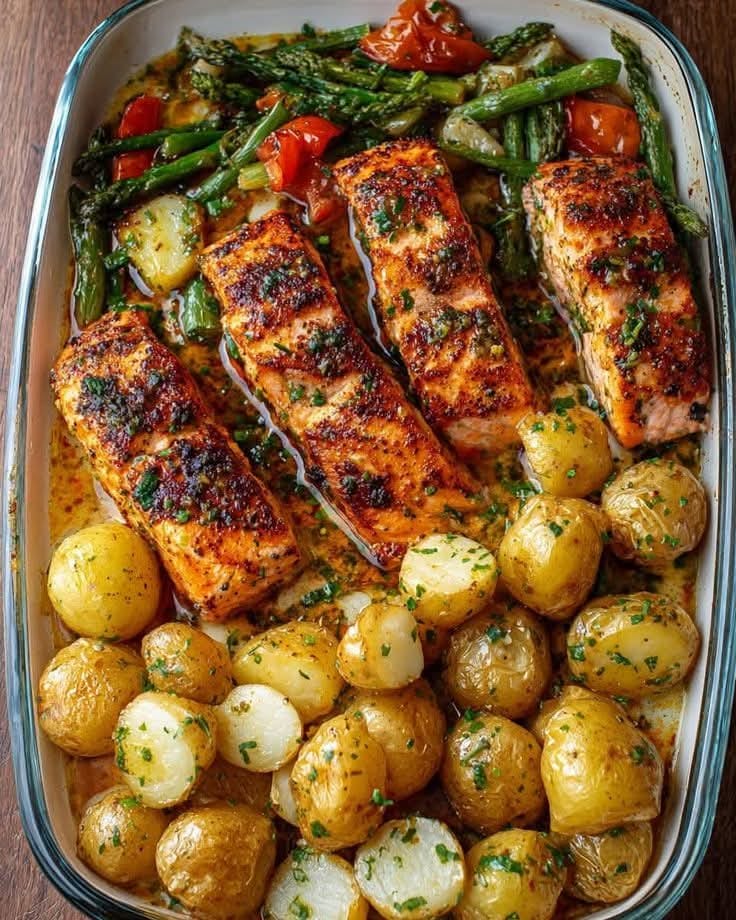
In the culinary world, “one-pan” or “sheet-pan” meals are celebrated for their ability to allow flavors to meld together. As the salmon roasts, its savory juices and the garlic-herb butter melt down into the potatoes and vegetables, creating a cohesive flavor profile that is impossible to achieve when cooking components separately. The image highlights the beautiful textures you can achieve: the salmon has a dark, caramelized herb crust; the baby potatoes are tender with glistening skins; and the asparagus retains a slight charred snap.
This recipe is designed for the busy professional, the health-conscious parent, or anyone who wants a “restaurant-quality” meal without the restaurant-level cleanup. By following the specific timing in this guide, you will ensure that every element—from the dense potatoes to the delicate salmon—is cooked to absolute perfection simultaneously.
📝 Ingredients You’ll Need (The Freshness Factor)
Success starts with the quality of your ingredients. Because this dish relies on simple preparations, the freshness of your produce and fish will shine through.
The Protein:
- 4 Center-Cut Salmon Fillets (6 oz each): Look for fillets of uniform thickness to ensure even cooking.
- 1 tablespoon Olive Oil: For the initial sear.
The Vegetables:
- 1.5 lbs Baby Potatoes: Yukon Gold or Red Bliss work best because of their creamy texture and thin skins.
- 1 bunch Fresh Asparagus: Trim the woody ends (about 1-2 inches from the bottom).
- 1 cup Cherry Tomatoes: These will blister and create a natural “sauce”.
The Garlic Herb Butter Sauce & Rub:
- 4 tablespoons Unsalted Butter, melted.
- 3 cloves Garlic, minced.
- 1 tablespoon Fresh Parsley, chopped (plus more for garnish).
- 1 teaspoon Dried Oregano.
- 1 teaspoon Smoked Paprika (for that deep golden color seen in the image).
- 1/2 teaspoon Salt and 1/2 teaspoon Black Pepper.
- 1 tablespoon Lemon Juice (freshly squeezed).
Equipment:
- 9×13 inch Glass Baking Dish or Large Sheet Pan.
🔪 Step-by-Step Cooking Instructions (Mastering the Timing)
The biggest challenge with one-pan meals is that different ingredients cook at different rates. We solve this by using a “staggered start” method.
1. Prep and Par-Roast the Potatoes
- Preheat your oven to 400^\circ\text{F} (200^\circ\text{C}).
- Wash the baby potatoes and cut any larger ones in half so they are all roughly the same size.
- Place the potatoes in your glass baking dish. Drizzle with 1 tablespoon of olive oil and a pinch of salt and pepper. Toss to coat.
- First Bake: Place the potatoes in the oven for 15-20 minutes. Potatoes take much longer to soften than salmon or asparagus, so this head start is essential for a tender interior.
2. Create the Garlic Herb Rub
- In a small bowl, combine the melted butter, minced garlic, chopped parsley, dried oregano, smoked paprika, salt, pepper, and lemon juice.
- Whisk until well combined. This mixture will serve as both a marinade and a basting sauce.
3. Prepare the Salmon and Vegetables
- While the potatoes are par-roasting, pat your salmon fillets completely dry with a paper towel. Moisture is the enemy of a good sear!
- Brush the top of each salmon fillet generously with the garlic herb mixture. You want a thick coating to create that beautiful crust.
4. Assemble the Pan
- Carefully remove the baking dish from the oven.
- Push the potatoes to one side of the pan to make room for the salmon and asparagus.
- Place the salmon fillets in the center.
- Arrange the trimmed asparagus and cherry tomatoes in the remaining space.
- Drizzle any remaining garlic herb butter over the asparagus and potatoes.
5. The Final Roast
- Return the dish to the oven and roast for 12-15 minutes.
- The Doneness Test: The salmon is done when it flakes easily with a fork and reaches an internal temperature of 145^\circ\text{F} (63^\circ\text{C}). The asparagus should be tender-crisp, and the tomatoes should just be starting to burst.
- Optional Broil: If you want an extra-crispy crust on the salmon (like in the photo), turn the broiler on high for the final 1-2 minutes, watching very closely to prevent burning.
6. Garnish and Serve
- Remove from the oven and let the dish rest for 5 minutes.
- Sprinkle with additional fresh parsley for a pop of color.
- Serve directly from the pan for a rustic, family-style presentation.
⭐ Deep Dive: Why This Recipe Works
To truly master this dish, it helps to understand the science and culinary logic behind the ingredients and techniques used.
The Power of Smoked Paprika
If you look closely at the salmon in the image, it has a rich, reddish-brown hue. This is achieved through Smoked Paprika. While regular paprika adds color, the smoked variety adds a “grilled” flavor profile even when cooking in a standard indoor oven. It complements the fatty richness of the salmon perfectly.
The Importance of the Glass Dish
Using a glass baking dish, as shown in the source image, helps retain heat and allows the juices to pool slightly. This creates a braising effect for the bottom of the potatoes while the tops roast, leading to an incredibly flavorful result.
Asparagus Texture
Asparagus is a delicate vegetable. By adding it only in the final 12 minutes of cooking, we prevent it from becoming mushy and grey. The high heat of 400^\circ\text{F} (200^\circ\text{C}) ensures the tips become slightly charred and crispy, which provides a wonderful textural contrast to the soft potatoes.
💡 Variations and Substitutions
While the version in the image is a classic, you can adapt this recipe based on what you have in your pantry:
- The Starch: If you don’t have baby potatoes, you can use diced sweet potatoes. Just keep the chunks small to ensure they cook through during the par-roasting phase.
- The Veggies: Broccoli florets or green beans can be substituted for asparagus. If using green beans, add them at the same time as the salmon.
- The Sauce: For a dairy-free version, replace the butter with high-quality avocado oil or extra virgin olive oil.
- The Herb Profile: Swap parsley and oregano for fresh dill and chives for a more traditional “Scandinavian” salmon flavor.
🥗 Serving Suggestions
This is a complete meal on its own, but if you are hosting a dinner party, consider these pairings:
- Wine: A crisp Sauvignon Blanc or a light Pinot Noir pairs beautifully with the fatty salmon and garlic notes.
- Bread: A crusty baguette is perfect for soaking up the garlic butter juices left at the bottom of the baking dish.
- Salad: A very light arugula salad with a lemon-vinaigrette provides a sharp acidity that cuts through the richness of the butter sauce.
🧼 Pro Tip for Cleanup
To make cleanup even easier, you can line your baking dish with parchment paper or aluminum foil. However, cooking directly in the glass dish (as pictured) often results in better caramelization of the potato skins.