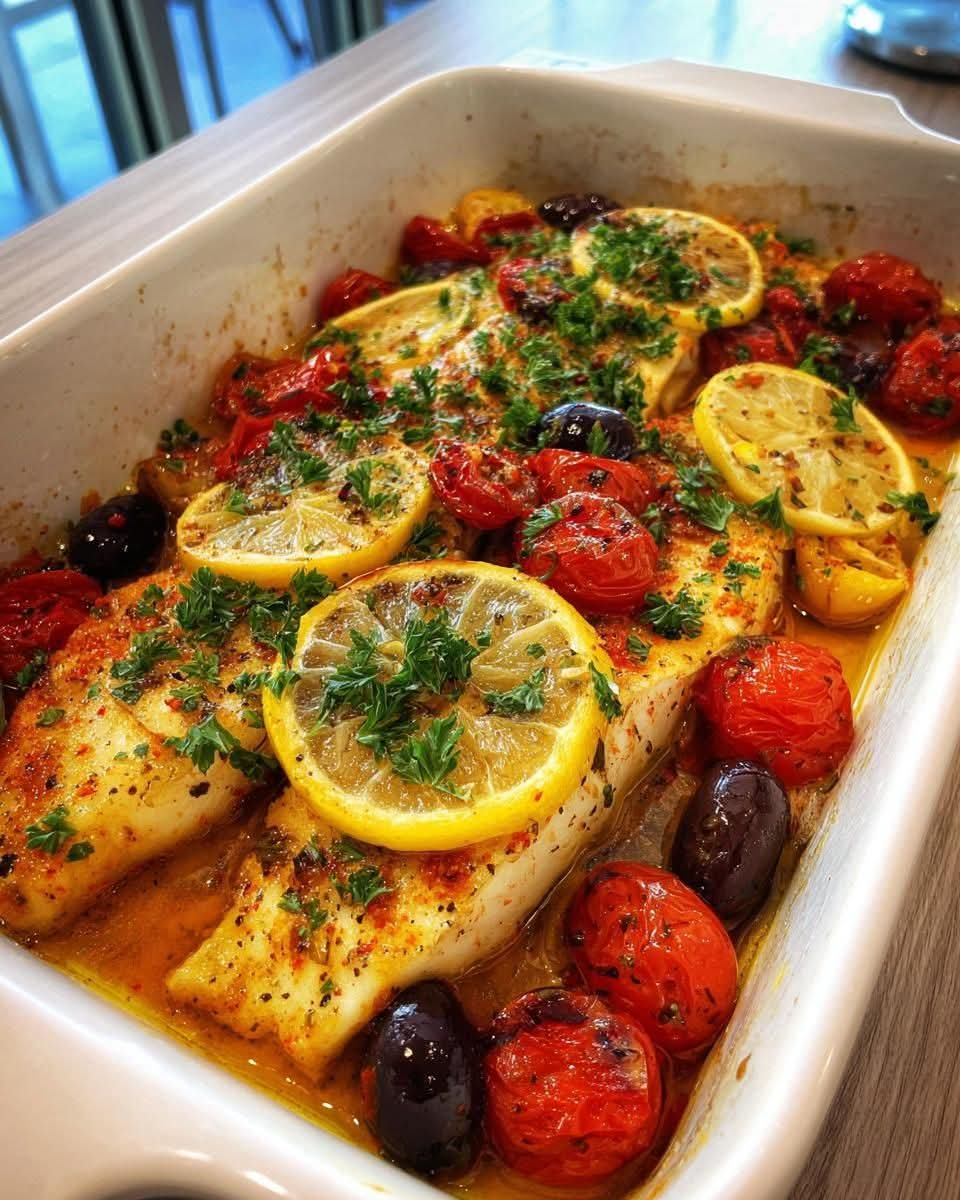
Baked Lemon Fish is a cornerstone of light, vibrant, and nutrient-dense cooking. As captured in your recent culinary images, this dish exemplifies the beauty of Mediterranean-style preparation, where high-quality protein is paired with acidic citrus and briny aromatics. This specific method—often characterized as oven-roasting or poaching—ensures that delicate white fish remains succulent while its natural juices create a built-in pan sauce.
To achieve the professional, glistening finish seen in your collection, one must balance the bright acidity of the lemon with the deep umami of roasted vegetables. This guide explores the technical precision and culinary theory required to master this “big” flavor seafood platter.
1. The Anatomy of a Perfect Seafood Platter
A world-class baked fish dish, like the one in your image, relies on a specific harmony of ingredients that provide a full spectrum of textures and flavors:
- The Protein Foundation: Thick, firm white fish fillets, such as cod, halibut, or sea bass, are the ideal choice. They provide a mild, clean canvas that absorbs the surrounding flavors without falling apart during the roast.
- The Citrus Infusion: Fresh lemon slices are layered directly onto the fish. This serves a dual purpose: it acts as a visual garnish and provides a steady drip of citric acid that tenderizes the surface and brightens the palate.
- The Briny Accents: The inclusion of whole Kalamata olives provides a salty, fermented punch. This salinity is essential for cutting through the mildness of the fish and the sweetness of the roasted vegetables.
- The Blistered Texture: Cherry tomatoes are roasted until they burst. This process concentrates their natural sugars and releases juices that emulsify with the olive oil to form a natural, jammy sauce.
- The Aromatic Garnish: A final, generous layer of freshly chopped flat-leaf parsley provides a “green” spark and essential visual contrast to the deep red and orange tones of the pan.
2. Technical Precision: Mastering the Bake
Seafood is highly sensitive to heat, and achieving the exact level of flake and moisture shown in your gallery requires careful environmental control.
Selecting the Baking Vessel
As seen in your photo, a ceramic or glass baking dish is the preferred tool. These materials hold and distribute heat evenly, which is critical for preventing the delicate proteins in the fish from seizing or drying out at the edges.
Temperature and Timing
Roasting at 200°C is the industry standard for this style of dish. This temperature is high enough to blister the tomato skins and “toast” the lemon slices before the fish becomes overcooked. The goal is to reach an internal temperature of 63°C, ensuring the meat is opaque and tender.
The Infusion Strategy
Before the citrus and vegetables are added, the fillets should be treated with a rub of high-quality extra virgin olive oil, salt, and dried herbs like oregano or smoked paprika. This creates a primary layer of flavor that the lemon juice will later enhance during the baking process.
3. Nutritional Profile: The Heart-Healthy Choice
This platter is a hallmark of the Mediterranean diet, offering a dense array of macronutrients and vitamins essential for metabolic health:
| Component | Primary Nutrients | Functional Benefit |
| White Fish Fillets | Lean Protein, Selenium, B12 | Supports muscle maintenance, thyroid function, and nerve health. |
| Cherry Tomatoes | Lycopene & Vitamin C | Powerful antioxidants that support skin health and immune function. |
| Kalamata Olives | Monounsaturated Fats | Supports heart health and helps reduce systemic inflammation. |
| Fresh Lemon | Vitamin C & Citric Acid | Aids in the absorption of iron and acts as a digestive stimulant. |
| Olive Oil | Omega-9 Fatty Acids | Critical for the absorption of fat-soluble vitamins (A, D, E, K). |
4. Professional Secrets for Success
- The Pan Sauce Baste: The liquid at the bottom of the dish—a mix of olive oil, tomato juice, and lemon—is “liquid gold”. Use a spoon to baste the fish with these juices just before serving to add a final glossy sheen.
- Space Management: Do not overcrowd the fillets. Proper air circulation is necessary to ensure the tomatoes blister and the olives roast; if the pan is too tight, the ingredients will steam, resulting in a soggy texture.
- The Resting Phase: Allow the dish to sit for 3 to 5 minutes after removal from the oven. This allows the muscle fibers in the fish to relax and reabsorb the hot juices, ensuring the fillets remain succulent when flaked.
5. Frequently Asked Questions (FAQ)
Can I use frozen fish?
While fresh is ideal, high-quality frozen fillets can be used if thawed completely and patted dry. Excess moisture from frozen fish can dilute the pan sauce and prevent the tomatoes from blistering correctly.
How do I know when the fish is done?
The fish should be opaque and should flake easily with a fork at its thickest part. If the meat is still translucent or resists the fork, it requires more time.
What are the best side dishes for this?
This dish is traditionally served with light grains like couscous, quinoa, or a simple side of crusty bread to soak up the aromatic pan juices.