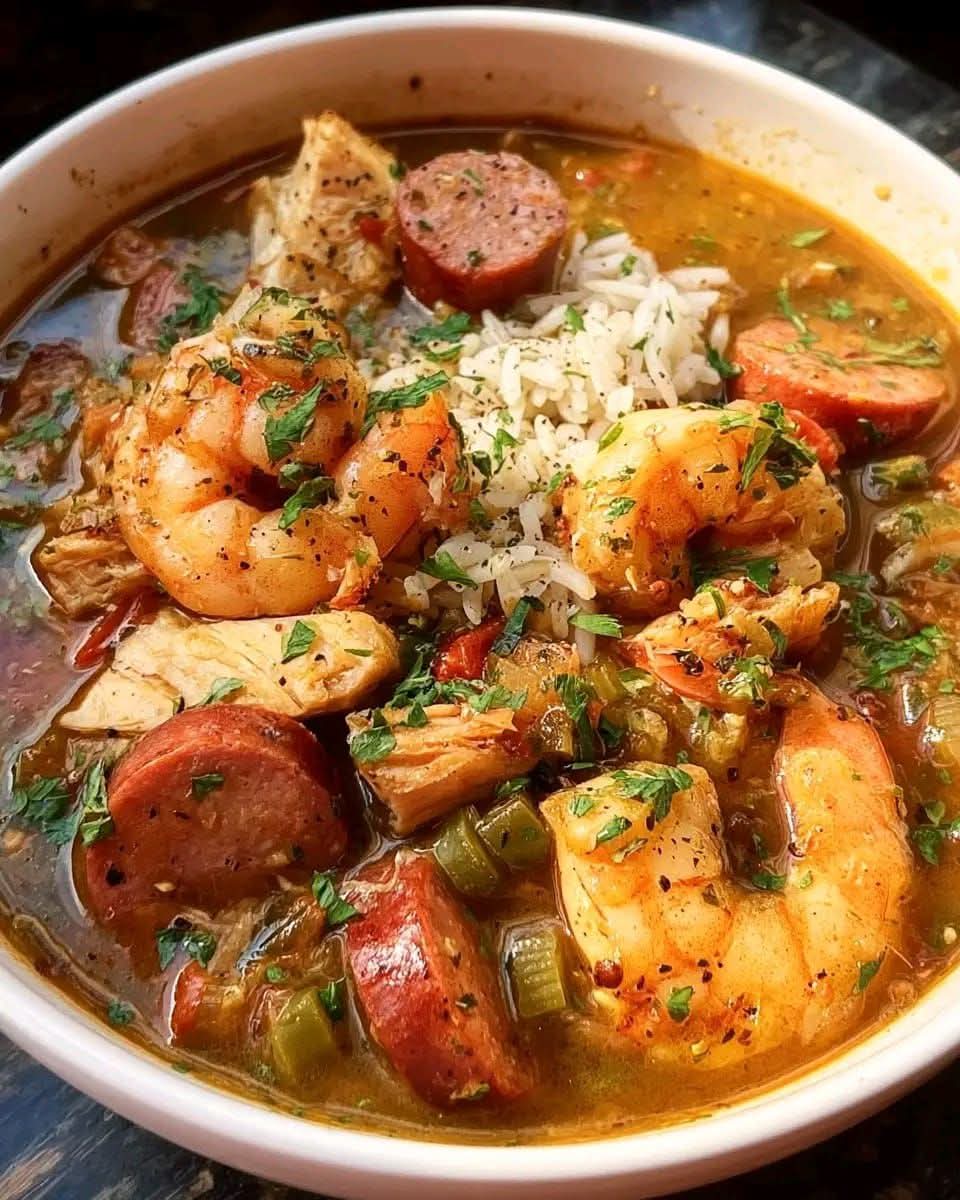
Louisiana Seafood Gumbo is a cornerstone of Creole and Cajun cuisine, celebrated for its complex, layered flavors and its historical roots as a melting pot of French, Spanish, African, and Native American influences. A true gumbo is defined by its roux—a slow-cooked mixture of flour and fat—and the “holy trinity” of vegetables (onions, celery, and bell peppers). This hearty stew is typically served over white rice and garnished with fresh parsley or scallions.
Visual Characteristics of an Authentic Gumbo
Based on your collection, a professionally prepared gumbo should display these key visual markers:
- The Dark Rich Broth: A successful gumbo features a broth that ranges from golden brown to dark mahogany, depending on how long the roux was cooked.
- Plump Seafood: Fresh, pink shrimp and tender pieces of white fish or crabmeat should be visible and not overcooked into the liquid.
- Sliced Aromatics: Rounds of smoky andouille sausage and sliced okra (a traditional thickener) add both texture and visual variety to the bowl.
- The Rice Mound: Serving the gumbo with a central scoop of fluffy white rice helps soak up the savory broth while providing a clean visual contrast.
Essential Nutritional Components
Gumbo is a nutritionally dense meal that provides a wide array of vitamins and minerals:
- High-Quality Protein: Shrimp and crab provide lean protein, iodine, and omega-3 fatty acids, which are essential for heart and brain health.
- Fiber and Thickening (Okra): Okra is not just a thickener; it is rich in Vitamins C and K, as well as fiber, which aids in digestion.
- Metabolism Boost (The Holy Trinity): Onions and bell peppers are packed with antioxidants and Vitamin C, which help support immune function.
- Mineral Density: The inclusion of seafood and sausage provides essential minerals like Selenium, Zinc, and Iron.
The Four Pillars of Gumbo Preparation
1. The Master Roux
The roux is the soul of the gumbo. It requires whisking equal parts fat (oil or lard) and flour over low-to-medium heat for anywhere from 20 to 45 minutes until it reaches the color of a copper penny or dark chocolate.
Pro Tip: Never leave your roux unattended; if it burns even slightly (shown by black specks), you must discard it and start over, as the bitterness will ruin the entire pot.
2. The “Holy Trinity”
Once the roux is ready, immediately add finely diced onions, celery, and green bell peppers. The moisture in the vegetables stops the roux from cooking further while releasing the aromatics essential to the base flavor.
3. The Seafood Stock
Traditional gumbo uses a rich stock made from boiled shrimp shells or blue crab bodies. This liquid is added slowly to the roux and vegetable mixture to create a velvety, cohesive broth.
4. Timing the Protein
To ensure the best texture, the andouille sausage and okra are simmered with the broth for at least 30–60 minutes. The delicate seafood, such as shrimp and oysters, is added in the last 5 to 7 minutes of cooking to prevent them from becoming rubbery.
Professional Tips for Best Results
- Sausage First: Brown your andouille sausage in the pot before starting the roux. This leaves “fond” (flavorful browned bits) on the bottom that will be incorporated into the stew.
- The Filé Factor: If you aren’t using okra to thicken your gumbo, use Gumbo Filé (ground sassafras leaves). Always add filé after the heat is turned off, as boiling it will make the gumbo stringy.
- Overnight Magic: Like many stews, gumbo often tastes better the next day after the spices and proteins have had time to fully meld in the refrigerator.
Frequently Asked Questions (FAQ)
Can I make gumbo without a roux?
Strictly speaking, it wouldn’t be a traditional Louisiana gumbo. The roux provides both the characteristic thickness and the deep, nutty flavor profile that defines the dish.
Is gumbo always spicy?
While it has a deep flavor, it is not necessarily “hot.” The spice level is usually controlled by the type of sausage used and the addition of hot sauce or cayenne pepper at the table.
What is the difference between Creole and Cajun Gumbo?
Creole gumbo (found in New Orleans) often includes tomatoes and uses a slightly lighter roux, whereas Cajun gumbo (rural Louisiana) strictly avoids tomatoes and prefers a very dark, smoky roux.
Next Step: Would you like a detailed spice blend recipe for Cajun seasoning, or would you like to see a guide on how to make a homemade seafood stock from shrimp shells?