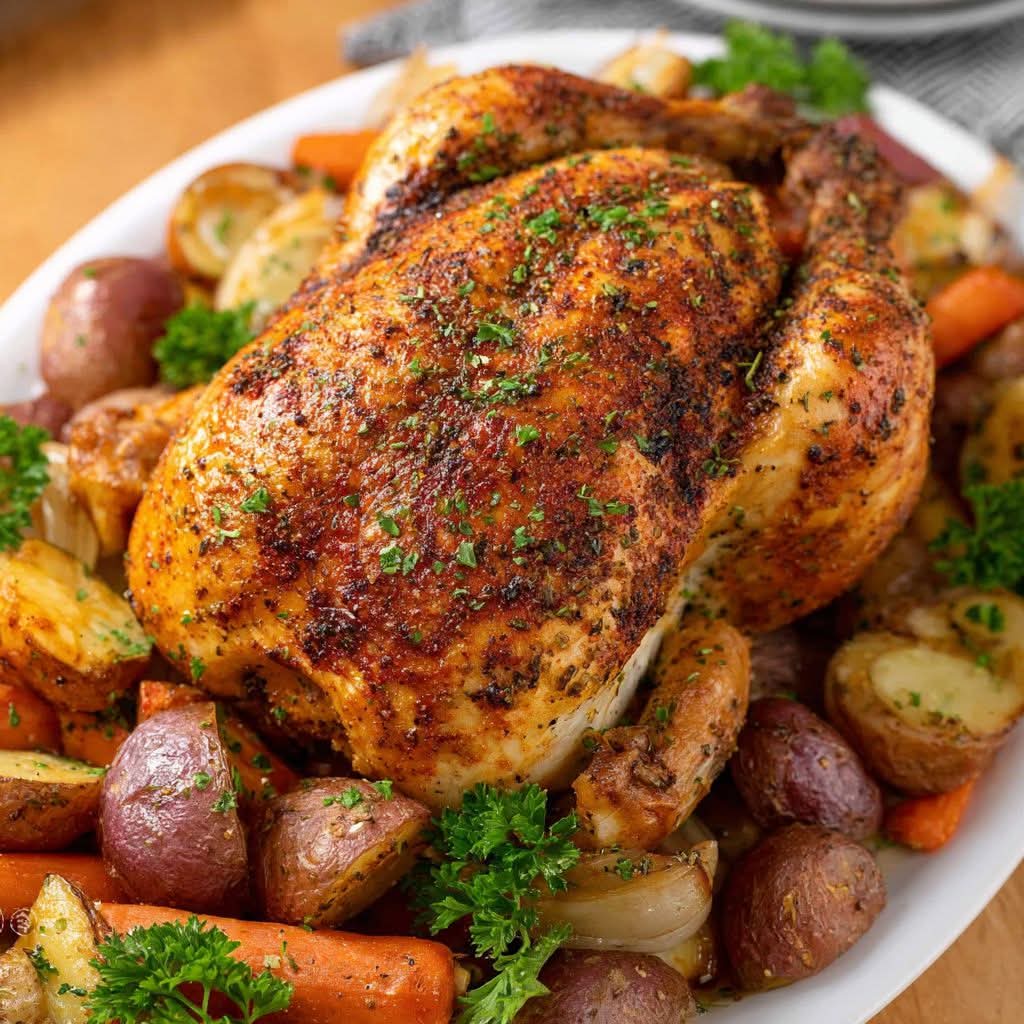
The Herb Butter Roasted Whole Chicken with Potatoes & Carrots is a timeless culinary centerpiece that defines the art of the family dinner. This dish relies on the harmonious relationship between a high-quality protein and root vegetables that caramelize in the chicken’s own savory drippings. By utilizing a compound herb butter both under and over the skin, you ensure the meat remains succulent while the exterior achieves a deep, golden-brown crunch. This guide will provide you with the professional techniques needed to elevate this rustic meal into a restaurant-quality experience.
Nutritional Benefits: A Wholesome Feast
This all-in-one pan meal provides a balanced nutritional profile, roughly totaling 475 calories per serving:
- Lean Protein: A single serving offers approximately 38g of protein, which is essential for muscle maintenance and immune health.
- Healthy Fats: While the butter adds richness, the dish provides a mix of saturated and unsaturated fats (approx. 25g total) that aid in nutrient absorption.
- Complex Carbohydrates: Potatoes and carrots provide about 28g of carbohydrates and 4g of dietary fiber, supporting steady energy levels and digestion.
- Essential Minerals: This meal is naturally high in Potassium (approx. 800mg), which is vital for heart health and muscle function.
Essential Ingredients and Smart Substitutions
The secret to a superior roast lies in the quality of your fats and aromatics.
The Core Components
- Whole Chicken: One 3.5 to 4 lb (1.6 to 1.8 kg) whole chicken, patted dry.
- Root Vegetables: 1 lb of potatoes (Yukon Gold or Russet) cubed and 2–4 medium carrots cut into sticks.
- The Herb Butter: 1 stick (1/2 cup) of softened unsalted butter mixed with 4–5 cloves of minced garlic, 2 tsp fresh thyme, and 2 tsp fresh rosemary.
- Cavity Aromatics: 1 small yellow onion (quartered), 1 lemon (halved or quartered), and extra herb sprigs.
Possible Substitutions
- The Veggies: Swap traditional potatoes for sweet potatoes or parsnips for a sweeter roasted profile.
- The Fat: You can use olive oil instead of butter on the outside, though butter provides a better golden-brown color due to its milk solids.
- The Herbs: If fresh herbs are unavailable, use 1 tsp of dried herbs for every 1 tbsp of fresh.
Step-by-Step Culinary Instructions
1. Prepping for Success
Preheat your oven to 400°F (200°C) or 425°F (220°C) for a faster, crispier skin. Remove the giblets and pat the chicken completely dry with paper towels inside and out; moisture is the enemy of crispy skin. Let the bird sit at room temperature for 1–1.5 hours before cooking to ensure it roasts evenly.
2. The Butter Application
In a small bowl, combine your softened butter, garlic, herbs, salt, and pepper. Use a dessert spoon to gently loosen the skin from the breast meat without tearing it. Stuff half of the herb butter mixture under the skin directly onto the breast meat, then rub the remaining butter over the entire exterior.
3. Stuffing and Trussing
Place the onion, lemon, and remaining herbs inside the chicken cavity. Tie the legs together with kitchen twine (trussing) to help the meat stay juicy and cook evenly.
4. Pan Assembly and Roasting
Arrange the potatoes and carrots in a roasting pan or cast-iron skillet, seasoning them with salt and oil. Place the chicken on a rack over the vegetables to allow air to circulate, which ensures the skin on the bottom doesn’t become soggy. Roast for approximately 1 hour to 1 hour 20 minutes, or until a thermometer in the thickest part of the thigh reads 165°F (74°C).
Professional Tips for Best Results
- The Liquid Secret: Add 1 cup of water, chicken broth, or white wine to the pan halfway through cooking to prevent the vegetables from burning and to keep the chicken moist.
- The High-Heat Finish: If the skin isn’t crispy enough when the chicken is done, broil it for a final 2–3 minutes.
- Resting is Crucial: Let the chicken rest for 15 minutes before carving; cutting too early allows the juices to escape, resulting in dry meat.
Common Mistakes to Avoid
- Improper Temperature Checks: Do not just check the breast; ensure the thickest part of the thigh reaches 165°F, as dark meat takes longer to cook.
- Overcrowding the Veggies: If your vegetables are in a thick pile, they will steam rather than roast. Use a large enough pan to keep them in a single layer.
- Washing the Chicken: Rinsing the bird is not necessary for safety and actually spreads bacteria around your kitchen; simply pat it dry.
Storage and Reheating Tips
- Refrigeration: Store leftovers in an airtight container for up to 3–4 days.
- Freezing: Roasted chicken can be frozen (ideally off the bone) for up to 3–4 months.
- Best Reheating: To keep it juicy, reheat the chicken in the oven with a splash of broth or water, covered with foil, until warmed through.
Frequently Asked Questions (FAQ)
Should I cover the chicken with foil while roasting?
Generally, no. Roasting uncovered is essential for crispy skin. However, if the skin is browning too quickly before the meat is cooked, you can loosely tent it with foil.
Can I roast the vegetables and chicken in the same pan without a rack?
Yes, but the underside of the chicken may be softer. Using a rack or a bed of hearty vegetables (like onions and celery) elevates the bird for better air circulation.
How do I use the leftover carcass?
Never toss the bones! Simmer the carcass with leftover veggie scraps to create an incredible homemade chicken broth.
Next Step: Would you like me to help you create a shopping list for these ingredients, or perhaps provide a recipe for a pan jus gravy made from the drippings?