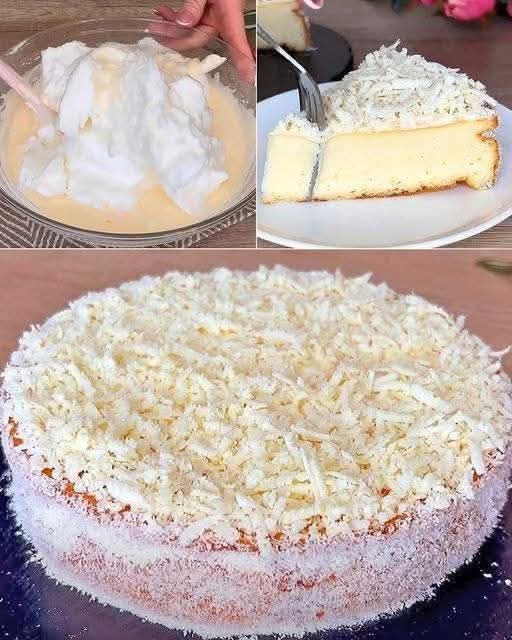
The Baked Cream Cheese Cake, known across Eastern Europe as Syrnik (from syr, meaning cheese), is the antithesis of the light, jiggly New York-style cheesecake. This dessert is celebrated for its dense, moist, custardy interior, rich flavor, and rustic, satisfying texture. Unlike recipes that rely on large amounts of cream cheese and heavy cream, the Syrnik is traditionally built on cottage cheese or tvorog (farmer’s cheese), which gives it a unique, grainy, and deeply comforting profile. Our version elevates this classic by creating a smooth blend of cream cheese and tvorog, incorporating air-whipped egg whites for lightness, and crowning it with a decadent blanket of shredded white chocolate, as seen in the image.
A Tradition of Dairy Dessert
Syrnik is a staple in Russian, Ukrainian, and Polish cuisine, often made from tvorog, a fresh dairy product similar to firm ricotta or cottage cheese. Traditionally served for breakfast or dessert, this baked cake is much faster to prepare than classic cheesecake, as it doesn’t require a crust or a finicky water bath.
This recipe achieves its signature qualities through a few essential techniques, including:
- Tvorog/Cream Cheese Blend: Using a mixture of cream cheese for smoothness and drained cottage cheese/tvorog for the traditional texture.
- Meringue Folding: As shown in the top panel of the image, the egg whites are beaten separately to stiff peaks, then gently folded into the batter. This step incorporates essential air, preventing the dense cheese mixture from becoming too heavy and yielding a beautifully light, yet moist, crumb.
- The High-Heat Finish: Baking the cake without a crust (or with a minimal crumb crust) at a moderate temperature ensures a golden-brown surface and a creamy-set interior.
Essential Ingredients and Texture Roles
The integrity of this cake is highly dependent on the quality and preparation of the cheese component.
| Component | Essential Ingredient | Function | Substitution Notes |
| Cheese Base | Full-Fat Cottage Cheese (or Tvorog) | Provides the signature granular texture and moisture. | Must be blended or pressed to remove curds. |
| Creaminess | Full-Fat Cream Cheese | Adds richness and stability to the batter. | Necessary for a smoother, less rustic texture. |
| Lift | Large Eggs (separated) | Beaten whites provide the necessary air for a tender, tall cake. | Must be at room temperature for maximum volume. |
| Thickener | Semolina (or Cornstarch) | Absorbs excess moisture from the cheese, ensuring a firm, sliceable texture. | All-purpose flour can be used, but semolina is traditional. |
| Topping | Shredded White Chocolate | Provides the sweet, visible finish and extra richness. | Shredded coconut or a simple sour cream glaze. |
Nutritional Advantages of a Cheese-Based Cake
Due to its high cheese content, this cake offers unique nutritional benefits compared to butter and sugar-heavy layer cakes:
- High Protein: Cottage cheese and eggs are excellent sources of high-quality protein, which increases satiety.
- Calcium: The cake is extremely rich in calcium, essential for bone health.
- Lower Fat (Optional): While delicious with full-fat ingredients, the Syrnik base can be successfully made with lower-fat cottage cheese and skim milk, unlike a standard cheesecake.
Step-by-Step Instructions: Baking the Perfect Syrnik
This recipe requires blending the cheese and carefully folding the meringue for the correct texture.
Stage 1: Preparing the Cheese Base (20 minutes)
- Prep the Cheese: Place 16 oz of full-fat cottage cheese in a fine-mesh sieve lined with cheesecloth and press out any excess liquid. Alternatively, place the cottage cheese and 8 oz of softened cream cheese in a food processor and blend until perfectly smooth.
- Combine Wet Ingredients: Transfer the blended cheese to a large bowl. Beat in 4 large egg yolks, 1/2 cup of granulated sugar, 1/4 cup of whole milk, 1 teaspoon of vanilla extract, and the zest of 1 lemon (optional).
- Add Thickener: Whisk in 3 tablespoons of semolina (or all-purpose flour) until smooth. Set the batter aside.
Stage 2: Meringue and Final Mix (15 minutes)
- Whip the Whites: In a separate, clean, grease-free bowl, beat 4 large egg whites with a pinch of salt until stiff, glossy peaks form.
- The Fold: Gently fold one-third of the meringue into the cheese base to lighten it. Then, gently fold in the remaining meringue using a spatula. Cut straight down the center of the bowl and fold up from the bottom. Crucially, do not overmix; stop as soon as the whites are just incorporated, leaving the mixture light and airy (as shown in the top panel of the image).
- Prepare Pan: Preheat oven to $350^{\circ} \text{F}$ ($175^{\circ} \text{C}$). Grease and line an 8-inch round springform pan or cake pan with parchment paper. Pour the batter into the prepared pan.
Stage 3: Bake, Cool, and Finish (Bake time: 55–65 minutes)
- Bake: Bake for 55 to 65 minutes. The cake is done when the top is deeply golden brown and the edges are set, but the center still has a slight wobble.
- Cooling: Turn off the oven, crack the oven door slightly, and let the cake cool inside the oven for 30 minutes. This slow cooling helps prevent the cake from sinking or cracking severely. Remove from the oven and cool completely on a wire rack.
- Top and Chill: Once completely cool, sprinkle the entire top and press shredded coconut or white chocolate flakes onto the sides of the cake (as shown in the image). Chill the cake for at least 3 hours, or preferably overnight, before slicing and serving.
Professional Tips for the Perfect Syrnik
- Press the Cottage Cheese: This step is essential if you are using cottage cheese instead of traditional tvorog. Excess moisture will result in a soggy, runny cake that won’t set properly.
- Semolina is Superior: If available, use semolina. It absorbs moisture better than flour and provides a unique, satisfying grit that is characteristic of authentic Eastern European cheese cakes.
- Slow Cooling: The slow cooling process inside the turned-off oven is the non-negotiable key to minimizing the dramatic collapse that often plagues dense cheese-based cakes.
Common Mistakes to Avoid
- Cold Cream Cheese: Ensure the cream cheese is at room temperature before blending with the cottage cheese, which guarantees a perfectly smooth final batter.
- Over-Baking: Over-baking will result in a dry, crumbly cake. Pull it out when the center still looks slightly undercooked; it will finish setting during the cooling process.
- Serving Warm: The Syrnik must be completely chilled. Slicing warm will yield a soft, pudding-like mess that does not hold its shape.
Serving and Variation Ideas
- Traditional Glaze: Instead of white chocolate, serve with a sour cream glaze (sour cream, sugar, and vanilla) or a dusting of powdered sugar.
- Fruit: Serve slices with a simple berry compote, cherry sauce, or fresh jam to cut through the richness of the cheese.
- Raisins: For a traditional twist, soak 1/2 cup of raisins in warm water or rum for 10 minutes, drain, dust with flour, and fold them into the batter before baking.
Storage and Leftovers
- Refrigeration: Store leftover Baked Cream Cheese Cake covered in the refrigerator for up to 5 days.
- Freezing: The cake freezes well. Wrap the cooled, unsliced cake tightly in plastic wrap, then foil. Freeze for up to 3 months. Thaw overnight in the refrigerator before adding the final toppings.
Frequently Asked Questions (FAQ)
Q: Can I use only cream cheese instead of cottage cheese/tvorog?
A: You can, but it will result in a much smoother, more standard New York-style cheesecake texture, losing the signature rustic, grainy texture of Syrnik.
Q: Why did my Syrnik sink dramatically after cooling?
A: Sinking is caused by two main factors: over-mixing the batter (deflating the meringue) or, more commonly, a sudden temperature change (removing it from the oven too quickly). The slow, gradual cooling period is vital.
Q: How do I ensure my white chocolate/coconut topping sticks to the sides?
A: Before applying the topping, lightly brush the sides of the cooled cake with a thin layer of warmed apricot jam, honey, or a simple glaze. Then, immediately press the shredded topping onto the sticky sides.
Q: Can I add a bottom crust to this cake?
A: Yes. You can press a simple graham cracker or shortbread crust into the bottom of the pan and bake it for 10 minutes before pouring in the cheese batter.
A New Classic for Your Kitchen
The Baked Russian Cream Cheese Cake (Syrnik) offers a comforting, dense, and deeply satisfying alternative to traditional cheesecakes. Its unique texture and the beautiful finish of shredded white chocolate make it a truly special dessert that is destined to become a staple in your home baking repertoire.
Start blending and folding your way to this unforgettable European classic today!