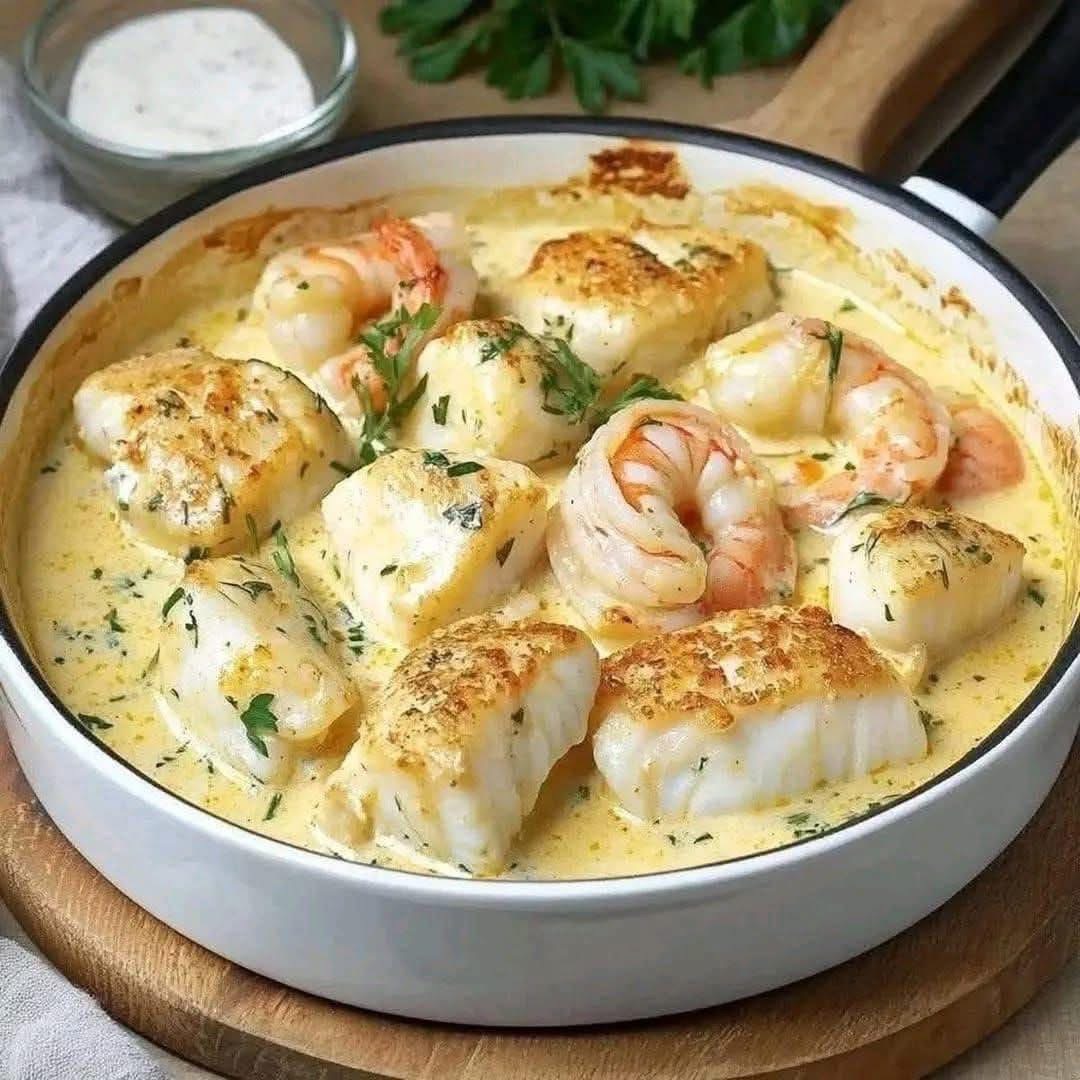
Ingredients
For the Seafood
- 400 g (about 1 lb) white fish fillets, cut into large chunks (cod, haddock, tilapia, or halibut work great)
- 250 g (about ½ lb) shrimp, peeled and deveined
- Salt and black pepper, to taste
- 1 tablespoon lemon juice
- 2 tablespoons olive oil
- 1 tablespoon butter
For the Creamy Sauce
- 3 tablespoons butter
- 4 garlic cloves, minced
- 1 cup heavy cream
- ½ cup chicken or seafood broth
- ½ teaspoon paprika
- ½ teaspoon dried thyme
- ½ teaspoon dried dill or parsley
- ¼ cup grated Parmesan (optional but delicious)
- Zest of ½ lemon
- Salt and pepper, to taste
- Fresh parsley, chopped (for garnish)
Instructions
1. Prepare the Seafood
Start by patting the fish and shrimp dry with paper towels. Removing surface moisture helps the seafood sear properly and prevents the pan from steaming instead of browning. Once dried, season everything generously with salt, pepper, and a splash of lemon juice. The acidity of the lemon lightly tenderizes the fish and enhances its natural flavor without overpowering it.
2. Sear the Seafood for Color
Heat a large skillet over medium-high heat and add olive oil and 1 tablespoon of butter. The combination of oil and butter is important because the oil raises the smoke point while the butter adds flavor.
Once the pan is hot, carefully place the fish chunks in the skillet. Avoid overcrowding the pan—good searing requires space and airflow. Let the fish cook untouched for 2–3 minutes on one side until golden brown. Flip gently using a spatula and sear the other side for another 1–2 minutes.
Remove the seared fish and set it aside. Repeat the same process for the shrimp, but keep in mind that shrimp require less time—about 1 minute per side. Don’t fully cook the seafood yet; it will finish cooking in the sauce later.
3. Build the Creamy Garlic Sauce
In the same skillet, melt 3 tablespoons of butter over medium heat. Add the minced garlic and cook for about 30 seconds, stirring constantly to prevent burning. This quick step releases the aroma of the garlic, giving the sauce its deep, irresistible flavor.
Next, pour in the broth and scrape any browned bits from the bottom of the pan. These caramelized bits are packed with flavor and help deepen the taste of the sauce.
After the broth simmers for a minute, add the heavy cream and stir well. Lower the heat to medium-low and season the sauce with paprika, thyme, dill or parsley, lemon zest, salt, and pepper. Allow it to simmer gently for 3–5 minutes, stirring occasionally. You want the sauce to thicken slightly but still remain pourable and silky.
If using Parmesan cheese, add it now and stir until fully melted.
4. Combine Everything and Simmer Gently
Return the seared fish and shrimp to the skillet, nestling them into the creamy sauce. Use a spoon to gently coat them with the sauce. Let everything simmer over low heat for 3–5 minutes, just until the seafood is cooked through. The fish should flake easily with a fork, and the shrimp should be pink and firm.
Be very careful not to overcook the seafood during this stage—overcooked fish becomes dry, and overcooked shrimp turn rubbery. Keeping the heat low allows everything to stay tender and juicy.
5. Finish and Serve
Once the sauce is velvety and the seafood is perfectly cooked, turn off the heat. Garnish with fresh chopped parsley. The bright green color contrasts beautifully with the creamy golden sauce and adds a fresh herbal note.
Serve immediately with rice, mashed potatoes, pasta, or crusty bread—anything that can soak up the rich sauce.
Tips for the Perfect Seafood Skillet
Use Fresh or High-Quality Seafood
Fresh seafood gives the best texture and sweetness to the dish. If you use frozen fish or shrimp, make sure they are fully thawed and dried before cooking.
Don’t Rush the Searing Step
This step builds flavor and adds a beautiful golden crust. A good sear makes all the difference in both taste and appearance.
Season in Layers
Season the seafood, season the sauce, and then adjust at the end. Layered seasoning creates depth and prevents a bland result.
Control the Heat
High heat is great for searing but not for simmering. Once you start the sauce, keep the heat low so the dairy doesn’t curdle and the seafood doesn’t overcook.
Add Vegetables (Optional)
You can add spinach, cherry tomatoes, mushrooms, or even asparagus during the sauce stage to make the dish more complete.
Why This Recipe Works
This dish is a balance of flavors and techniques. The searing creates caramelization, the cream sauce adds richness, and the herbs bring freshness. Combining fish and shrimp gives multiple textures in one dish: tender flakes from the fish and a juicy bite from the shrimp. The garlic butter base gives it that restaurant-style luxury, while the lemon zest keeps it bright and not overly heavy.
Serving Ideas
- Over creamy mashed potatoes
- With buttered noodles or fettuccine
- Spoon over steamed rice
- Served with roasted vegetables
- As a topping for toasted garlic bread
This versatility means you can prepare it for quick dinners, romantic nights, or special gatherings.