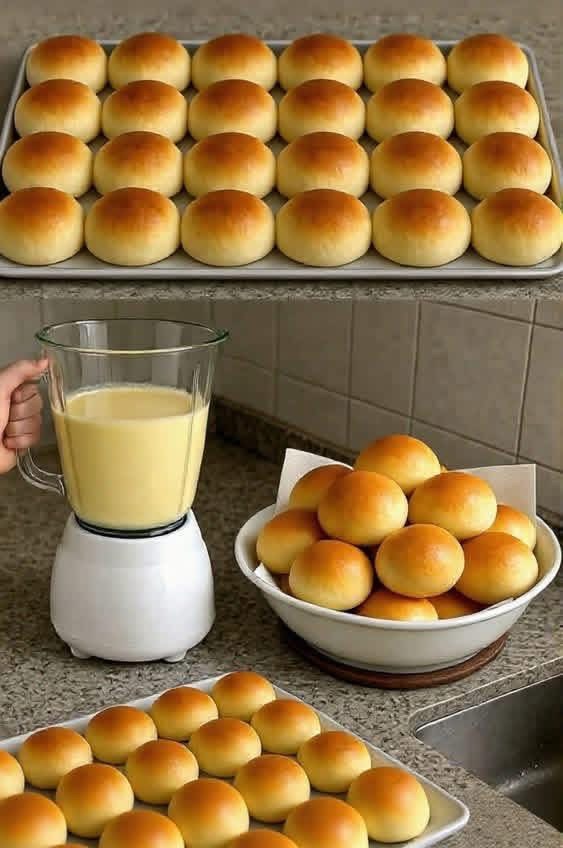
Ingredients
Wet ingredients (blended)
- 1 cup warm milk
- 1 large egg
- ¼ cup melted butter
- ¼ cup sugar
- 1 teaspoon vanilla extract
- 1 packet (7g) active dry yeast
Dry ingredients
- 3 ½ cups all-purpose flour
- 1 teaspoon salt
For brushing
- 2 tablespoons melted butter
How to Make Soft Blender Milk Bread Rolls
1. Prepare the blender mixture
In a blender, add warm milk, egg, melted butter, sugar, vanilla, and yeast.
Blend for 15–20 seconds until smooth.
Blending helps the yeast dissolve fully and ensures the rolls rise evenly and gain that beautiful round shape.
2. Combine with the dry ingredients
In a large bowl, add flour and salt.
Pour the blended mixture over the flour.
Use a spoon or spatula to bring the dough together.
It will be sticky—this is what gives the rolls their softness.
3. Knead the dough
Transfer to a lightly floured surface and knead for 8–10 minutes.
You want a smooth, elastic dough.
If using a stand mixer, knead for about 5 minutes on medium.
A soft dough makes the rolls fluffy and tender after baking.
4. First rise
Place the dough into a greased bowl, cover with a towel or plastic wrap, and let rest in a warm area for 1 hour.
The dough should double in size and look airy.
5. Shape the rolls
Punch down the dough gently.
Divide into 24–30 small equal pieces.
Roll each piece into a smooth ball.
Place the balls on a baking tray lined with parchment, keeping small spaces between them so they rise into perfect round buns like the ones in the photo.
6. Second rise
Cover the tray and let the rolls rise for 30–40 minutes.
They should puff up, look round, and feel pillowy to the touch.
This second rise is what gives them that professional, uniform shape.
7. Bake
Bake at 175°C (350°F) for 18–20 minutes or until golden on top.
The tops should have that perfect warm brown color seen in the image.
8. Brush with butter
While still hot, brush the rolls with melted butter.
This step adds flavor, shine, and softness to the crust.
Taste, Texture & Appearance
Your rolls will turn out:
✔ Soft and fluffy inside
✔ Golden brown on top
✔ Slightly sweet and milky
✔ Smooth and perfect in shape
✔ Lightly buttery
✔ Cloud-like when torn apart
Their pillowy texture comes from the milk and butter combination, while blending helps distribute yeast and sugar evenly for a perfect rise.
How to Serve These Bread Rolls
These rolls are incredibly versatile. Enjoy them:
- Fresh with butter and honey
- With jam or cream cheese
- As slider buns
- Alongside soups and stews
- In lunchboxes
- With tea or coffee
- As mini sandwiches
They are also perfect for breakfast when warmed slightly with butter.
Why This Recipe Works So Well
Blender-based doughs are popular because they guarantee consistency.
Here’s why the method is so effective:
- The yeast dissolves fully, preventing uneven rising.
- Butter, egg, and milk blend smoothly into a silky mixture.
- Sugar disperses evenly, enhancing browning and flavor.
- The dough becomes naturally soft and elastic.
- Rolls bake with a flawless domed shape.
Even if you’re not experienced with bread making, this method makes it easy to get perfect results.
Tips for Success
Use warm milk—not hot
Hot milk kills yeast, but warm milk activates it.
Don’t add too much flour
A slightly sticky dough = softer rolls.
Let the dough rise fully
Fluffiness depends on proper fermentation.
Keep rolls equal in size
This ensures even baking.
Brush with butter immediately
It locks in moisture.
Storage
These rolls stay soft for 3–4 days at room temperature.
To store:
- Keep in an airtight container.
- Warm in the microwave for 10 seconds before serving.