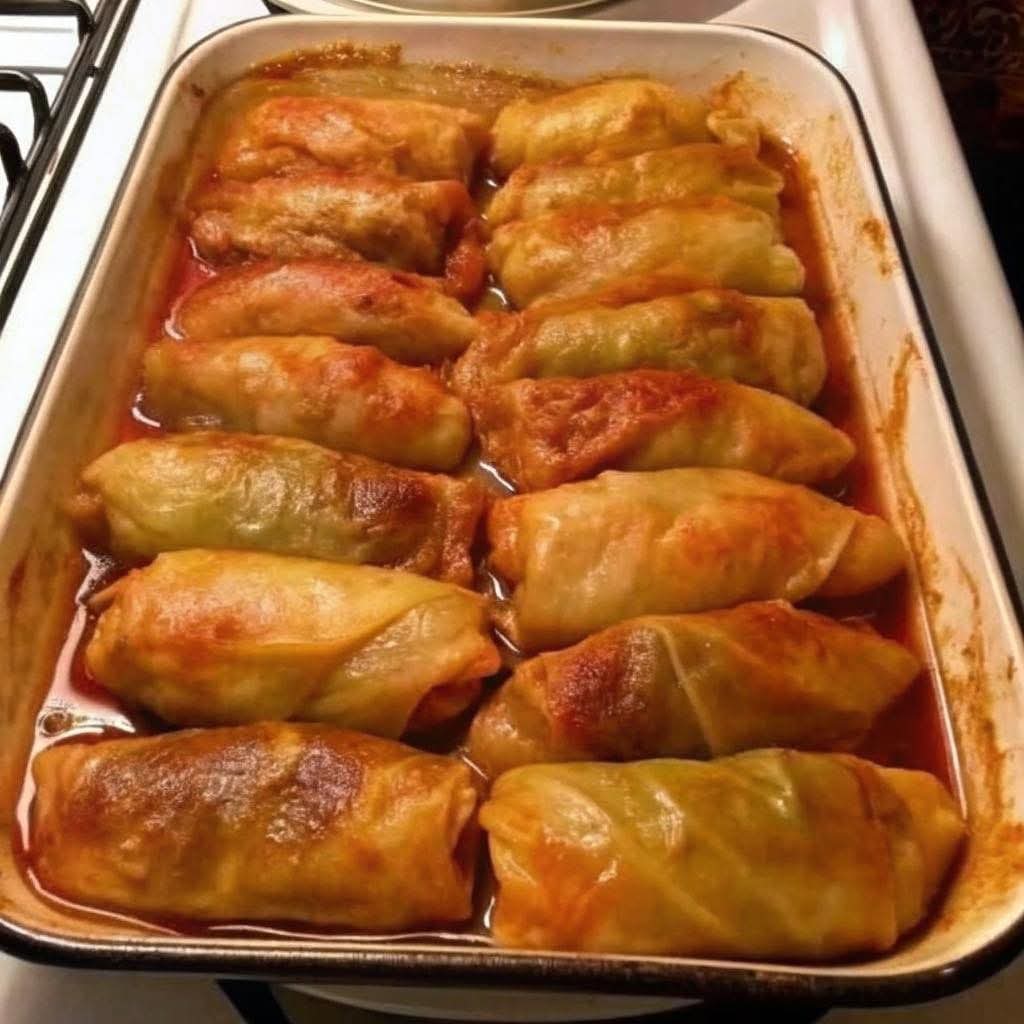
Stuffed cabbage rolls are one of the most comforting traditional dishes found in many cultures across Eastern Europe, the Middle East, and the Mediterranean. Whether you know them as cabbage dolma, malfouf mahchi, golabki, or simply cabbage rolls, the heart of the recipe is the same: tender cabbage leaves wrapped around a delicious mixture of seasoned meat and rice, slowly baked in a rich tomato sauce. The result is a warm, flavorful dish perfect for family dinners, gatherings, or meal prep because it reheats beautifully and tastes even better the next day.
This recipe brings together simple, wholesome ingredients—cabbage, rice, minced meat, onions, garlic, tomatoes, and spices—to create a filling dish with deep aromas and satisfying texture. The long cooking time allows the rolls to absorb the sauce, becoming juicy and tender. The recipe also ranks well on search engines when presented with detailed instructions, flavor tips, and variations because many readers search for a dependable method for making stuffed cabbage rolls that won’t fall apart or taste bland. With the right approach, this dish becomes easy, enjoyable, and consistently delicious.
Ingredients
For the cabbage
- 1 large green cabbage
- Salt for boiling water
For the filling
- 500 g ground beef or lamb (or half beef, half lamb)
- 1 cup uncooked rice (short or medium grain recommended)
- 1 large onion, finely diced
- 3 cloves garlic, minced
- 2 tablespoons tomato paste
- 1 teaspoon paprika
- 1 teaspoon black pepper
- 1 teaspoon salt
- ½ teaspoon cumin
- ½ teaspoon dried oregano
- 2 tablespoons olive oil
For the sauce
- 2 cups tomato sauce or crushed tomatoes
- 2 tablespoons tomato paste
- 3 cups broth (chicken or beef)
- 2 tablespoons lemon juice or vinegar
- 1 teaspoon sugar (balances acidity)
- Salt and pepper to taste
Preparing the cabbage
The key to perfect stuffed cabbage rolls is making sure the cabbage leaves are soft enough to roll without tearing. Fill a large pot with water and bring it to a boil. Add a generous amount of salt. Carefully place the whole cabbage into the pot and let it simmer for 10–12 minutes. As the outer leaves begin to soften, gently peel them off with tongs and set them aside on a tray. Continue until all usable leaves are removed.
Trim the thick stem area of each leaf by slicing off a thin layer to make rolling easier. If the cabbage core is still too firm, return the remaining head to the pot and boil a few more minutes. Softer leaves guarantee that your rolls will wrap tightly and cook evenly.
Making the filling
The filling is simple but rich in flavor. In a large mixing bowl, combine the ground beef or lamb with the uncooked rice, onion, garlic, tomato paste, paprika, cumin, oregano, pepper, and salt. Drizzle in the olive oil and mix gently with your hands until everything is well combined. The uncooked rice will absorb juices during baking, helping the rolls stay firm while becoming tender inside.
Rolling the cabbage
Place one cabbage leaf on a cutting board, vein side down. Add about one to two tablespoons of filling near the bottom edge of the leaf. Fold the sides inward and roll tightly, similar to rolling a burrito. Arrange the rolls seam-side down in a baking dish or deep pot. Continue rolling until all leaves are used. If you have leftover filling, you can place it between the rolls or shape small meatballs and tuck them into the dish.
Making the sauce
In a saucepan, whisk together the tomato sauce, tomato paste, broth, lemon juice, sugar, salt, and pepper. Heat over medium until the sauce begins to simmer. Pour the hot sauce evenly over the cabbage rolls, making sure they are almost fully covered. If needed, add a bit more broth or water.
Cooking the cabbage rolls
Cover the baking dish tightly with foil or place a lid on the pot. Bake in a preheated oven at 180°C (350°F) for 1 hour and 30 minutes. Slow cooking is essential because it allows the cabbage to soften completely and the filling to absorb the flavor of the sauce. After the baking time is complete, remove the foil and bake an additional 15 minutes to slightly caramelize the tops.
If cooking on the stovetop instead of the oven, cover tightly and simmer on low heat for about 1 hour and 15 minutes, checking occasionally to ensure the liquid doesn’t evaporate too quickly.
Texture, aroma, and serving
When cooked perfectly, the cabbage rolls will be fork-tender, juicy, and full of flavor. The sauce thickens slightly and becomes rich with the natural juices released by the meat and rice. Serve the rolls warm with a spoonful of the tomato sauce on top. They pair wonderfully with mashed potatoes, crusty bread, or a simple salad on the side.
Tips for perfect cabbage rolls
- Choose a cabbage with loose outer leaves; it softens more easily.
- Do not overstuff the leaves; rice expands during cooking.
- Tuck the rolls close together to prevent them from unravelling.
- If the sauce is too acidic, add a pinch more sugar or a bit of grated carrot.
- For extra richness, add a tablespoon of butter to the sauce before baking.
- If the rolls float during cooking, place an upside-down plate on top to keep them submerged.
Variations
One of the best things about stuffed cabbage rolls is how customizable they are. You can use lamb, beef, chicken, or a vegetarian filling. A lentil-and-rice mixture works beautifully for a meat-free version. Some regions season the filling with cinnamon, allspice, or herbs like dill or parsley. Others add raisins or pine nuts for sweetness and crunch. For a spicy variation, add chili flakes or cayenne pepper.
Storage and reheating
Stuffed cabbage rolls store extremely well. Keep them refrigerated in an airtight container for up to four days. To reheat, warm them in a pot with a little extra sauce or broth